
How to Read the Heechee Saga
Frederik Pohl’s Heechee Saga (often referred to simply as the Gateway series) is one of the most influential space opera and psychological science fiction series of the late 20th century. Spanning five main novels, a short story collection, and a foundational novella, the series presents a fascinating reading order choice: should you start at the very beginning of the fictional timeline, or follow the sequence in which the books were published?
For the absolute best experience, we strongly recommend reading the Heechee Saga in publication order. While the prequel novella, The Merchants of Venus, introduces the universe, starting with the masterwork Gateway establishes the core themes, the psychological depth, and the central mystery of the universe in a way that later additions cannot match.
The Recommended Reading Order
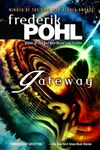
- Gateway (1977) — The essential starting point. This Hugo, Nebula, Locus, and John W. Campbell Award-winning novel introduces Robinette Broadhead, a desperate prospector who strikes it rich but suffers immense psychological trauma.
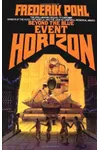
- Beyond the Blue Event Horizon (1980) — Expands the scale of the universe, introducing the feral boy Wan and a massive Heechee food factory.
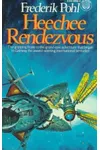
- Heechee Rendezvous (1984) — Focuses on humanity's actual encounters with the mysterious, long-vanished alien race.
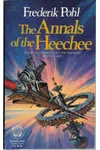
- The Annals of the Heechee (1987) — Resolves the primary conflict regarding the cosmic threat known as the Assassins (or the Kugel).
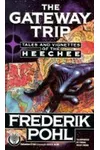
- The Gateway Trip: Tales and Vignettes of the Heechee (1990) — A collection of short stories, including the original 1972 novella The Merchants of Venus, which serves as a prequel.
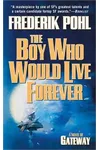
- The Boy Who Would Live Forever (2004) — The sixth and final novel, which weaves new characters together with returning faces to provide a ultimate resolution to the saga.
Publication Order vs. Chronological Order
The main question readers face is what to do with the prequel novella, The Merchants of Venus (1972). It was written five years before Gateway and takes place on a colonized Venus, focusing on the discovery of the tunnels left by the Heechee. While it is chronologically first, it reads more like a satirical, commercial frontier adventure rather than the deeply introspective, psychoanalytical space opera that defines the main novels.
Because The Merchants of Venus was later anthologized in the 1990 collection The Gateway Trip, most modern readers treat it as supplementary material. Starting with it can give a misleading impression of the series' tone. By starting with Gateway, you experience the mystery of the Heechee exactly as Pohl intended—as an incomprehensible, terrifying, and awe-inspiring force that humans slowly begin to understand.
The Core Novels and Story Collections
Gateway (1977)
The novel that defined the series, Gateway is structured as a dual narrative. Half of the story follows Robinette Broadhead in therapy sessions with an artificial intelligence therapist named Sigfrid von Shrink, slowly unpacking the trauma of his exploration missions. The other half details his life as a prospector on Gateway—an asteroid hollowed out by the Heechee containing hundreds of pre-programmed spacecraft. Humans climb aboard, push a button, and hope they discover wealth rather than flying into a black hole or dying of starvation.
Beyond the Blue Event Horizon (1980)
This sequel picks up with a wealthy Robinette Broadhead funding deep-space expeditions. The narrative introduces a human family living aboard a Heechee food factory (which processes raw cometary dust into nutritional food) and a feral child named Wan, who possesses a unique connection to the Heechee's technology.
Heechee Rendezvous (1984)
Humanity’s reckless tinkering with Heechee faster-than-light ships finally triggers alarms. The Heechee, who have been hiding inside the event horizon of a black hole at the galactic core to escape a dark, destructive entity, are forced to emerge and intervene before humanity alerts their mutual enemy.
The Annals of the Heechee (1987)
This installment completes the main story arc of Robinette Broadhead. Now existing as a stored digital consciousness (a "machine-stored personality"), Robinette works alongside the Heechee to understand the mysterious threat of the Assassins (also referred to as the Kugel), who seek to wipe out intelligent life in the universe.
The Gateway Trip (1990)
A companion volume containing ten short stories and vignettes. It is most notable for including The Merchants of Venus, as well as shorter sketches that flesh out the early exploration of Gateway, the mechanics of Heechee technology, and the fate of early prospectors.
The Boy Who Would Live Forever (2004)
Published nearly two decades after the main trilogy ended, this novel follows two young prospectors, Stan Avery and Estrella Pancorbo, who head toward the galactic core. It acts as a final capstone to the series, integrating elements of The Gateway Trip and resolving the ultimate fates of the human and Heechee alliances.
What to Know Before You Start
Frederik Pohl’s background as a prominent editor of magazines like Galaxy Science Fiction heavily influenced the structure of the Heechee Saga. The series stands at the intersection of Golden Age adventure and New Wave introspection. Unlike typical space operas of its time, the series spends significant time on psychological trauma, guilt, and the economic desperation of its characters.
Furthermore, the setting of the series reflects Malthusian fears of the 1970s, including overpopulation, resource depletion, and a highly corporatized future where healthcare is a luxury and human life is heavily commodified. Understanding this background helps readers appreciate the bleak, desperate atmosphere that drives prospectors to board alien ships they do not know how to steer.
Spin-offs, Games, and Adaptations
The popularity of the Heechee universe extended beyond the printed page. In 1992, Legend Entertainment released Frederik Pohl's Gateway, an interactive fiction game featuring graphics and text commands. It was followed in 1993 by a sequel, Gateway II: Homeworld. These games do not feature Robinette Broadhead but allow players to experience the life of a prospector on Gateway, complete with encounters with the Assassins. In 2019, Skybound Entertainment announced plans for a television adaptation, though concrete production updates remain scarce.