

The Recommended Reading Order
The best way to experience the Henry Gamadge Mysteries is in publication order. Because author Elizabeth Daly wrote the series in a chronological flow, the books follow a linear timeline. Reading them in order allows you to watch Henry Gamadge's household grow, track his relationship with his wife Clara, and witness the subtle shift in mid-century American culture from the pre-war era through World War II and into the early 1950s.
Henry Gamadge Mysteries in Publication Order
Elizabeth Daly published sixteen novels in the main series between 1940 and 1951. Since the chronological order aligns perfectly with the publication dates, this is the definitive reading order:
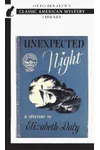
- Unexpected Night (1940) – Gamadge’s debut novel. While vacationing in Maine, he is drawn into a high-stakes inheritance dispute and a suspicious death at a local golf club.
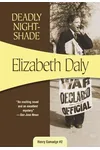
- Deadly Nightshade (1940) – Gamadge investigates a bizarre case of poisoned children and nightshade in a small, insular Maine community.
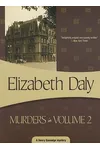
- Murders in Volume 2 (1941) – A classic bibliophilic mystery involving a long-lost volume of poetry, a century-old disappearance, and a family estate.
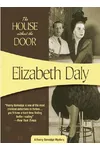
- The House Without the Door (1942) – Gamadge is hired by a woman acquitted of murder who is terrified of the mysterious forces still targeting her in New York.
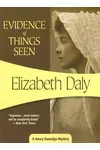
- Evidence of Things Seen (1943) – A unique entry where Gamadge is falsely accused of murder while on holiday, leaving his new wife Clara to investigate and clear his name.
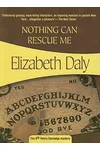
- Nothing Can Rescue Me (1943) – Set at a country estate, Gamadge looks into a series of threatening messages inserted into a novelist's manuscript.
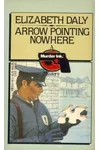
- Arrow Pointing Nowhere (1944) – Also published under the title Murder Listens In. Gamadge decodes clues hidden in a family's old photography collection to expose a hidden killer.
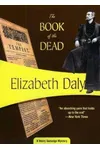
- The Book of the Dead (1944) – A fan-favorite mystery in which Gamadge uses a volume of Shakespeare to solve a puzzle left behind by a deceased acquaintance.
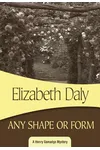
- Any Shape or Form (1945) – Gamadge investigates a murder that occurs during a garden party, navigating high-society secrets and a puzzling crime scene.
- Somewhere in the House (1946) – A classic closed-room scenario involving a treasure locked in a clay-sealed room for twenty years.
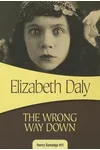
- The Wrong Way Down (1946) – Also published as Shroud for a Lady. Gamadge investigates a series of deaths linked to an old, seemingly worthless print of a painting.
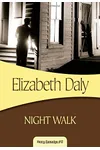
- Night Walk (1947) – Gamadge travels to a quiet suburban town to solve a brutal murder that has left the residents paralyzed by suspicion.
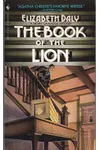
- The Book of the Lion (1948) – A dense literary mystery concerning the lost play of a deceased poet and a circle of greedy collectors.
- And Dangerous to Know (1949) – Gamadge searches for a quiet, overlooked spinster who vanished from her prominent family's Manhattan brownstone.
- Death and Letters (1950) – A suspenseful puzzle featuring a woman held prisoner in a cold Victorian estate, communicating via coded letters.
- The Book of the Crime (1951) – The final entry in the original series, focusing on a young runaway bride who stumbles into danger after spotting a rare book.
Chronological Continuity and Key Milestones
While the mysteries are self-contained and do not end in cliffhangers, the personal lives of the recurring characters evolve significantly. In the early books, Henry Gamadge is a bachelor living in a New York City brownstone, supported by his faithful houseman, Theodore. Over the course of the series, Gamadge meets, falls in love with, and marries Clara Dawson. By 1943, their family expands with the birth of their son. Other beloved fixtures of the household—such as Gamadge's taciturn young assistant Harold Bantz, Martin the cat, and Clara's red chow dog—are introduced gradually. Reading the books out of order will spoil these domestic milestones and confuse the status of Gamadge's household.
Where Should You Start?
For most readers, the natural starting point is the very first book, Unexpected Night. It establishes Gamadge’s character, his professional credentials as a handwriting expert and bibliophile, and his polite, observant method of sleuthing.
However, if you want to sample the series at its absolute peak of puzzle-craft, two alternative entry points are highly recommended:
- Evidence of Things Seen (1943): This book is an excellent showcase of Daly's atmospheric writing. It shifts the spotlight to Clara Gamadge, offering a tense, personal narrative that highlights the couple's relationship.
- The Book of the Dead (1944): Considered by many fans to be the most intellectually satisfying mystery of the series, this book perfectly blends Gamadge's literary expertise with a complex web of New York high-society secrets.
The Spin-Off Series: Clara Gamadge Mysteries
If you finish the original sixteen books and find yourself missing the Gamadge household, you can continue the journey with the spin-off series written by Eleanor Boylan. Boylan, who was Elizabeth Daly’s niece, revived the characters in the late 1980s. Set decades after the original series, these books feature an elderly, widowed Clara Gamadge as she solves crimes with the help of some familiar legacy characters. They should be read after you finish Elizabeth Daly's original run:
- Working Murder (1989)
- Murder Observed (1990)
- Murder Machree (1992)
- Pushing Murder (1993)
- Murder Crossed (1996)
What to Know Before You Start
Elizabeth Daly was a fascinating figure in Golden Age detective fiction. She did not publish her first novel until she was sixty years old, yet she went on to write sixteen books in just over a decade, receiving a Special Edgar Award from the Mystery Writers of America in 1961. Daly was famously Agatha Christie’s favorite American mystery writer, and it is easy to see why. The Henry Gamadge novels focus on intellectual deduction, elegant settings, and psychological intrigue rather than violence or gore. Gamadge solves cases not through physical force, but by analyzing rare documents, identifying forged handwriting, and understanding human nature. The books offer a wonderful, nostalgic escape to a bygone era of Manhattan brownstones, vintage libraries, and classic detective work.