




The Recommended Reading Order for the Henry Swann Mysteries
The Henry Swann series blends classic hardboiled noir with a soulful, modern sensibility. Written by seasoned journalist and writing instructor Charles Salzberg, the series follows the cases of Henry Swann, a Manhattan-based skip tracer who specializes in tracking down people and assets that have vanished. Because the emotional arc of the characters, Swann's personal growth, and his evolving relationship with his partner develop continuously, the recommended reading path is the publication order.
Here is the recommended reading order for the Henry Swann books:
- Swann’s Last Song (2008)
- Swann Dives In (2012)
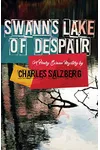
- Swann’s Lake of Despair (2014)
- Swann’s Way Out (2017)
- Swann’s Down (2019)
Henry Swann Book-by-Book Breakdown
1. Swann’s Last Song (2008)
The series begins with Swann’s Last Song, introducing readers to Henry Swann as he works as a skip tracer in New York. The case begins when he is hired to track down a missing husband, a task that quickly escalates into a dangerous web of deception. The investigation takes Swann from New York across international borders, establishing the series' signature mix of gritty realism, sharp dialogue, and intellectual observation. Nominated for a Shamus Award for Best First PI Novel, this book lays the foundation for Swann's character and his struggle to cope with the tragic death of his wife.
2. Swann Dives In (2012)
In the second installment, Swann Dives In, Swann is hired by a lawyer to find his runaway daughter. The search leads him straight into the competitive, sometimes cutthroat underworld of rare book dealers. As Swann digs deeper, he must balance the intellectual curiosities of the literary trade with the inherent dangers of the criminal elements lurking beneath the surface. This novel further establishes his partnership with Goldblatt, highlighting the contrast between Swann's methodical nature and Goldblatt's erratic habits.
3. Swann’s Lake of Despair (2014)
Swann’s Lake of Despair presents a highly complex structure, juggling three distinct mysteries simultaneously. Swann is tasked with locating a set of missing photographs, tracking down a scandalous diary, and finding a vanished woman. The pressure of managing multiple clients and cases forces Swann to rely heavily on his wits and his questionable partner, Goldblatt. The book explores themes of memory, regret, and the hidden costs of keeping secrets in a bustling, indifferent metropolis.
4. Swann’s Way Out (2017)
The fourth book, Swann’s Way Out, takes the Manhattan skip tracer out of his comfort zone. Hired to track down an embezzler who fled with one million dollars, Swann’s search leads him to Hollywood. While navigating the superficiality of the West Coast, he is also forced to deal with an art forgery ring back in New York and personal dilemmas that threaten to disrupt his quiet, routine life. The contrast between the New York art world and the Los Angeles entertainment industry provides a rich backdrop for Salzberg's sharp-tongued protagonist.
5. Swann’s Down (2019)
The fifth entry in the series, Swann’s Down, features two demanding cases. First, Goldblatt asks Swann for help finding a psychic who swindled his ex-wife. At the same time, Swann is hired to find a missing witness critical to a mob hitman's upcoming murder trial. As these two investigations collide, Swann is pushed to his limits, dealing with eccentric characters, dangerous criminals, and the realization that his professional partnership with Goldblatt is more permanent than he ever anticipated.
What to Know Before You Start
Before diving into the Henry Swann Mysteries, there are a few unique elements of the series to keep in mind. Unlike traditional private eye protagonists who carry badges and guns, Henry Swann is technically a skip tracer. He lacks a formal private investigator's license, though he frequently identifies himself as a PI to gain access to information. His methods rely more on psychological insight, conversation, public records, and literary intuition than on physical confrontation.
A major highlight of the series is the relationship between Swann and his partner, Goldblatt. Goldblatt is a disbarred, eccentric, and disheveled attorney who acts as Swann's informant, foil, and business partner. Their banter and mutual dependency provide much of the series' dark humor. Interestingly, author Charles Salzberg named the character after his real-life friend, writer Mark Goldblatt, though the fictional representation is entirely fabricated for comedic and narrative contrast.
Finally, the setting of New York City plays an active role in the books. Salzberg uses his background as a journalist to paint an authentic portrait of Manhattan, focusing on its cultural institutions, galleries, bookstores, and local neighborhoods. Readers who appreciate a strong sense of place and a literary flavor to their crime fiction will find themselves right at home.
Reading Advice: Chronology and Standalones
Because the chronological order matches the publication order, readers do not need to worry about complex timelines or prequel novels. Each book features a self-contained main mystery that is fully resolved by the final page, meaning you can technically pick up any book in the series and enjoy it as a standalone crime novel.
However, skipping around is not recommended for the best reading experience. The overarching character development—including Swann’s gradual healing from his past trauma, the growth of his skip-tracing business, and the slow reveal of Goldblatt's mysterious background—unfolds incrementally. Reading the books in order ensures you appreciate the subtle shifts in Swann’s life and the building blocks of his relationships.
There are no spin-off series, co-authored novels, or short story collections directly set in the Henry Swann universe. Fans of Charles Salzberg's writing style can also explore his standalone crime novels, such as Devil in the Hole or Second Story Man, which share the same sharp dialogue and realistic depiction of crime but feature different characters and settings.