



Where to Start Reading Inspector Banks
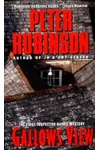
If you want to experience the full, rich development of Detective Chief Inspector Alan Banks, the best approach is to read the series in publication order. Starting at the beginning with Gallows View (1987) allows you to watch Banks grow from a newly arrived London transplant trying to adapt to the deceptively quiet Yorkshire countryside into a seasoned, complex detective battling both internal demons and increasingly dark external threats.
However, because the early books function as relatively cozy, traditional police procedurals, some readers prefer to jump directly into the series' mid-career turning point: In a Dry Season (1999). This tenth novel represents a dramatic shift in Peter Robinson's writing style, moving toward a much darker, psychologically intense, and dual-timeline structure. It is also the book that introduces Detective Sergeant Annie Cabbot, whose complex personal and professional relationship with Banks defines the rest of the series. If you choose this path, you can always read the first nine books as prequels later on.
DCI Alan Banks: The Complete Publication Order
Due to different publishers in the United Kingdom, United States, and Canada, several of Peter Robinson’s novels were released under different titles depending on where they were sold. The list below uses the original UK title first, with the alternate US/Canadian title noted alongside it. Reading them in this order ensures you follow the chronological character arcs and relationship dynamics properly:
- Gallows View (1987) - Introduces Inspector Banks as he relocates from London to the fictional Yorkshire Dales town of Eastvale.
- A Dedicated Man (1988) - Banks investigates the murder of a local historian in a quiet village.
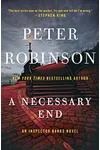
- A Necessary End (1989) - A protest at an anti-nuclear demonstration leads to the killing of a young police officer.
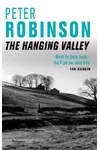
- The Hanging Valley (1989) - A decaying corpse in a scenic valley draws Banks into an international web of secrets.
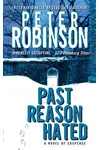
- Past Reason Hated (1992) - A winter holiday murder introduces complex domestic secrets.
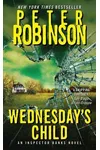
- Wednesday's Child (1992) - Banks searches for a young girl abducted by suspects posing as social workers.
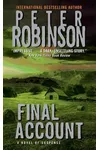
- Dry Bones That Dream (1994) (US title: Final Account) - A seemingly straightforward murder of a local businessman reveals deep financial corruption.
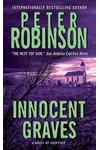
- Innocent Graves (1996) - The murder of a schoolgirl exposes class divides and media sensationalism.
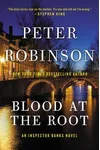
- Dead Right (1997) (US title: Blood at the Root) - Banks infiltrates a racially charged environment in Eastvale after a far-right activist is killed.
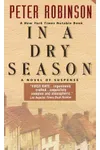
- In a Dry Season (1999) - A drought exposes a long-hidden reservoir village, revealing a skeleton from World War II. First appearance of DS Annie Cabbot.
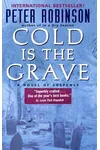
- Cold is the Grave (2000) - Banks' former boss, Chief Constable Riddle, asks him to search for his runaway daughter, leading to London's dark underbelly.
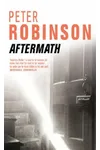
- Aftermath (2001) - A horrific discovery in an ordinary house forces Banks to confront a terrifying serial killer case.
- The Summer That Never Was (2002) (US title: Close to Home) - The discovery of skeletal remains forces Banks to investigate the disappearance of a childhood friend decades prior.
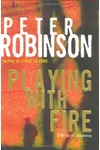
- Playing with Fire (2003) - An arson attack on canal barges leaves two dead and leads Banks into the art world.
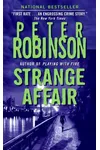
- Strange Affair (2004) - DS Annie Cabbot investigates a murder in Yorkshire while Banks goes AWOL in London to find his missing brother.
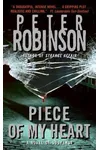
- Piece of My Heart (2006) - Dual narratives connect a murder at a 1969 rock festival with a modern-day investigation.
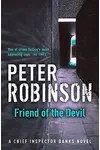
- Friend of the Devil (2007) - A paralyzed woman is murdered on a clifftop, while Annie Cabbot investigates a gruesome murder in a maze.
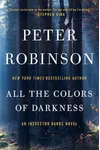
- All the Colors of Darkness (2008) - A suicide in the woods unravels a web of espionage, MI6 involvement, and personal betrayal.
- Bad Boy (2010) - Banks' daughter gets caught up in a dangerous situation involving a fugitive and a loaded gun.
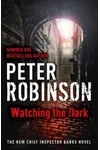
- Watching the Dark (2012) - Banks investigates a murder at an convalescent home for police officers, dealing with internal affairs.
- Children of the Revolution (2013) - A disgraced college lecturer is found dead on a disused railway line, leading back to 1970s student politics.
- Abattoir Blues (2014) (US title: In the Dark Places) - A stolen tractor and a blood-soaked hangar lead Banks into the dark heart of rural crime.
- When the Music's Over (2016) - Banks and DCI Annie Cabbot tackle historical sexual abuse allegations against a beloved public figure.
- Sleeping in the Ground (2017) - A mass shooting at a local wedding sends shockwaves through Eastvale.
- Careless Love (2018) - Two seemingly unrelated suspicious deaths challenge Banks' team.
- Many Rivers to Cross (2019) - The murder of a young boy found in a shipping container exposes human trafficking networks.
- Not Dark Yet (2021) - A property developer's murder is captured on a security camera, leading into dark web investigations.
- Standing in the Shadows (2023) - The final novel, connecting a 1980 murder in Leeds with a modern discovery of bones at an archaeological dig.
Short Stories and Novellas: Where Do They Fit?
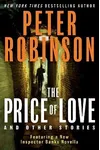
In addition to the 28 full-length novels, Peter Robinson wrote several short stories and novellas featuring DCI Banks. These pieces offer fascinating glimpses into Banks' life outside his major cases, including his past in London and his family relationships. Most of these shorter works were originally published in magazines or as digital shorts, but they are primarily collected in two key anthologies: Not Safe After Dark (1998, expanded in 2004) and The Price of Love and Other Stories (2009).
Key short stories featuring Inspector Banks include:
- "Like a Virgin" (2009) - This novella is a crucial prequel to the entire series. Set in London during the mid-1980s, it details Banks' final, harrowing case with the Metropolitan Police before he decides to flee the city's cynicism for Yorkshire. It is best read after you are already familiar with the characters, but chronologically it occurs first.
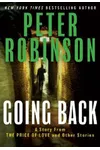
- "Going Back" (2009) - Another novella from The Price of Love, focusing on Banks returning to his childhood home in Peterborough for his parents' golden wedding anniversary, reflecting on his family history.
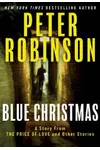
- "Blue Christmas" (2009) - A seasonal Inspector Banks story exploring Robinson's signature atmospheric styling.
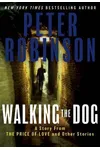
- "Walking the Dog" (2009) - A short story showing a more personal, domestic side of Banks in Eastvale.
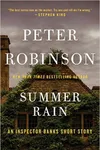
- "Summer Rain" (2015) - A standalone novella set between the events of Abattoir Blues and When the Music's Over.
Chronological Order vs. Publication Order
If you want to read the series strictly in chronological order based on the internal timeline of Alan Banks' life, you would start with the prequel novella "Like a Virgin" (found in The Price of Love) before moving on to Gallows View. However, reading the prequel first is not recommended for newcomers. "Like a Virgin" was written with the benefit of decades of hindsight, and its emotional weight relies on the reader already knowing who Banks becomes.
Outside of this prequel novella and occasional historical flashbacks (such as the World War II segments in In a Dry Season or the 1969 rock festival segments in Piece of My Heart), the novels take place in the years they were written. Thus, the publication order is almost identical to the chronological order, tracking Banks' steady aging, the modernization of policing techniques, and the changing landscape of Yorkshire over nearly four decades.
What to Know Before You Start
Before diving into Eastvale, it helps to understand how the series evolves. The early books (roughly volumes 1 through 9) have a lighter, more classic "whodunit" feel, though they still address social issues of the late 80s and 90s. From In a Dry Season onward, the tone shifts significantly. Robinson begins to explore darker, more complex psychological territory, with heavier focus on systemic corruption, serial violence, and the emotional toll that police work takes on his protagonists.
The series is also deeply defined by Inspector Banks' personal life. Unlike traditional procedurals where the detective remains static, Banks ages in real-time. You will watch his marriage dissolve, his children grow from school-aged kids to adults, and his romantic life shift through various partnerships—most notably with Annie Cabbot. His love for classical and jazz music (which he plays constantly in his cottage) and his penchant for a good pint of Yorkshire bitter at the local pub are recurring anchors that make him feel like a real person.
Additionally, the popular ITV adaptation DCI Banks (2010–2016), starring Stephen Tompkinson, successfully adapted several of the novels. However, the television series makes significant changes to characters, timelines, and relationships—especially regarding Annie Cabbot's role and introduction. Purists will find that reading the novels offers a much richer, more cohesive look at Banks' internal world and the atmospheric beauty of the Yorkshire Dales.