


The Recommended Reading Order for Inspector Pekkala
The Inspector Pekkala series, written by Sam Eastland (the pen name of American author Paul Watkins), is a compelling mix of historical fiction and political mystery. Fortunately for readers, the series has a clear, straightforward path. The publication order matches the internal chronological order of the narrative. To follow the personal evolution of Pekkala and his assistant, Major Kirov, you should read the books in the order they were published.
Keep in mind that depending on whether you are reading the US or UK editions, some books have different titles. Below is the complete reading path, listing both options where applicable:
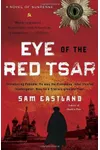
- Eye of the Red Tsar (2010)
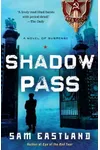
- The Red Coffin (UK) / Shadow Pass (US) (2011)
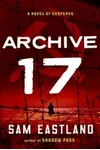
- Siberian Red (UK) / Archive 17 (US) (2012)
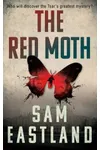
- The Red Moth (2013)
- The Beast in the Red Forest (2013)
- Red Icon (2015)
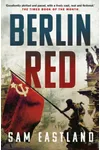
- Berlin Red (2016)
Why You Should Start at the Beginning
While each book features a self-contained mystery or mission, the series has a strong, overarching character arc. We first meet Pekkala as a broken man who has spent a decade in a brutal Siberian gulag. Over the course of the novels, he is slowly reintegrated into a paranoid Soviet society, builds a complex partnership with the young investigator Major Kirov, and navigates his own traumatic memories of the Romanov dynasty. Starting with Eye of the Red Tsar is essential to understanding the emotional weight, the shifting political alliances, and the fragile trust Pekkala has to build with the very regime that imprisoned him.
The Timeline of the Series: Chronological vs. Publication
The main timeline of the series progresses linearly from 1929 to 1945. However, the narrative is enriched by frequent flashbacks to the pre-revolutionary era. Before the fall of the Romanovs, Pekkala was the personal investigator for Tsar Nicholas II—known and feared as the "Emerald Eye." These flashbacks provide critical backstory, explaining how Pekkala earned his legendary status, his interactions with the imperial family, and the tragic events that led to his exile in Siberia.
Because these flashbacks are woven throughout all seven books rather than collected in a single prequel, sticking to the publication order remains the best way to experience the narrative. The chronological progression of the main timeline is as follows:
- Eye of the Red Tsar is set in 1929. Pekkala is pulled from the Borodok gulag by Stalin to investigate the mystery of the Romanov executions.
- The Red Coffin / Shadow Pass moves the timeline forward to the late 1930s, exploring the paranoid atmosphere of the Soviet military build-up just before World War II.
- Siberian Red / Archive 17 takes place in September 1939, right at the outbreak of World War II, as Stalin searches for the Tsar's lost gold.
- The Red Moth and The Beast in the Red Forest are set during the brutal German invasion of the Soviet Union (1941 onwards).
- Red Icon takes place in 1944 as the Red Army begins driving the German forces back.
- Berlin Red serves as the series finale, taking place in April 1945 during the chaotic final days of World War II in Europe as the Red Army closes in on Berlin.
Detailed Book Breakdown
1. Eye of the Red Tsar (2010)
The series begins with Pekkala living as an anonymous prisoner in Siberia. Joseph Stalin, facing political instability and rumors of a surviving Romanov heir, sends for the former Tsar's detective to locate the royal family's remains and recover their hidden treasure. Pekkala must decide if he can work for the man who destroyed the world he once protected.
2. The Red Coffin / Shadow Pass (2011)
Set against the backdrop of pre-WWII tension, Pekkala is sent to investigate the murder of the lead designer of the T-34 tank. When a prototype of the revolutionary tank goes missing, Pekkala must track down the saboteurs before the weapon falls into foreign hands, all while dealing with the suspicion of the Red Army high command.
3. Siberian Red / Archive 17 (2012)
Stalin becomes obsessed with finding the missing gold of the Romanovs to fund the impending war effort. The key to the treasure lies with a prisoner in the Borodok Gulag—the very prison where Pekkala was once kept. To extract the secret, Pekkala must go back undercover as a convict, returning to the nightmare of his past captivity.
4. The Red Moth (2013)
As the Nazi invasion of the Soviet Union begins, a German plane is shot down carrying a painting of a red moth. Stalin senses a hidden conspiracy and tasks Pekkala with uncovering its meaning. The investigation leads Pekkala behind enemy lines in a race against Nazi art thieves to locate the legendary Amber Room.
5. The Beast in the Red Forest (2013)
After a mission goes wrong, Pekkala is presumed dead. Refusing to accept that his best investigator is gone, Stalin sends Major Kirov to find him. Kirov's search leads him deep into the forests of Ukraine, where partisan forces are fighting a brutal guerrilla war, and rumors swirl of a monstrous creature stalking the woods.
6. Red Icon (2015)
In 1944, as the Soviet army advances, a priceless religious icon called "The Shepherd" is discovered in a bombed-out church. Pekkala is tasked with tracking down the survivors of the Skoptsy, a radical religious sect thought to have been eradicated by the Bolsheviks, who are determined to reclaim the icon at all costs.
7. Berlin Red (2016)
The final book in the series takes Pekkala into the war-torn streets of Berlin in April 1945. His mission is to secure "Diamond Stream," a secret guidance system for V-2 rockets, before the Western Allies can reach it. The mission becomes deeply personal when Pekkala discovers that a British operative working on the same target is someone from his past.
Spin-Offs and Standalones: What Else Did Sam Eastland Write?
There are no direct spin-offs or companion stories featuring Inspector Pekkala. However, writing under the same Sam Eastland pseudonym, Paul Watkins published a standalone thriller titled The Elegant Lie (2019). Set in post-war Cologne in 1949, it follows Nathan Carter, a disgraced American military officer recruited by the newly formed CIA to infiltrate the city's black market. While it features a different protagonist and setting, fans of the Pekkala series will recognize Eastland's signature blend of historical detail and high-stakes espionage.
For those interested in the author's broader work, Paul Watkins has published numerous acclaimed novels under his own name, including Night Over Day Over Night and The Forger, which focus on the human impact of wartime conflicts.
What to Know Before You Start
The Inspector Pekkala series is highly praised for its atmosphere and attention to historical detail. It offers a fascinating look at the internal conflicts of Soviet citizens during Stalin's reign. Readers who enjoy Martin Cruz Smith's Arkady Renko series (beginning with Gorky Park) or Tom Rob Smith's Child 44 will find a similar tone of dark suspense and historical intrigue. While the books are fiction, Sam Eastland draws heavily on real events, military history, and the geography of the Soviet Union, creating a vivid, bleak, and immersive reading experience.