


The Recommended Reading Path for Inspector Ramsay
For the best experience, readers should follow the series in its original publication order. Detective Inspector Stephen Ramsay undergoes significant personal and professional evolution across the six books. Reading them sequentially allows you to witness his growth from a somewhat detached, quick-to-judge investigator into a more empathetic and mature detective, while also tracking his changing relationships within the small communities of Northumberland.
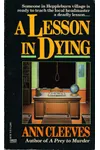
1. A Lesson in Dying (1990)
The series opens in the quiet pit village of Heppleburn. Harold Medburn, the deeply disliked local headmaster, is found murdered on Halloween night. Inspector Ramsay initially targets the headmaster's wife, Kitty, leading to friction with local residents. However, school caretaker Jack Robson and his daughter Patty begin their own inquiries to protect the family, exposing a web of blackmail, adultery, and long-buried village grudges that Ramsay must untangle.
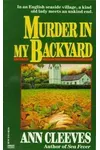
2. Murder in My Backyard (1991)
After deciding to settle down by buying a cottage in Heppleburn, Ramsay is called to investigate the murder of Alice Parry. Found dead in her own backyard on St. David's Eve, Alice was seemingly beloved by everyone in the community. However, as Ramsay digs beneath the surface, he discovers that her well-meaning interference in the lives of her neighbors and nephews generated plenty of hidden resentment.
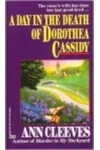
3. A Day in the Death of Dorothea Cassidy (1992)
Dorothea Cassidy, the energetic wife of the local vicar in Otterbridge, is known for her tireless charitable work. When she is found strangled on a Thursday—a day she notoriously kept free for her own private errands—Ramsay is tasked with piecing together her final hours. He soon discovers that Dorothea's altruistic facade hid a controlling personality and a list of people who might want her dead.
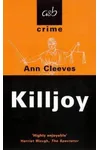
4. Killjoy (1993)
Set during the rehearsals for a youth theatre production in the town of Hallowgate, the play is thrown into chaos when the teenage lead actress, Gabriella Paston, goes missing. Her body is subsequently discovered in the boot of the director’s car. Ramsay’s investigation forces him to navigate the local youth culture, theatrical egos, and a wave of recent joyriding incidents on the nearby Starling Farm Estate.
5. The Healers (1995)
When reclusive farmer Ernie Bowles is found strangled, Ramsay is initially stumped. The mystery deepens when another suspicious death occurs under similar circumstances. The only common link between the victims appears to be the Mittingford Alternative Therapy Centre, prompting Ramsay to infiltrate the local healing community to determine if one of the practitioners has a darker agenda.
6. The Baby Snatcher (1997)
The final mystery begins when fifteen-year-old Marilyn Howe arrives at Ramsay’s door, terrified by her mother Kathleen’s bizarre behavior. Though the initial investigation yields few answers, Ramsay is drawn back to the isolated coastal community known as the "Headland" months later when Kathleen goes missing and a woman's body washes ashore. Ramsay must delve into the insular, complex family dynamics of the coastal settlement to find the truth.
Publication Order vs. Chronological Order
Unlike some long-running crime series that feature prequels or time-skips, the Inspector Ramsay books were written and published in chronological order. There are no companion short stories or chronological deviations to worry about. The timeline progresses naturally from 1990 to 1997, meaning the publication order and the chronological order are identical. Sticking to the release order is the easiest and most logical way to read the series.
What to Know Before You Start
Written in the 1990s, the Inspector Ramsay series serves as an excellent time capsule of pre-digital police procedurals. Ramsay and his assistant, Detective Sergeant Hunter, rely entirely on physical evidence, shoe-leather detective work, and psychological interrogation rather than mobile phones, DNA databases, or modern surveillance. This gives the books a classic, slightly nostalgic "cozy procedural" feel.
Crucially, the series showcases Cleeves' early development of setting-as-a-character. The windswept moors, coastal villages, and tight-knit pit communities of Northumberland are the exact same landscapes that would later host her famous Vera Stanhope series. While Ramsay is a very different character from Vera—quieter, more traditional, and initially more aloof—fans of Cleeves' later books will easily recognize her signature atmospheric prose and deep interest in small-town dynamics.
Practical Reader Guidance and Standalone Value
While the overall character arc of Stephen Ramsay is best appreciated by starting with A Lesson in Dying, each novel functions perfectly well as a standalone murder mystery. Cleeves provides enough context in each installment to bring new readers up to speed on Ramsay's life, his move to Heppleburn, and his professional standing. However, because his choice of cottage and integration into the local village in book two are direct results of the events in book one, starting at the beginning is highly recommended. The series has no direct spin-offs or co-authored additions, making it a straightforward, satisfying six-book journey.