

The Recommended Reading Order for Inspector Salgado
When diving into the dark, atmospheric world of Inspector Héctor Salgado, there is only one true path forward: publication order. Written by Spanish author and translator Toni Hill (sometimes credited as Antonio Hill), this celebrated crime fiction trilogy functions as a continuous, deeply serialized narrative. The personal struggles, career downfalls, and long-term investigation mysteries of the main characters carry over directly from one book to the next.
Here is the recommended order to read the Inspector Salgado series:
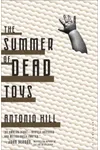
- The Summer of Dead Toys (2011) – Original Spanish title: El verano de los juguetes muertos
- The Good Suicides (2012) – Original Spanish title: Los buenos suicidas
- Los amantes de Hiroshima (2014) – Untranslated in English; direct translation: The Lovers of Hiroshima
If you are an English-only reader, you will encounter a significant caveat: while the first two novels were translated into English by Lulu Norman and published to critical acclaim, the third and final installment, Los amantes de Hiroshima, remains untranslated. In fan circles and international database discussions, it is often referred to under the literal English translation of The Lovers of Hiroshima, but no official English edition currently exists.
The Inspector Salgado Books in Detail
1. The Summer of Dead Toys (2011)
The series begins with The Summer of Dead Toys, which introduces readers to Inspector Héctor Salgado. Salgado is an Argentine-born detective working for the Barcelona police department. He is returning from a forced leave of absence after a violent confrontation with a suspect involved in a human trafficking ring. His superiors want to keep him out of trouble, so they assign him what seems like a simple, low-profile case: the death of a young man from a wealthy family who fell from a balcony during a humid Barcelona summer.
Salgado quickly realizes that the fall was no accident. As he digs deeper, he finds himself navigating the dark, decadent secrets of Barcelona's high society, battling corruption, and facing his own unresolved personal trauma. This debut novel establishes the gritty tone of the series, drawing comparison to classic Nordic noir while retaining a distinct Mediterranean warmth.
2. The Good Suicides (2012)
Set a few months after the dramatic events of the first book, The Good Suicides raises the stakes. Salgado is called to investigate a series of bizarre and chilling suicides among senior executives at Alemany Cosmetics, a prominent local company. Each victim received an anonymous email before their death, containing a disturbing photograph of dogs hung from a tree with the caption "Never Forget."
While Salgado is buried in the corporate web of Alemany Cosmetics, his colleague Leire Castro is on maternity leave. Bored and restless, Leire begins an unauthorized, private investigation of her own. She is searching for Ruth Valldaura, Salgado's ex-wife, who mysteriously vanished at the end of the first book. The dual storylines weave together seamlessly, escalating the tension and ensuring that the personal lives of the detectives remain just as crucial as the central mystery.
3. Los amantes de Hiroshima (2014)
The trilogy reaches its climax in Los amantes de Hiroshima. Set against the backdrop of May 2011, during a period of intense social unrest and youth-led anti-corruption protests in Spain, the story begins with a grisly discovery. In an abandoned house near the Barcelona airport, police find the buried bodies of two young lovers, embraced in a shroud of flowers, alongside a large sum of cash.
The bodies belong to a couple who vanished seven years prior. The original investigation ended in a questionable, high-profile conviction that Salgado and Leire Castro must now re-examine. As they work to solve this cold case, the long-running mystery surrounding Salgado's missing ex-wife, Ruth, finally comes to a head. It is a complex, emotionally charged finale that ties up all the loose threads introduced throughout the trilogy.
Chronological vs. Publication Order Caveats
Because the chronological timeline of the series aligns perfectly with the publication dates, there is no need to shuffle the books. However, readers should be prepared for the major narrative continuity. You cannot read these books out of order without spoiling major plot points. The disappearance of Ruth at the end of The Summer of Dead Toys is the primary driving force behind Leire's subplot in The Good Suicides, which in turn leads directly to the resolution in Los amantes de Hiroshima. Reading the second or third book first will completely ruin the suspense of the preceding mysteries.
Practical Reading Guidance for Newcomers
Where is the best starting point? You must start with The Summer of Dead Toys. The character development of Héctor Salgado, his relationship with his colleagues, and the lingering shadow of his past case are essential for understanding his motivations in later novels.
Can these books be read as standalones? The individual murder mysteries in the first two books are resolved by their respective endings. However, the overarching character arcs and personal mysteries are highly serialized. We strongly advise against treating these as standalone crime fiction novels. If you jump straight into The Good Suicides, you will miss crucial context regarding Salgado's professional disgrace and the emotional wreckage of his family life.
How to handle the untranslated third book: For English readers, the lack of an official translation for Los amantes de Hiroshima is frustrating, as it contains the definitive wrap-up of Héctor Salgado's personal story. If you read Spanish, Catalan, or other European languages (such as French, where the translation Les Amants de Hiroshima is available), we highly recommend picking up a translated copy to complete the experience.
What to Know Before You Start
Toni Hill brings a unique background to his crime writing. Before publishing his debut novel, he worked for over a decade as a literary translator, translating works by prominent English-language authors such as Jonathan Safran Foer, A.L. Kennedy, and Jane Austen into Spanish. This translation background, combined with his education in psychology, gives his prose a highly polished, analytical depth.
The setting of Barcelona is not merely a backdrop in these novels; it functions as a primary character. Hill contrasts the sunny, tourist-friendly image of the city with its humid, oppressive summers, sharp class divisions, and undercurrents of corporate and political corruption. The series occupies a subgenre often called Mediterranean noir, which blends the meticulous plotting of police procedurals with rich social commentary and a deep sense of place.