
The Recommended Reading Order for Inspector Sejer
When diving into the haunting landscapes of Karin Fossum’s psychological crime fiction, the best way to experience the series is by following the original Norwegian publication order. While each mystery is technically self-contained and solves a specific case, Konrad Sejer’s personal life, his aging process, his relationship with his beloved dog Kollberg, and his interactions with his junior colleague Jakob Skarre develop sequentially across the books. Reading the books out of order can lead to confusing jumps in Sejer's personal timeline.
Due to historical translation delays and publishers releasing books out of sequence in English markets, tracking the series can sometimes be tricky. Below is the definitive chronological sequence based on the original Norwegian release years, which represents the optimal reading path.
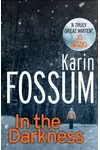
1. In the Darkness (Norwegian: Evas øye, 1995 / English Translation: 2012)
Also published under the title Eva's Eye, this is the book that started it all. The story follows Eva Magnus, a struggling artist who accidentally witnesses a murder. Inspector Sejer is brought in to solve the crime, establishing his trademark quiet, respectful, and methodical approach to interrogation. Although it was the first book written, English readers did not get to read it until much later in the series' translation history.
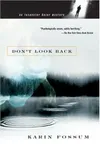
2. Don't Look Back (Norwegian: Se deg ikke tilbake!, 1996 / English Translation: 2002)
This book served as the introduction to Inspector Sejer for most English-speaking readers. The case centers on the murder of a teenage girl named Annie Holland, whose body is found by a serene Norwegian lake. This entry won the prestigious Glass Key Award for best Nordic crime novel and highlights Sejer’s unique ability to look past the sensational aspects of a crime to understand the human drama beneath.
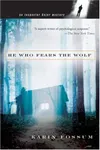
3. He Who Fears the Wolf (Norwegian: Den som frykter ulven, 1997 / English Translation: 2003)
An elderly woman is brutally killed in her isolated cottage, and suspicion immediately falls on Errki Johansen, an escaped psychiatric patient. When Errki is taken hostage during a bank robbery by a desperate young man, Sejer must navigate a complex hostage situation while parsing the true motives behind the initial murder.
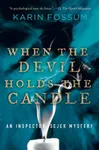
4. When the Devil Holds the Candle (Norwegian: Djevelen holder lyset, 1998 / English Translation: 2004)
This tense installment focuses heavily on the perspective of two teenage boys who engage in petty crime, only to target the wrong house. When one of the boys goes missing, Sejer is tasked with finding him, leading to a chilling exploration of isolation and psychological distress. It stands out for focusing more on the perpetrator's perspective than typical procedural novels.
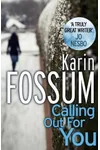
5. Calling Out for You (Norwegian: Elskede Poona, 2000 / English Translation: 2005)
Also published under the title The Indian Bride, this is one of Fossum's most emotionally devastating works. Gunder Jomann, a quiet middle-aged man, travels to India and finds love with a woman named Poona. When Poona arrives in Norway, she is brutally murdered before they can reunite. Sejer must investigate the dark undercurrents of xenophobia and secrets in a tight-knit rural community.
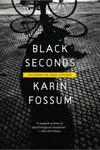
6. Black Seconds (Norwegian: Svarte sekunder, 2002 / English Translation: 2007)
A nine-year-old girl named Ida Joner rides her bicycle to a local shop and completely vanishes. The investigation tests Sejer's patience and empathy, digging deep into family grief, secrets, and the fragile nature of quiet suburban neighborhoods. The book deals heavily with the ripple effects of a child's disappearance on a small community.
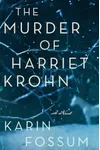
7. The Murder of Harriet Krohn (Norwegian: Drapet på Harriet Krohn, 2004 / English Translation: 2008)
In a fascinating structural shift, this novel is narrated by the killer, Charlo Torp, a man desperate to pay off his gambling debts. The book follows his planning and execution of a robbery that goes horribly wrong. Inspector Sejer appears as a persistent shadow, slowly closing in on Charlo through patient, psychological deduction.
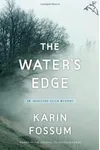
8. The Water's Edge (Norwegian: Den som elsker noe annet, 2007 / English Translation: 2009)
While walking in the woods, a couple discovers the body of a young boy. Soon after, another boy is reported missing. Sejer and Skarre must navigate a highly sensitive investigation involving delicate family dynamics and community outrage. The story touches on complex moral dilemmas and the limits of justice.
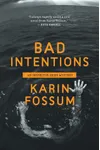
9. Bad Intentions (Norwegian: Den onde vilje, 2008 / English Translation: 2010)
Three young men go on a weekend trip to a remote cabin, but only two return. They claim their friend committed suicide in the lake, but Sejer senses that guilt is eating away at the survivors. The novel focuses heavily on the psychological tension between the two remaining friends as Sejer slowly unravels their stories.
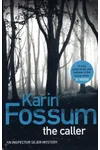
10. The Caller (Norwegian: Varsleren, 2009 / English Translation: 2011)
A series of bizarre, sadistic pranks terrorizes a small town: a baby is covered in animal blood in its stroller, and an elderly woman is tricked into believing her house is on fire. When the caller's actions escalate to actual violence, Sejer must track down a deeply disturbed culprit before the community takes the law into its own hands.
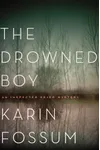
11. The Drowned Boy (Norwegian: Carmen Zita og døden, 2013 / English Translation: 2015)
A sixteen-month-old toddler named Tommy, who has Down syndrome, drowns in a shallow pond while under his mother's care. What initially looks like a tragic accident starts to raise questions for Sejer. The investigation focuses on the intense psychological pressure of parenthood and the cold realities of grief.
12. Hell Fire (Norwegian: Helvetesilden, 2014 / English Translation: 2016)
A mother and her young son are found brutally murdered in a caravan on a remote farm. The investigation runs parallel to the stories of two single mothers and their adult sons, weaving a intricate tapestry of domestic despair and hidden family histories. Sejer must pierce through decades of secrets to find the connection.
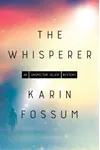
13. The Whisperer (Norwegian: Hviskeren, 2016 / English Translation: 2018)
This novel centers on an extended interrogation between Inspector Sejer and Ragna Riegel, a quiet, isolated woman who works in a design shop and has committed a terrible crime. Through their conversations, the tragic events leading to her crime are slowly revealed, showcasing Fossum’s mastery of quiet, psychological character study.
Understanding the Translation Discrepancies
If you have ever picked up the Inspector Sejer series and felt like you missed a major event in the detective's life, you are not alone. For many years, publishers in the US and UK released Karin Fossum's translations completely out of order. For example, In the Darkness (the first book) was not translated into English until 2012, long after readers had already read later books like Black Seconds (2007 in English) and The Caller (2011 in English). Reading by English release dates causes Sejer's personal life—especially his grief over his deceased wife, his relationship with his daughter and grandchild, and his aging dog—to jump back and forth in time. Following the original publication order fixes this timeline confusion.
Where Should You Start?
For the complete experience, you should start with In the Darkness. However, because the books are largely self-contained police procedurals, you can easily start with two of the most critically acclaimed entries in the series: Don't Look Back or Calling Out for You (also known as The Indian Bride). Both represent Fossum at the height of her powers, blending masterfully written mysteries with profound observations on human grief and community dynamics.
Spin-Offs and Standalones to Keep in Mind
Karin Fossum is known for keeping a tight focus on her characters, and the Inspector Sejer series does not have any direct spin-offs or co-authored entries. However, Fossum has written several standalone psychological thrillers that readers often confuse with the Sejer series because they share the same dark, contemplative Norwegian setting. Books like Broken (2006) and I Can See in the Dark (2011) are completely independent stories that do not feature Konrad Sejer and can be read at any point. Additionally, Fossum later launched a new crime series featuring detective Eddie Feø, which is separate from Sejer's timeline.