
The Recommended Reading Path: Where Should You Start?
If you are picking up John Lawton's Inspector Troy series for the first time, you face a classic readers' dilemma: should you follow the order in which the books were published, or should you read them in chronological order? The series spans from the pre-war tension of 1938 to the spy scandals of 1963, yet Lawton wrote these books out of order, jumping back and forth across the mid-20th century to fill in different eras of Frederick Troy's life.
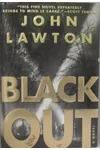
Our recommendation: Start with the publication order, beginning with Black Out.
Although Black Out takes place in 1944 (midway through the chronological timeline), it serves as the perfect introduction to Frederick Troy's character, his complicated family background, and the atmospheric style that defines the series. Reading in publication order allows you to experience the character development as Lawton originally intended, with later prequel novels like Second Violin and Riptide providing satisfying origin context rather than front-loading the history. However, for history buffs who want a linear progression of World War II and the Cold War, a chronological read is highly rewarding.
Publication Order of the Inspector Troy Books
Following the publication order lets you experience Lawton's evolution as a writer and the gradual unveiling of Troy’s past. Be aware that some titles differ between the UK and US editions. Here is the complete list of Inspector Troy novels by publication date, including the latest additions to the series:
- Black Out (1995) – The novel that started it all. Set in the London Blitz of 1944, a dismembered corpse leads Sergeant Troy of Scotland Yard into a murky web of military intelligence and stateless refugees.
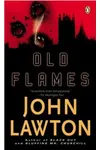
- Old Flames (1996) – Jumping forward to 1956, Chief Inspector Troy is assigned to guard Soviet leader Nikita Khrushchev during his historic visit to London, only to find himself embroiled in underwater assassinations and Cold War secrets.
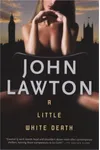
- A Little White Death (1998) – Set in 1963, this novel channels the scandalous atmosphere of the Profumo affair. Troy investigates a high-profile suicide that exposes corruption and blackmail among Britain's ruling class.
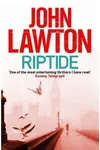
- Riptide / Bluffing Mr. Churchill (2001) – Set in 1941, Troy must navigate German intelligence plots and protect Prime Minister Winston Churchill from internal threats. (Published as Bluffing Mr. Churchill in the US).
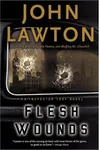
- Flesh Wounds / Blue Rondo (2005) – Set in 1959, this entry plunges into London's changing gangland landscape, jazz clubs, and the rise of Soho. (Published as Blue Rondo in the US).
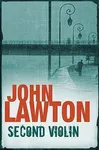
- Second Violin (2007) – Set in 1938. As Europe stands on the brink of World War II, this prequel explores the internment of German-Jewish refugees in Britain and the early days of Troy's career.
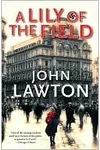
- A Lily of the Field (2010) – Spanning 1934 to 1948, this ambitious book follows a young Viennese cellist whose path repeatedly intersects with Troy's post-war espionage cases.
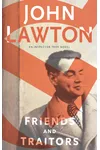
- Friends and Traitors (2017) – Set in 1958, Troy investigates the murder of a high-society figure while dealing with the fallout of the infamous Cambridge Spy Ring, specifically the defection of Guy Burgess.
- Smoke and Embers (2025) – The latest addition to the series. Set in 1950, Chief Inspector Troy investigates a racketeer's associates and uncovers a web of identity theft and Cold War duplicity stretching back to war-torn Poland and Germany.
Chronological Order: Navigating the Historical Timeline
If you prefer to read the series as a continuous historical saga, the chronological order organizes the books by the primary years in which their plots are set. This path lets you watch Frederick Troy grow from a green constable in pre-war London to a battle-hardened Chief Inspector at the height of the Cold War. The chronological reading order is:
- Second Violin (2007) – Set in 1938 (the run-up to World War II)
- Riptide / Bluffing Mr. Churchill (2001) – Set in 1941 (the Blitz and Churchill's leadership)
- Black Out (1995) – Set in 1944 (the latter half of WWII and its immediate aftermath)
- A Lily of the Field (2010) – Spanning 1934 to 1948 (focusing heavily on post-war reconstruction and the 1948 Berlin Airlift)
- Smoke and Embers (2025) – Set in 1950 (early Cold War tension and post-war displacement)
- Old Flames (1996) – Set in 1956 (Khrushchev's visit and the Suez Crisis era)
- Friends and Traitors (2017) – Set in 1958 (the Cambridge Spy Ring fallout)
- Flesh Wounds / Blue Rondo (2005) – Set in 1959 (the dawn of the 1960s cultural shift in Soho)
- A Little White Death (1998) – Set in 1963 (the height of the Cold War spy scandals)
Chronological Note: Because A Lily of the Field covers a broad time frame starting in the 1930s, some readers place it earlier. However, because its narrative climax and resolution tie heavily into the post-war events of 1948, it is best read after Black Out and before Smoke and Embers.
The Joe Wilderness Connection: The Shared Universe
John Lawton fans know that the Inspector Troy series is only one half of a larger, interconnected fictional universe. Lawton also writes the Joe Wilderness (Wilderness) series, which follows Joe Holderness, a rogue spy operating in post-war Berlin and London. While the Wilderness books can be read on their own, they feature frequent crossovers, cameos, and deep connections to the Troy family.
The Joe Wilderness series consists of:
- Then We Take Berlin (2013)
- The Unfortunate Englishman (2016)
- Hammer to Fall (2020)
- Moscow Exile (2023)
The ultimate crossover occurs in Moscow Exile (2023). While officially the fourth book in the Joe Wilderness series, it features a massive role for Chief Inspector Frederick Troy and his family. The narrative acts as a bridge that ties the espionage plots of both series together. If you plan to read all of Lawton's thrillers, it is highly recommended to finish the main Inspector Troy novels up to Friends and Traitors before diving into the Joe Wilderness series, ensuring you capture all the references and character links in Moscow Exile.
What to Know Before You Start
Before you begin your journey with Inspector Troy, it helps to understand the unique flavor of John Lawton’s writing. Unlike traditional police procedurals, the Troy books are deeply atmospheric historical novels that happen to feature crime and espionage. Lawton’s prose is literary, detailed, and dark, drawing comparisons to John le Carré, Len Deighton, and Alan Furst.
Frederick Troy himself is a fascinating protagonist. As the son of a wealthy, aristocratic Russian émigré who made his fortune in British publishing, Troy is a man caught between two worlds. He is independently wealthy, fluent in Russian, and possesses elite social connections, yet he chooses to work as a detective in the gritty streets of Scotland Yard. This outsider status gives him a unique, cynical perspective on both the British upper classes and the sordid underworld of espionage. While Columbia Pictures optioned the film rights to the series, no adaptation has made it to the screen yet, leaving the richly described world of mid-century London entirely to the reader's imagination.