
![Münsters Fall [German]](https://images.booksonboard.com/books/163839/thumbnail/Muensters-Fall-German.webp)

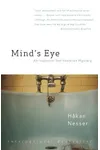

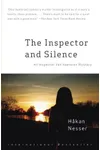





The Recommended Reading Order: Original Chronology
Håkan Nesser’s internationally acclaimed Inspector Van Veeteren series is a ten-book project originally published in Sweden between 1993 and 2003. To fully appreciate the character development, the evolving dynamics of the Maardam police force, and Van Veeteren's transition from Detective Chief Inspector to retired antique bookshop owner, you should read the series in its original chronological order.
However, English-speaking readers face a unique hurdle: the books were translated and published in a highly scrambled order. For instance, the second book, Borkmann's Point, was translated first in 2006, while the actual first book, The Mind's Eye, was not translated until 2008. Reading according to the original Swedish chronology ensures you experience the character arcs and overarching subplots exactly as Nesser intended.
Chronological (Original Swedish) Order
- 1. The Mind's Eye (Original: Det grovmaskiga nätet, Swedish: 1993 / English: 2008)
- 2. Borkmann's Point (Original: Borkmanns punkt, Swedish: 1994 / English: 2006)
- 3. The Return (Original: Återkomsten, Swedish: 1995 / English: 2007)
- 4. Woman with Birthmark (Original: Kvinna med födelsemärke, Swedish: 1996 / English: 2009)
- 5. The Inspector and Silence (Original: Kommissarien och tystnaden, Swedish: 1997 / English: 2010)
- 6. Münster's Case / The Unlucky Lottery (Original: Münsters fall, Swedish/German: 1998 / English: 2011/2012)
- 7. Hour of the Wolf (Original: Carambole, Swedish: 1999 / English: 2012)
- 8. The Weeping Girl (Original: Ewa Morenos fall, Swedish: 2000 / English: 2013)
- 9. The Strangler's Honeymoon (Original: Svalan, katten, rosen, döden, Swedish: 2001 / English: 2013)
- 10. The G File (Original: Fallet G, Swedish: 2003 / English: 2012)
The English Publication Order
If you prefer to read the books in the order they were introduced to the English-speaking market, use the publication schedule below. Be warned that this order jumps back and forth in Van Veeteren's life, which can confuse readers who expect a linear narrative progression.
English Release Schedule
- Borkmann's Point (2006)
- The Return (2007)
- The Mind's Eye (2008)
- Woman with Birthmark (2009)
- The Inspector and Silence (2010)
- The Unlucky Lottery / Munster's Case (2011/2012)
- Hour of the Wolf (2012)
- The G File (2012)
- The Weeping Girl (2013)
- The Strangler's Honeymoon (2013)
Understanding the Translation Discrepancies
Several quirks exist in the publication history of the Van Veeteren books that can confuse collectors and casual readers alike:
The Münster's Case Confusion
The sixth novel in the series, Münsters fall, was published in Sweden in 1998. The German translation, titled Münsters Fall, was released the same year and became an instant bestseller, helping establish Nesser’s massive following in Germany. When it finally arrived in English, it was published under two different titles: UK editions generally styled it as The Unlucky Lottery in 2011, whereas US editions released it as Munster's Case in 2012.
The Shuffled Finale
The tenth book in the Swedish order, Fallet G (published in 2003), was translated into English as The G File and published in 2012. However, the eighth and ninth books in the Swedish chronology (Ewa Morenos fall and Svalan, katten, rosen, döden) were not published in English until 2013 as The Weeping Girl and The Strangler's Honeymoon. Because of this, the English publication order places the grand finale before two of its preceding stories.
Practical Reader Advice
Where Should You Start?
The best starting point is undoubtedly The Mind's Eye. Starting here introduces you to a younger, active Inspector Van Veeteren, establishing his sour temperament, love for dark beer and chess, and his philosophical worldview. It also sets up the background of the Maardam police squad, which becomes crucial as the series progresses.
If you cannot find a copy of The Mind's Eye, starting with Borkmann's Point is a viable alternative. This book was chosen as the English debut for a reason: it is a tightly written, award-winning locked-room-style murder mystery that requires little prior knowledge of the characters.
Can the Books Be Read as Standalones?
Yes. Each novel features a self-contained investigation that is resolved by the end of the book. Håkan Nesser is less interested in police procedures and more focused on the psychological and philosophical motives behind crimes. However, the overarching personal lives of the detectives—particularly Van Veeteren's retirement and his purchase of an antique bookshop—evolve chronologically, meaning you will spoil major life events if you read them wildly out of order.
The Subseries Shift
As the series progresses, Van Veeteren steps away from active police duty, allowing his colleagues to take center stage. This creates mini-subseries within the main chronology:
- Münster's Focus: Inspector Münster, Van Veeteren's reliable right-hand man, takes the lead on cases like Münster's Case / The Unlucky Lottery.
- Ewa Moreno's Focus: Inspector Ewa Moreno takes the lead in The Weeping Girl, investigating the disappearance of a young woman connected to a religious sect.
Van Veeteren remains a background consultant in these later books, often reading case files and offering cryptic, brilliant insights from his comfortable chair in the bookshop, before returning to active duty for the final book, The G File.
The 2018 Crossover: De vänsterhäntas förening
In 2018, Håkan Nesser surprised fans by publishing De vänsterhäntas förening (literally translated as The Left-Handed League or The Left-Handers' Association). This book is a crossover event that brings Inspector Van Veeteren out of retirement to work alongside Inspector Gunnar Barbarotti—the protagonist of Nesser's other major crime series. While it acts as a retrospective addition to the Van Veeteren universe, it remains untranslated in English as of 2026, though it is highly regarded by Swedish-speaking fans as a fitting celebration of both detectives.
What to Know Before You Start
The Van Veeteren series is famous for its unique setting. Unlike typical Nordic Noir set in recognizable Swedish towns, Nesser set the books in a fictional city called Maardam. Situated in an unspecified northern European country, Maardam features Dutch, Swedish, German, and Polish naming conventions. This deliberate ambiguity gives the series a surreal, placeless quality, highlighting the universal nature of the moral dilemmas Nesser explores. Expect a slower, deeply psychological pace filled with black humor, dry wit, and bleak, atmospheric landscapes.