


How to Read the Jack Laidlaw Series
When it comes to reading the Jack Laidlaw novels, readers generally choose between two simple paths: the Chronological Order (which begins with the 2021 prequel completed by Ian Rankin) or the Publication Order (which starts with the revolutionary 1977 debut). Because the series is compact, both routes offer a rewarding experience, though they spotlight different stages of Laidlaw’s character development and the series' real-world evolution.
Option 1: Chronological Reading Order (Recommended for Narrative Flow)
If you want to trace Jack Laidlaw’s career from his very first major case in the Glasgow police force, you should start with the prequel. This order lets you experience the timeline as Laidlaw himself lived it:
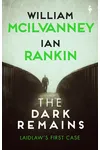
- The Dark Remains (2021) – Set in 1972, this prequel features a younger, newly promoted Laidlaw.
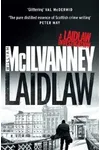
- Laidlaw (1977) – The original debut, introducing Laidlaw to the reading public.
- The Papers of Tony Veitch (1983) – A complex gangland mystery exploring Glasgow's underbelly.
- Strange Loyalties (1991) – A deeply personal, introspective final case for Laidlaw.
Option 2: Publication Reading Order (Recommended for Historical Context)
Reading the books in the order they were written allows you to appreciate how William McIlvanney pioneered the Tartan Noir genre in the late 1970s, and how Ian Rankin seamlessly picked up the baton decades later:
- Laidlaw (1977)
- The Papers of Tony Veitch (1983)
- Strange Loyalties (1991)
- The Dark Remains (2021)
The Jack Laidlaw Books: A Closer Look
1. The Dark Remains (2021)
Set in 1972, The Dark Remains serves as the chronological starting point of the series. When gangland lawyer Bobby March is found dead in a Glasgow hotel room, the city’s criminal underworld threatens to boil over into an all-out war. A younger Jack Laidlaw, not yet the legendary cynic of the later books but already showing his signature philosophical streak, is brought in to solve the case. This book was reconstructed and completed by Ian Rankin using William McIlvanney’s handwritten notes and unfinished manuscript, making it a unique bridge between two eras of Scottish crime fiction.
2. Laidlaw (1977)
The book that started it all. Laidlaw introduces us to an unconventional detective who keeps existential philosophy books in his desk drawer and prefers understanding criminals to simply locking them up. The plot revolves around the brutal murder of a young girl named Margaret Lawson. As Laidlaw tracks the killer, he finds himself in a race against the girl's grieving, vengeful father and local hoodlums who want their own brand of street justice. It won the CWA Silver Dagger and changed crime writing in Scotland forever.
3. The Papers of Tony Veitch (1983)
In this second installment, a dying vagrant leaves behind a cryptic message, leading Laidlaw into a web of gangland corruption, university students, and high-society secrets. The search for a missing student named Tony Veitch reveals the stark contrasts of Glasgow class warfare. McIlvanney uses this investigation to dissect the systemic divides of the city, earning him his second CWA Silver Dagger for this sharp, poetic novel.
4. Strange Loyalties (1991)
The most introspective and dark book in the trilogy, Strange Loyalties is a deeply personal case. Following the sudden death of his brother John in a car accident, Laidlaw embarks on an unofficial investigation to uncover the truth. Rather than focusing on a standard crime syndicate, Laidlaw must confront his own grief, guilt, and the complex networks of loyalty and betrayal that bind family and friends together. It won the Glasgow Herald’s People’s Prize and serves as a powerful conclusion to McIlvanney's solo work.
What to Know Before You Start
The Birth of Tartan Noir
Before Jack Laidlaw, Scottish crime fiction as we know it didn't exist. William McIlvanney was already an acclaimed literary writer who wanted to write a serious novel about the human condition using the mechanics of a detective story. The result was "Tartan Noir"—a term later coined by American author James Ellroy. The genre is characterized by gritty urban settings, a focus on social and political realities, existential themes, and a dry, dark humor.
A Tale of Two Authors
William McIlvanney passed away in 2015, leaving behind a wealth of notes and a partially written manuscript for a prequel novel. His widow, Gill McIlvanney, and his publisher Canongate approached Ian Rankin—the author of the Inspector Rebus series and one of McIlvanney's biggest admirers—to complete the book. Rankin carefully channeled McIlvanney's distinct, poetic prose style to deliver The Dark Remains in 2021, ensuring the Laidlaw legacy ended on a high note.
The Glaswegian Setting and Dialect
Glasgow is not just a backdrop in these novels; it is a living, breathing character. The prose is rich with authentic Glaswegian dialogue, slang, and cultural references of 1970s and 1980s Scotland. If you are new to Scottish writing, it may take a few pages to get used to the cadence and vocabulary, but it provides an unmatched atmosphere that generic detective novels cannot replicate.