

The Recommended Reading Order for The Jerusalem Chronicles
For the best reading experience, you should read the Jerusalem Chronicles in its standard publication order. Because the narrative progresses chronologically through the life, ministry, and ultimate sacrifice of Jesus of Nazareth, reading the books out of order will spoil the overarching emotional and spiritual arc of the characters.
Here is the recommended reading path:
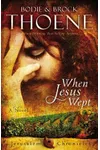
1. When Jesus Wept (2013)
The trilogy opens with When Jesus Wept, centering on the life of Lazarus of Bethany. Long before he becomes the man Jesus famously raises from the dead, Lazarus is portrayed as a wealthy vineyard owner who grapples with grief, love, and the complex political landscape of Roman-occupied Judea. The story explores his deep, personal friendship with Jesus, using the agricultural metaphor of the True Vine to illustrate spiritual truths. It sets a rich, emotional foundation for the series and introduces readers to the daily realities of first-century Jewish life.
2. Take This Cup (2014)
The second book, Take This Cup, shifts the focus toward Nehemiah, a young Jewish boy living in the distant land of Eden. Educated by his elderly teacher, Rabbi Kagba (one of the original Magi present at Jesus' birth), Nehemiah escapes a bandit attack and discovers an ancient silver chalice. According to local lore, this chalice has a sacred lineage passed down from Melchizedek to Abraham, and eventually to King Solomon. Guided by visions and dreams, Nehemiah embarks on a perilous journey to Jerusalem to deliver this cup to Jesus of Nazareth, intending for it to be used at the Last Supper. This installment beautifully blends prophecy, adventure, and the legendary history of the Holy Grail.
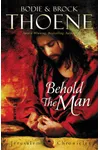
3. Behold the Man (2016)
The trilogy reaches its dramatic climax in Behold the Man, which focuses on the trial, crucifixion, and resurrection of Jesus. Uniquely, the story is told primarily through the eyes of three Roman figures stationed in Judea: the ambitious governor Pontius Pilate; his wife Claudia, who is desperate to find healing for their disabled son Philo; and Marcus Longinus, a centurion caught between his military duty to Rome and his growing conviction that Jesus is indeed the Son of God. As political intrigue and temple opposition reach a boiling point, these characters find their lives permanently altered by their encounters with Christ.
Publication Order vs. Chronological Order
Fortunately for readers, the publication order of the Jerusalem Chronicles aligns directly with the chronological progression of the Gospel events. The narrative begins prior to Jesus' public ministry in When Jesus Wept, moves through his active ministry and the preparation for the Last Supper in Take This Cup, and concludes with the Passion week, crucifixion, and resurrection in Behold the Man. There are no complicated flashbacks or temporal jumps that require rearranging the reading order, making it an easy and accessible series to dive into.
Spiritual Companions: Connecting to the A.D. Chronicles
While the Jerusalem Chronicles stands alone as a complete three-book series, Bodie and Brock Thoene are no strangers to writing about this era. If you finish the trilogy and want to remain in first-century Jerusalem, the authors' extensive 12-book series, the A.D. Chronicles (published between 2003 and 2011), serves as a perfect companion. Although the A.D. Chronicles is a separate narrative project with different main characters, it covers the same volatile historical setting and shares the Thoenes' signature blend of meticulous research, political intrigue, and spiritual depth.
What to Know Before You Start
Bodie and Brock Thoene are renowned in the Christian historical fiction genre for their immersive world-building. Brock's background as a historian and Bodie's experience as a journalist combine to create a setting that feels authentic, down to the details of ancient Jewish traditions, vineyard cultivation, and Roman military administration. However, readers should note that the series also incorporates traditional legends and creative liberties—such as tracing the history of the Holy Grail in Take This Cup—to weave a compelling narrative. The books are best enjoyed when appreciated as creative, faithful reimaginings of the Gospel accounts rather than strict historical texts.
Each book in the trilogy is relatively self-contained, focusing on a different central protagonist (Lazarus, Nehemiah, and the Roman household, respectively). However, because they all build toward the same culminating events in Jerusalem, you will get the most satisfaction by reading them sequentially as a unified trilogy.