
The Recommended Reading Order for Barsoom
To experience the rich history and wild imagination of Edgar Rice Burroughs' Barsoom (his fictionalized version of Mars), you should follow the original sequence in which the stories were written and serialized. Because the world-building is cumulative, the publication order and the chronological order are effectively identical.
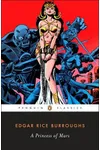
- A Princess of Mars (1912)
The book that started it all. Originally serialized in 1912 under the title Under the Moons of Mars, this novel introduces John Carter, a Civil War veteran who is mysteriously transported to the Red Planet. There, he discovers he has superhuman strength due to the lower gravity, encounters the fierce four-armed Green Martians, falls in love with the beautiful Red Martian princess Dejah Thoris, and earns the respect of the chieftain Tars Tarkas.
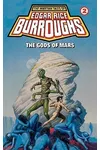
- The Gods of Mars (1913)
Following a decade-long exile back on Earth, John Carter manages to return to Barsoom, only to land in the Valley Dor—the Martian version of the afterlife. Here, he uncovers a massive, sinister conspiracy involving a false religion run by the Holy Therns and the First Born, who prey on those who seek spiritual salvation. Carter must fight to expose the fraud and rescue his family.
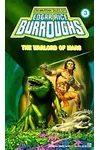
- The Warlord of Mars (1914)
This book concludes the initial trilogy. John Carter pursues the villainous kidnappers of Dejah Thoris to the northern polar regions of Mars, where the mysterious Yellow Martians live in domed cities. Carter unites the disparate races of Barsoom, overthrows the final bastions of the ancient false religion, and is declared the Warlord of Mars.
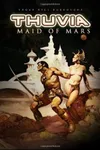
- Thuvia, Maid of Mars (1916)
The series shifts its focus to the next generation of heroes. This adventure stars Carthoris, the son of John Carter and Dejah Thoris, who possesses his father's Earth-born strength. Carthoris must clear his name of accusations of kidnapping and win the heart of Thuvia, the princess of Ptarth, amidst political schemes and prehistoric beasts.
- The Chessmen of Mars (1922)
This entry centers on John Carter's daughter, Tara of Helium. After being swept away by a terrible storm, she is captured in the isolated city of Manator, where the inhabitants play Jetan—a Martian version of chess—using living people in gladiatorial combat to the death. She must be rescued by Gahan, the clever prince of Gathol.
- The Mastermind of Mars (1927)
Burroughs introduces a new Earthman protagonist, Ulysses Paxton (renamed Vad Varo). After being mortally wounded in World War I, Paxton is transported to Barsoom and becomes the assistant to Ras Thavas, a brilliant but completely unethical surgeon who performs organ transplants and mind swaps for wealthy elderly Martians seeking youth.
- A Fighting Man of Mars (1930)
A standalone epic focusing on Hadron of Hastor, a young officer in Helium's navy. When the woman he loves is kidnapped by a mad inventor who has created invisibility technology and devastating disintegration rays, Hadron embarks on a dangerous rescue mission across the lesser-explored regions of Barsoom.
- Swords of Mars (1935)
John Carter returns as the primary protagonist. To destroy the powerful Assassins' Guild of Zodanga, Carter goes undercover and infiltrates their ranks. The adventure escalates dramatically when Carter is forced to board a experimental spaceship and travel to Thuria, the closest of Mars' two moons.
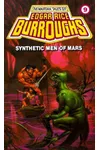
- Synthetic Men of Mars (1939)
The mad scientist Ras Thavas returns. Seeking to heal Dejah Thoris after a flyer crash, John Carter sends his loyal warrior Vor Daj to find the surgeon. However, they discover Ras Thavas has created a city populated by Hormads—loathsome, mindless synthetic humanoids that are beginning to multiply out of control and threaten the planet.
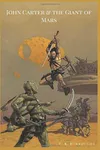
- John Carter and the Giant of Mars (1940)
A controversial novella aimed at younger readers. It pits John Carter against Pew Mogul, a synthetic brain inside a giant body who commands a massive, genetically engineered giant. While published under Burroughs' name, it is widely accepted to have been written primarily by his son, John Coleman Burroughs.
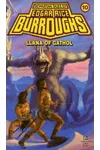
- Llana of Gathol (1941)
A collection of four interconnected novellas first serialized in 1941 (and later published as a book in 1948). The stories follow John Carter as he protects his adventurous granddaughter, Llana of Gathol, from various bizarre factions, including ancient frozen humans, invisible warriors, and hypnotic cultists.
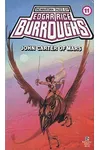
- John Carter of Mars (1941 / 1964)
This is the eleventh canonical volume, published posthumously in 1964. It is not an original novel but a compilation that binds together the novellas John Carter and the Giant of Mars and Skeleton Men of Jupiter to preserve them in book format.
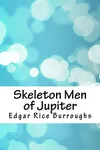
- Skeleton Men of Jupiter (1943)
The final Barsoom story written by Edgar Rice Burroughs. John Carter is kidnapped by the skeletal Morgors, who intend to invade Earth. He is taken to Jupiter, where he aligns with local rebels. Because Burroughs passed away before writing the planned sequels, this story ends on a permanent cliffhanger.
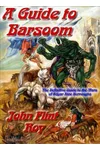
- A Guide to Barsoom (1976)
An official companion volume compiled by John Flint Roy. It functions as an alphabetical directory of the people, places, flora, fauna, technology, and customs of Barsoom, making it an invaluable resource for dedicated fans of the lore.
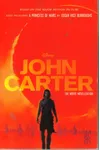
- John Carter: The Movie Novelization (2012)
Written by Stuart Moore, this is the official novelization of the 2012 Disney film. It adapts the cinematic version of the story, which combined elements of the first few books into a single modernized narrative.
Understanding the Barsoom Story Arcs
The Core John Carter Trilogy (Books 1–3)
The first three novels form a tight, continuous narrative arc. You should not attempt to read these out of order. They establish the mythology of Barsoom, the mechanics of John Carter's presence on Mars, and his relationship with Dejah Thoris. By the end of The Warlord of Mars, the main planetary conflicts are resolved, and Carter's status as a legend is secure.
The Family Expansion (Books 4–5 & 11)
As the series progressed, Burroughs began rotating the spotlight. Thuvia, Maid of Mars and The Chessmen of Mars explore the adventures of John Carter's children. Later, Llana of Gathol introduces his granddaughter. These books expand the geography and cultural details of Barsoom while keeping the core themes of chivalry and rescue alive.
The Standalone Experiments (Books 6–7 & 9)
Books like The Mastermind of Mars and A Fighting Man of Mars introduce new protagonists and focus heavily on sci-fi concepts (like brain transplants, cloning, invisibility, and death rays) rather than pure sword-and-planet romance. They can largely be read as standalones, though they are best enjoyed with the context of the first three books.
The Authorship Dispute: Giant of Mars
For decades, fans noticed a distinct shift in tone and style in the novella John Carter and the Giant of Mars. Historical research has confirmed that Edgar Rice Burroughs' son, John Coleman Burroughs, wrote the draft as a juvenile promotional story. While the elder Burroughs polished the text, the simplified plotting and uncharacteristic behavior of John Carter make it an outlier in the canon.
What to Know Before You Start
Burroughs' Barsoom is the foundation of modern space opera, directly influencing Star Wars, Flash Gordon, and Avatar. However, readers should prepare for the pulp magazine conventions of the early 20th century: episodic plotting, dramatic cliffhangers, florid romantic language, and a rigid code of honor. The publication years represent the original magazine appearances where the lore was first built, ensuring the cleanest progression of Burroughs' ideas.