









The Recommended Reading Order
The best way to experience the John Keller series is to follow the publication order of the main books. Because Keller ages, experiences career shifts, goes into retirement, relocates from New York to New Orleans, and even changes his identity, reading his story chronologically allows you to experience his character development. For the complete experience, you should insert the key transitional novellas between the main novels as listed below.
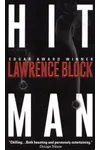
- Hit Man (1998) – The essential starting point, introducing Keller, his handler Dot, and his love for stamps.
- Hit List (2000) – The second major entry, transitioning into a more structured novel format.
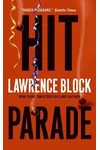
- Hit Parade (2006) – A collection of linked stories that builds Keller's nest egg.
- Hit and Run (2008) – A gripping novel where Keller is framed and must go on the run.
- Keller in Dallas (2009) – A crucial transitional bridge novella that sets up Keller's new life in New Orleans.
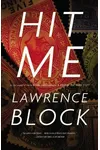
- Hit Me (2013) – The fifth novel, picking up after the events of Keller's retirement.
- Keller's Fedora (2016) – A standalone novella featuring Keller working as a private investigator in New Orleans.
A Breakdown of the John Keller Books
Hit Man (1998)
Lawrence Block introduced John Keller through episodic short stories originally published in magazines like Playboy. Compiled into this first volume, these interconnected stories establish the quirky formula: Keller is a cold-blooded yet highly introspective contract killer who lives in New York, works via his handler Dot in White Plains, and finds solace in stamp collecting to bring order to his chaotic life.
Hit List (2000)
In this second installment, the episodic nature shifts closer to a traditional novel. Keller discovers that someone is actively trying to eliminate him. As he travels across the country on his assignments, he must figure out who has put him on a hit list while continuing to obsess over non-U.S. stamps issued before 1940.
Hit Parade (2006)
Returning to a mosaic structure of interconnected vignettes, this book follows Keller as he tries to secure his retirement funds. It features famous individual stories like "Keller's Designated Hitter" (where he delays a hit on a baseball player to watch him chase a home run milestone) and "Keller's Adjustment" (detailing his existential shift after the events of September 11, 2001).
Hit and Run (2008)
This novel features a continuous, linear plot. While on a job in Des Moines, Keller is framed for the assassination of a high-profile public figure. Forced to abandon his apartment, his stamp collection, and his life in New York, he must go underground to survive. The book was nominated for the prestigious CWA Gold Dagger award in 2009.
Keller in Dallas (2009)
This novella serves as a bridge between Hit and Run and Hit Me. Keller has resettled in New Orleans under the alias Nicholas Edwards, attempting to live a normal life with a family. However, economic pressures and a call from Dot pull him back into the game for a job in Dallas, where he also hunts for a rare Obock stamp.
Hit Me (2013)
Now living as a husband, father, and building contractor in New Orleans under his Nicholas Edwards identity, Keller is pulled back into contracting when the financial crisis hits. He must balance his domestic suburban life with deadly assignments, traveling under the radar while continuing to expand his secret philatelic passion.
Understanding the Standalone Stories & Digital Singles
Lawrence Block has published numerous short works in the Keller universe. However, navigating them can be confusing because of how they were published. Many digital e-singles released on Kindle in the 2010s are actually stories that were already collected inside the main books. Understanding these crossovers is key:
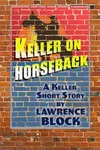
- Older Stories Released Later: Stories like "Keller on Horseback" (released as a digital single in 2021, but originally written in 1994 for an anthology and included in Hit Man) or "Keller's Horoscope" (released in 2013, but originally from a 2001 anthology and included in Hit List) are already present in the primary collections. You do not need to buy them separately if you own the books.
- Transitional Novellas: Works like Keller in Dallas (2009) and Keller's Fedora (2016) contain unique storylines that act as bridges between novels and should be read in their chronological spots.
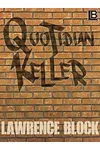
- Quotidian Keller: Originally published in 2007 in a stamp collecting magazine, this fun standalone short story features Keller attending a philatelic convention only to find his target is a fellow collector. It fits narratively during the era of Hit Parade.
What to Know Before You Start
Despite being about a professional assassin, the Keller series has a surprisingly cozy, dark-comedy tone. Block keeps the actual violence minimal and off-page, choosing instead to focus on the mundane logistics of travel, hotel rooms, and Keller's internal monologues. It is a character study of a lonely man searching for meaning, order, and normalcy in a dark profession. The series is highly recommended for fans of character-driven mystery, dark humor, and Block's other famous series, such as Matthew Scudder, though Keller has a much lighter and more whimsical atmosphere.