
Where to Start: The Two Reading Paths
David Downing’s John Russell series, often referred to by fans as the "Station Series" due to its railway-themed titles, is a masterclass in atmospheric historical espionage. Because Downing wrote a prequel later in the series' run, readers have two primary ways to experience John Russell’s journey through World War II and the early Cold War: chronological order or publication order.
Path 1: Chronological Order (Recommended)
Reading chronologically is highly recommended for the best narrative flow. It allows you to follow Russell’s personal relationships, his career, and the political descent of Berlin in real-time, starting from the rise of the Nazi regime in 1933 all the way to the paranoia of the early Cold War in 1953.
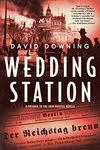
- Wedding Station (Set in 1933; Published 2021)
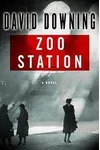
- Zoo Station (Set in 1939; Published 2007)
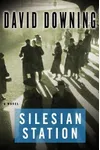
- Silesian Station (Set in 1939; Published 2008)
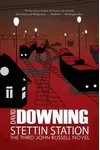
- Stettin Station (Set in 1941; Published 2009)
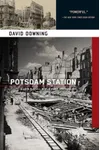
- Potsdam Station (Set in 1945; Published 2010)
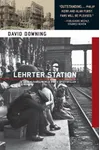
- Lehrter Station (Set in 1945; Published 2012)
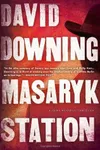
- Masaryk Station (Set in 1948; Published 2013)
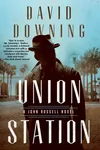
- Union Station (Set in 1953; Published 2024)
Path 2: Publication Order
If you prefer to read the books in the order David Downing wrote them, you will begin with Zoo Station. This path plunges you directly into the high-stakes paranoia of 1939 just before the outbreak of World War II, treating the prequel Wedding Station as a flashback that fills in the crucial backstory of how Russell met his partner, Effi Koenen, and established his life in Berlin.
- Zoo Station (2007)
- Silesian Station (2008)
- Stettin Station (2009)
- Potsdam Station (2010)
- Lehrter Station (2012)
- Masaryk Station (2013)
- Wedding Station (2021)
- Union Station (2024)
Deep Dive: The Station Series Book by Book
To help you navigate the series, here is a detailed breakdown of each novel, its historical backdrop, and its place in the timeline.
1. Wedding Station (Set in 1933)
Though published in 2021, this prequel takes readers back to the crucial months of 1933. The Weimar Republic is crumbling, Adolf Hitler has just been appointed Chancellor, and the Reichstag fire triggers a wave of brutal crackdowns. John Russell is a young journalist trying to find his footing in a rapidly changing Berlin when he meets Effi Koenen, an aspiring actress. This book establishes the emotional foundation of the entire series.
2. Zoo Station (Set in 1939)
The book that introduced the world to John Russell is set in the tense spring of 1939. Europe is on the brink of war, and Berlin is a city of whispers. Working as a dual correspondent for British and American papers, Russell is approached by Soviet intelligence. Desperate to secure British passports for his German partner Effi and his son Paul, Russell enters a dangerous game of double espionage that will define the rest of his life.
3. Silesian Station (Set in 1939)
Picking up immediately after the events of Zoo Station, this novel is set during the summer and autumn of 1939, culminating in the Nazi invasion of Poland. Russell finds himself working under intense pressure from both the British and Soviets. When he is asked to locate a missing Jewish girl, he must navigate the increasingly dangerous and antisemitic streets of Berlin as the world slides into war.
4. Stettin Station (Set in 1941)
By the autumn of 1941, the German war machine is deeply committed to Operation Barbarossa on the Eastern Front. In Berlin, the civilian population faces rationing, air raids, and the terrifying onset of the Holocaust. Russell, still working under his journalistic cover, witnesses the escalating horrors of the regime. Realizing his time is running out, he begins planning a high-stakes escape from the Reich.
5. Potsdam Station (Set in 1945)
The timeline jumps forward to April 1945. The Nazi regime is in its death throes, and the Soviet Red Army is closing in on Berlin. Having spent years away, Russell parachutes back into the ruined, burning capital on a desperate mission to find Effi and Paul. This novel captures the visceral, chaotic horror of the Battle of Berlin with stunning historical realism.
6. Lehrter Station (Set in 1945)
Set in the immediate aftermath of the war, this installment covers the summer and autumn of 1945. Berlin is divided into British, American, French, and Soviet sectors. As the ashes of WWII cool, the initial skirmishes of the Cold War begin. Russell is forced back into the shadows, caught between his former Soviet handler and the American OSS, showing that peace brings its own brand of danger.
7. Masaryk Station (Set in 1948)
Moving to 1948, Berlin has become the frontline of the Cold War. As the Soviet blockade looms, Russell is dragged into a conspiracy involving the suspicious death of Jan Masaryk in Prague. This novel explores the hardening lines of the Iron Curtain and the moral compromises required to survive in a divided city.
8. Union Station (Set in 1953)
The grand finale shifts the action to 1953, moving between the paranoid atmosphere of McCarthy-era Los Angeles and post-Stalin Berlin. Russell and Effi have attempted to build a quiet life, but the ghosts of their espionage past refuse to stay buried. It is a fitting, high-stakes conclusion to a monumental saga.
What to Know Before You Start
The John Russell novels are not typical action-oriented spy stories. David Downing focuses heavily on historical accuracy, character development, and the psychological weight of living under totalitarian regimes. Russell is an ordinary man trying to protect his family, making his decisions feel deeply grounded and human.
Can these books be read as standalones?
We highly recommend against reading these books out of order or as standalones. The character arcs, especially the relationships between John, Effi, and John's son Paul, rely on continuous development across the novels. The shifting political landscape of Berlin is also a character in itself, evolving chronologically from the Weimar Republic's end to the divided city of the Cold War.
Are there spin-offs or crossovers?
While David Downing wrote another highly acclaimed espionage series—the Jack McColl series, set during World War I—there is no narrative crossover between McColl and John Russell. However, fans of John Russell will find the same meticulous research and tense, character-driven storytelling in McColl's adventures, starting with Jack of Spies.