
The Recommended Reading Order for the Jonathan Argyll Series
For the best experience, the Jonathan Argyll series (frequently referred to as the Art History Mysteries) should be read in publication order. Because the books follow a linear timeline and feature a central romantic and professional relationship that evolves significantly over the course of the series, jumping around can spoil key character developments and major status quo shifts.
Since publication order and chronological order are identical, following this sequence is straightforward:
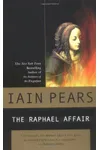
- The Raphael Affair (1990)
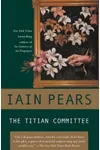
- The Titian Committee (1991)
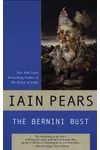
- The Bernini Bust (1992)
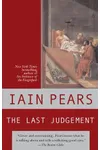
- The Last Judgement (1993)
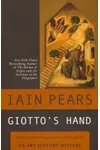
- Giotto's Hand (1995)
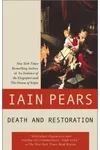
- Death and Restoration (1996)
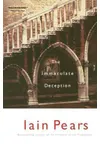
- The Immaculate Deception (2000)
Book-by-Book Breakdown of the Art History Mysteries
1. The Raphael Affair (1990)
The series begins with The Raphael Affair, introducing us to the eccentric and slightly naive British graduate student and art dealer, Jonathan Argyll. Arrested in a Roman church under the suspicion of breaking and entering, Jonathan claims he has discovered a lost masterpiece by Raphael hidden beneath a mediocre painting. This brings him into the orbit of Flavia di Stefano and General Taddeo Bottando of the Italian Art Theft Squad. What starts as a scholarly quest quickly turns deadly as the painting is authenticated, bought, and then targeted by art thieves and murderers. This book sets the witty, lighthearted, yet intellectually engaging tone for the rest of the series.
2. The Titian Committee (1991)
In the second book, the setting shifts from the historic streets of Rome to the canals of Venice. Jonathan and Flavia are tasked with investigating the sudden death of a researcher who belonged to a prestigious committee cataloging the works of Titian. The victim is found dead in a Venetian garden, and the investigation soon reveals that the world of high-level art scholarship is filled with backstabbing, forged credentials, and bitter rivalries. Pears uses this mystery to satirize the academic art world with his characteristic dry humor.
3. The Bernini Bust (1992)
Jonathan travels to Los Angeles to deliver a newly discovered Bernini bust to a wealthy American collector. However, the transaction goes horribly wrong when the collector is murdered and the bust vanishes. Stranded in California, Jonathan must navigate the unfamiliar culture of the West Coast art scene, dealing with eccentric millionaires and suspicious local police. Flavia di Stefano soon arrives to assist him, and the two must work together to locate the missing sculpture and identify the killer before Jonathan becomes the prime suspect.
4. The Last Judgement (1993)
This entry takes Jonathan and Flavia to Paris, where Jonathan has been hired to transport a minor, seemingly unremarkable painting to Rome. The assignment turns dangerous when the painting is stolen and a series of murders follows in its wake. As Jonathan and Flavia dig into the provenance of the painting, they uncover a complex web of forged histories, political intrigue, and secrets dating back to World War II. The novel explores themes of historical guilt and the lengths to which individuals will go to preserve their reputations.
5. Giotto's Hand (1995)
General Bottando has spent years chasing an elusive art thief known only as "the Master," who has systematically looted minor masterpieces across Europe. When a suspect connected to these thefts is found murdered in England, Jonathan and Flavia step in to investigate. The case takes them from Italy to the English countryside, forcing them to unravel a complex puzzles based on the style of the medieval master Giotto. This novel highlights Pears' deep knowledge of art history and the technical details of painting attribution.
6. Death and Restoration (1996)
Set back in Rome, Flavia receives a tip about a planned heist at the monastery of San Giovanni on the Aventine Hill. The target is a controversial painting attributed to Caravaggio, depicting the martyrdom of Saint Catherine. Despite police surveillance, the theft succeeds, and the thieves steal not only the Caravaggio but also a ancient, highly revered icon of the Madonna. When a prominent French art dealer is found dead in the Tiber, the case shifts to a homicide investigation, forcing Jonathan and Flavia to navigate monastic secrets and international art market collusion.
7. The Immaculate Deception (2000)
The final novel in the series sees Flavia di Stefano stepping up as the acting head of the Art Theft Squad. She faces immense political pressure when a highly valuable Claude Lorrain landscape, on loan to Italy for a diplomatic exhibition, is stolen. The Italian Prime Minister demands its recovery without public scandal or ransom payments. Meanwhile, Jonathan pursues a separate, personal investigation into a small Renaissance painting of the Immaculate Conception belonging to the retired General Bottando. The two cases eventually collide, revealing deep-seated corruption and bringing the series to a satisfying conclusion.
The Core Trio: Meet the Cast
The enduring appeal of the series lies in the chemistry and distinct personalities of its three main characters:
- Jonathan Argyll: A British art historian who is brilliant at identifying paintings but often clumsy, financially insecure, and physically unsuited for detective work. His academic passion frequently leads him into dangerous situations.
- Flavia di Stefano: A sharp, pragmatic, and highly competent investigator in the Italian Art Theft Squad. She serves as the practical anchor to Jonathan's academic eccentricity, and their professional collaboration slowly turns into a romance.
- General Taddeo Bottando: The wise, patient, and occasionally cynical head of the Art Theft Squad. He acts as a mentor and father figure to Flavia, protecting his team from bureaucratic interference while indulging his own appreciation for good food and art.
What to Know Before You Start
The Art History Mysteries are classic "cozy" police procedurals with an intellectual twist. While they contain murders and criminal investigations, the tone remains light, sophisticated, and humorous, avoiding graphic violence. Pears integrates genuine art historical concepts, terminology, and controversies into each plot, making the books a treat for readers who enjoy learning about painting techniques, provenance, and the art market.
There are no spin-offs, short stories, or co-authored entries in this series. The seven novels represent the entirety of the Jonathan Argyll universe. They are completely standalone in terms of their individual mystery plots, but they should still be read in order to fully appreciate the evolving relationship and career progressions of Jonathan and Flavia.