



The Recommended Reading Path
For the best experience, readers should follow the publication order of the Joseph Antonelli series. Because the chronological timeline of Antonelli's life and career matches the order in which the books were published, reading them sequentially allows you to appreciate his evolution from a cocky, undefeated defense attorney into a deeply reflective prosecutor and veteran legal counselor. Following this path also traces the real-world shifts in the legal and political landscapes over the nearly three decades during which D.W. Buffa has written these novels.
Joseph Antonelli Books in Publication Order
The series consists of ten core novels, starting with a classic Portland courtroom battle and eventually moving into national political conspiracies, Hollywood scandals, and modern technology conflicts. Below is the list of books in their recommended reading order:
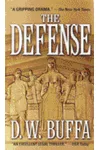
- The Defense (1997): The novel that introduced the legal thriller world to Joseph Antonelli. Set in Portland, Oregon, Antonelli is hired to defend Johnny Faris, a career criminal accused of murdering a judge's wife. Antonelli wins the trial, but the victory comes with a devastating moral cost that haunts him for the rest of the series.
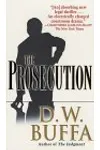
- The Prosecution (1999): Antonelli switches sides in this installment, acting as a special prosecutor in a high-profile murder-for-hire trial. He must prosecute a deputy district attorney accused of arranging his wife's murder, testing Antonelli's beliefs regarding the burden of proof and personal loyalty.
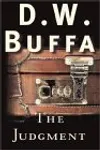
- The Judgment (2001): Nominated for an Edgar Award, this novel pits Antonelli against a brilliant, manipulative adversary in a case that pushes the ethical boundaries of the judicial system. The story heavily explores the concept of legal manipulation and institutional corruption.
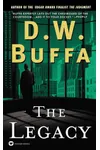
- The Legacy (2002): The stakes expand beyond local courtrooms when Antonelli becomes involved in a controversial case involving a Supreme Court nominee, drawing him into the murky world of federal politics and legacy-building.
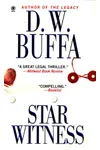
- Star Witness (2003): Antonelli travels to Hollywood to defend a highly charismatic and powerful film mogul who stands accused of murdering his movie-star wife. The book explores the intersection of celebrity, wealth, and media influence on the scales of justice.
- Breach of Trust (2004): Antonelli is drawn into a historical conspiracy surrounding the death of a young woman at a party hosted decades earlier by a man who has since become a major presidential candidate.
- Trial by Fire (2005): This novel tackles the court of public opinion. Antonelli defends a client in a murder trial that quickly becomes a televised media circus, examining how sensationalized journalism can distort the truth.
- Necessity (2018): After a thirteen-year publishing hiatus, Buffa returned to his signature character. Antonelli is hired to defend a United States Senator who has confessed to assassinating the President. The defense rests on the ancient and controversial "Law of Necessity"—the claim that the president was colluding with a foreign power and had to be stopped to save the country.
- The Privilege (2021): Set against a more contemporary backdrop, this book centers on the sanctity of attorney-client privilege. The plot incorporates modern themes, including artificial intelligence, tech entrepreneurs, and corporate espionage.
- Lunatic Carnival (2023): The tenth book finds Antonelli defending professional athlete T.J. Allen, who was found standing over the body of a sports team owner with the murder weapon in hand. Despite the damning evidence, a judge suspects Allen is innocent, prompting Antonelli to uncover the real culprit.
Chronological Caveats and the Thirteen-Year Gap
While the chronological order aligns perfectly with the publication order, readers should keep in mind the significant real-world gap between Trial by Fire (2005) and Necessity (2018). When D.W. Buffa returned to the character after thirteen years, the tone of the series shifted. The early novels (published between 1997 and 2005) are grounded in the late-90s and early-2000s legal environments, focusing heavily on courtroom procedure, local political machines, and the immediate ethics of defense work. The newer books (from 2018 onward) reflect a more modern world, touching on national security, political polarization, and high-tech themes like artificial intelligence. Despite these shifts, Antonelli remains the same analytical, literary investigator at heart.
What to Know Before You Start
D.W. Buffa is a former criminal defense attorney who practiced for a decade before turning to fiction. This background gives the Joseph Antonelli series a level of authenticity and intellectual weight that sets it apart from more action-driven legal thrillers. Rather than relying on physical danger or standard thriller tropes, Buffa's novels focus on rhetoric, philosophy, and the psychological realities of trial strategy. Antonelli's personal philosophy is famously summarized by his own boast: he never lost a case he should have won, and he won nearly every case he should have lost.
Readers who enjoy the intellectual, dialogue-heavy styles of authors like Scott Turow or the political philosophy of Leo Strauss (under whom Buffa studied) will find themselves right at home. While the cases are self-contained and can technically be read as standalones, the running narrative of Antonelli's life, his regrets, and his relationships makes the chronological publication order the most rewarding path.
Spin-offs and Companion Series
While there are no direct spin-off characters from the Antonelli novels, D.W. Buffa has written other books that exist in a similar thematic universe. Readers who finish the Antonelli series should look into:
- The Senator Bobby Hart Series: A political thriller series that starts with Rubicon (originally published under the pseudonym Lawrence Alexander) and continues with The Grand Master and Hillary. It follows an idealistic California Senator as he navigates high-level political conspiracies.
- The Western Quartet: A four-book sequence consisting of Helen, Julian's Laughter, The Autobiography of Niccolo Machiavelli, and Neumann's Last Concert. These books lean even further into Buffa's passion for classical philosophy and historical analysis.