
The Recommended Reading Order
Nicola Upson’s series featuring real-life Golden Age mystery writer Josephine Tey (the pseudonym of Elizabeth Mackintosh) is best read in publication order. Because the narrative follows a consistent timeline that mirrors the real-life progression of the 1930s and early 1940s, reading the books in sequence allows you to fully appreciate the developing relationships between Josephine, her partner Marta Fox, and her detective friend Archie Penrose.
Here is the complete order of the Josephine Tey Mysteries, including the upcoming twelfth novel:
- An Expert in Murder (2008) — Set in 1934, during the final week of Josephine's real-life theatrical hit, Richard of Bordeaux.
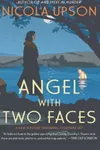
- Angel with Two Faces (2009) — Set in 1935, taking place in the dramatic landscapes of Cornwall at Archie Penrose's family estate.
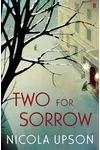
- Two for Sorrow (2010) — Set in 1935/1936, linking a modern murder to the infamous real-life 1903 case of baby-farmers Amelia Sach and Annie Walters.
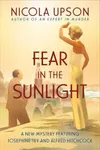
- Fear in the Sunlight (2012) — Set in 1936 at the Italianate resort of Portmeirion, where Alfred Hitchcock is planning a film adaptation of Tey’s novel, A Shilling for Candles.
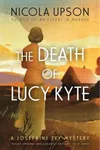
- The Death of Lucy Kyte (2013) — Set in 1937, exploring the legacy of the infamous 1827 Red Barn Murder after Josephine inherits a cottage in Suffolk.
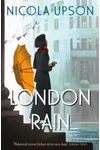
- London Rain (2015) — Set in May 1937 against the backdrop of the coronation of King George VI, with a murder taking place at the BBC during the live broadcast.
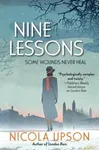
- Nine Lessons (2017) — Set in the winter of 1937, centering on Cambridge's King's College Chapel, the ghost stories of M.R. James, and a series of gruesome murders.
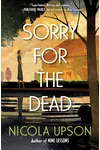
- Sorry for the Dead (2019) — Set primarily in 1938, but deeply tied to events from 1915 at Charleston Farmhouse, the Sussex retreat of the Bloomsbury Group.
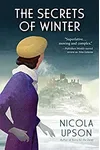
- The Secrets of Winter (also published as The Dead of Winter) (2020) — Set in December 1938, transportive and isolating, on the remote Scottish island of St. Kilda.
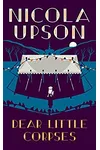
- Dear Little Corpses (2022) — Set in September 1939, capturing the overwhelming tension of the mass child evacuations from London at the outbreak of World War II.
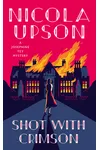
- Shot with Crimson (2023) — Set in late 1939, splitting its focus between Hollywood (during the production of Hitchcock's Rebecca) and Milton Hall in England.
- The Voices of the Dead (2026) — Set in the summer of 1941, following Penrose and Tey to North Wales, where the National Gallery's art is hidden in slate mines during the Blitz, featuring a guest appearance by Noël Coward.
Publication Order vs. Chronological Order
For the vast majority of the series, publication order and chronological order are identical. Upson structures the series as a chronological journey through the late interwar period and into the early years of World War II. Each book moves the characters forward in time, starting in 1934 and reaching 1941 in the twelfth installment.
However, there are minor narrative departures to keep in mind. Several books feature dual timelines or structural flashbacks that examine the past:
- Sorry for the Dead shifts between a 1948 framing sequence, a 1938 primary investigation, and the summer of 1915, when a young Josephine worked as a physical training instructor.
- Shot with Crimson takes place in late 1939 but uses extensive flashbacks to 1917, during World War I, when Milton Hall served as a military hospital.
Because the overarching character arcs and personal lives of Josephine, Marta, and Archie develop continuously, we recommend sticking strictly to the publication order rather than trying to read these historical flashbacks out of sequence.
The Core Cast and Historical Intersections
What sets the series apart is how Upson blends fictional mystery with real history. Josephine Tey herself is depicted not just as a detective, but as a complex woman balancing her Inverness family obligations, her London literary success, and her private relationships. Upson handles Tey’s sexuality with nuance, incorporating her real-life companion Marta Fox into the narrative as a central figure.
Alongside Josephine is Detective Inspector (later Chief Inspector) Archie Penrose, who acts as the traditional investigator. Their friendship forms the emotional core of the series, drawing on their shared experiences of grief, the lingering shadow of the Great War, and the shifting social dynamics of the 1930s.
Throughout the books, readers will encounter real-life historical figures who cross paths with the duo. Alfred Hitchcock, Noël Coward, Margaret Rutherford, and members of the Bloomsbury Group all make appearances, ensuring the series serves as a love letter to the cultural and theatrical history of mid-20th-century Britain.
What to Know Before You Start
Before diving into the books, it helps to understand the dual nature of Josephine Tey's identity. In real life, Elizabeth Mackintosh wrote plays under the name Gordon Daviot and detective fiction under the name Josephine Tey. Her real-life mystery novels, such as The Daughter of Time and The Franchise Affair, are considered masterpieces of the Golden Age.
Nicola Upson’s books are a fictional homage to Mackintosh's life. Reading Upson's work does not require familiarity with the real Josephine Tey's novels, but doing so adds a rich layer of appreciation, as Upson frequently references Tey's real plays, novels, and writing struggles. If you want to explore the real author's works, they make excellent companions to this series.