

The Recommended Reading Order for the Judd Ryker Series
For readers diving into the fast-paced, politically charged world of the State Department's experimental Crisis Reaction Unit (S/CRU), the path forward is straightforward. Author Todd Moss wrote the Judd Ryker series in a direct chronological sequence that mirrors its publication timeline. To fully appreciate the evolution of the characters, the shifting dynamics of Ryker's marriage to his CIA-agent wife Jessica, and the escalating scale of the global emergencies he faces, you should read the books in order of release.
Here is the recommended reading order for the series:
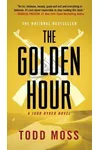
- The Golden Hour (2014)
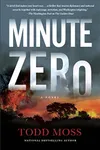
- Minute Zero (2015)
- Ghosts of Havana (2016)
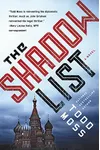
- The Shadow List (2017)
Detailed Breakdown of the Judd Ryker Books
1. The Golden Hour (2014)
The series debuts with The Golden Hour, introducing readers to Judd Ryker, a former academic who is recruited to lead the State Department’s new, experimental Crisis Reaction Unit. Ryker’s signature academic theory—the "Golden Hour"—suggests there is a critical 100-hour window immediately following a coup during which diplomatic or strategic intervention can successfully restore order. When a sudden military coup destabilizes Mali, Ryker is thrust from his comfortable classroom into the harsh reality of West African politics. Armed with only data, logic, and a ticking clock, he must navigate international turf wars, negotiate with local factions, and rescue a U.S. Senator's kidnapped daughter in Timbuktu, all while fighting bureaucratic infighting back home in Washington, D.C.
2. Minute Zero (2015)
In the second installment, Minute Zero, Ryker is dispatched to Zimbabwe during a highly volatile election. The country's aging dictator, Winston Tinotenda, is facing a fierce challenge from a reformist lawyer, and the United States wants to ensure a democratic outcome. However, as the situation on the ground rapidly deteriorates into violence, Ryker finds himself caught in a web of shifting loyalties, rogue military elements, and reports of missing weapons-grade uranium. The novel showcases Moss's deep understanding of political transitions and the chaotic moments where historical regimes crumble.
3. Ghosts of Havana (2016)
Moving from Africa to the Caribbean, Ghosts of Havana centers on a diplomatic crisis between the United States and Cuba. When four American sport fishermen are detained by the Cuban navy in local waters, Ryker is sent to negotiate their release. The mission takes place during a fragile period of thawing relations between Washington and Havana. Ryker quickly discovers that the arrested men are not simple fishermen, and the negotiation is a cover for a deeper, more dangerous conflict. He is forced to confront the legacy of Cold War operations and determine who, inside his own government, is trying to sabotage the peace talks.
4. The Shadow List (2017)
The fourth novel, The Shadow List, is the most complex in the series, expanding the scope to include international financial crime and cyber-scams. When a young American investment banker disappears in London after getting caught up in a Nigerian advanced-fee fraud scheme, Ryker travels to Lagos to investigate. Meanwhile, his wife Jessica is working a separate CIA operation tracking a Russian master criminal known as "the Bear." As their paths cross in Saint Petersburg and Nigeria, the couple realizes they are pulling different threads of the same massive criminal enterprise involving piracy, political corruption, and murder.
The Core Elements: S/CRU and the Academic Hero
What sets the Judd Ryker series apart from traditional action-adventure or espionage thrillers is the nature of its protagonist. Ryker is not a physical powerhouse, a trained assassin, or a rogue operative. Instead, he is a soft-spoken academic, a strategist who relies on analytical models, diplomatic protocol, and situational intelligence to resolve conflicts. The series places a heavy emphasis on the State Department’s Crisis Reaction Unit, illustrating how data analysis, bureaucratic negotiations, and rapid communication are utilized as primary tools in modern foreign policy.
A critical secondary element is the relationship between Judd and Jessica Ryker. Jessica's role as a CIA officer creates a compelling domestic dynamic. The couple must balance their marriage with the professional secrets they are sworn to keep, even when their respective agencies are actively working at cross-purposes or keeping information from one another. This partnership adds personal stakes and psychological depth to the macro-political conflicts in each book.
Insider Realism: About the Author
The exceptional authenticity of the series stems directly from Todd Moss's professional background. Moss served as the Deputy Assistant Secretary of State for West Africa during the George W. Bush administration. His firsthand experience negotiating real-world diplomatic crises, including the 2008 Mauritania coup, allowed him to depict the inner workings of the State Department, the Pentagon, and the CIA with unmatched accuracy. Readers get an insider's view of the granular realities of foreign service, from the exhaustion of long-haul diplomatic flights to the complex negotiations with foreign leaders and the constant threat of administrative sabotage in Washington.
Practical Reader Advice
Spelling Note: While some online databases and library listings refer to the series or the character as "Judd Riker" with an "i", the official spelling on the books and by the publisher is "Judd Ryker" with a "y". Keeping this spelling in mind will make searching for the physical copies or digital editions much easier.
Reading Order Caveats: While each book features a self-contained international crisis that is resolved by the final page, the character development and the ongoing narrative arc of Judd and Jessica's relationship build from book to book. For the best reading experience, it is highly recommended to read them in order. Do not skip The Golden Hour, as it establishes the creation of the S/CRU and explains the foundation of Ryker's crisis-management theories.
Status of the Series: As of 2026, the series remains a finished four-book arc. Following the release of The Shadow List in 2017, Todd Moss has focused on his work in international development and policy analysis. No further Judd Ryker novels have been announced, making this a concise, completed series that is perfect for a weekend binge-read.