







Where to Begin Your Investigation
For readers looking to dive into the cases of Judge Dee, choosing the right starting point is essential to enjoying this historic mystery series. Written by Dutch diplomat and sinologist Robert van Gulik, the series can be approached in a few different ways, but three books stand out as the best starting doors:
- The Chinese Gold Murders (1959): If you prefer to read chronologically, this is the absolute best place to start. It marks Judge Dee’s very first official posting as a magistrate in the fictional district of Peng-lai. It also introduces key assistants who will remain by his side for the rest of his career.
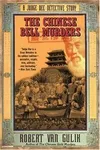
- The Chinese Bell Murders (1958): This was the first original Judge Dee novel written by Robert van Gulik to be published in the West. It showcase the series' signature style: three complex, overlapping crimes solved simultaneously through deductive reasoning, sharp intellect, and a deep understanding of ancient Chinese law and culture.
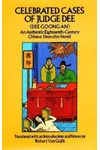
- Celebrated Cases of Judge Dee (1949): Originally titled Dee Goong An, this is an authentic 18th-century Chinese detective novel that van Gulik translated into English. While it has a different, more traditional narrative style—including supernatural elements that van Gulik later avoided in his own writing—it serves as the direct inspiration for the entire modern series.
Publication Order vs. Chronological Order
Like many long-running mystery series, the Judge Dee books were not written in the order they occur in the detective's life. Robert van Gulik frequently jumped back and forth across the timeline of Judge Dee's career. As a result, readers are divided on the best path forward.
Reading in Publication Order allows you to experience the series as van Gulik developed it. You can see how his writing style, pacing, and handling of the historical settings matured over time. However, this path means characters will appear, disappear, and reappear randomly, and Judge Dee’s political promotions will feel out of sequence.
Reading in Chronological Order offers a much smoother character arc. You will witness Judge Dee's progression from a young, newly appointed magistrate in a small coastal town to the Lord Chief Justice in the imperial capital. It also tracks the organic growth of his investigative team, showing exactly when and how his loyal assistants join his service.
The Official Chronological Timeline of Judge Dee's Career
Robert van Gulik was so mindful of his character's life timeline that he included an official chronology in the back of the short story collection Judge Dee at Work. The books are structured around Judge Dee's geographical promotions, which serve as the perfect framing for his detective career.
1. The Peng-lai Magistracy (663–664 AD)
In this coastal district, a young Judge Dee takes his first steps as a magistrate, dealing with local pirate raids, smuggling, and mysterious deaths.
- Celebrated Cases of Judge Dee (1949) - The translated 18th-century source novel.
- The Chinese Gold Murders (1959) - Judge Dee's first assignment in Peng-lai.
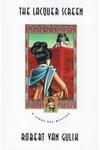
- The Lacquer Screen (1962) - A case set during a brief vacation to Liang-pu.
- Judge Dee at Work (1967) - A collection of short stories, several of which take place during this early career phase.
2. The Han-yuan Magistracy (666–667 AD)
Promoted closer to the capital, Judge Dee deals with crimes involving wealthy merchants, floating houseboats, and isolated temples.
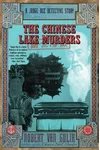
- The Chinese Lake Murders (1960)
- The Haunted Monastery (1961)
3. The Poo-yang Magistracy (668–670 AD)
Dee's longest and wealthiest posting. This period features some of the most intricate and celebrated cases of the series, where he confronts complex conspiracies and elite families.
- The Chinese Bell Murders (1958)
- The Red Pavilion (1961)
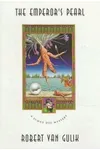
- The Emperor's Pearl (1963)
- The Monkey and The Tiger (1965) - A collection containing two novellas spanning different points of his career.
- Necklace and Calabash (1967)
- Poets and Murder / The Fox-Magic Murders (1968)
4. The Lan-fang Magistracy (670–676 AD)
A challenging frontier outpost on the western borders of the Tang Empire, surrounded by wild country and hostile tribes.
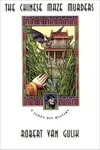
- The Chinese Maze Murders (1962)
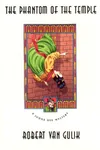
- The Phantom of the Temple (1965)
5. The Pei-chow Magistracy (676 AD)
A cold, isolated northern border town where Judge Dee faces his grimmest cases during a harsh winter.
- The Chinese Nail Murders (1961)
6. Imperial Capital & Canton (676–681 AD)
At the peak of his career, Judge Dee is promoted to Lord Chief Justice in the capital city of Ch'ang-an and travels to the southern port of Canton to resolve high-profile state conspiracies.
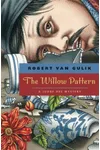
- The Willow Pattern (1965) - Set during a plague outbreak in the capital.
- Murder in Canton (1966) - His final case before retirement.
Meet the Retinue: Judge Dee's Loyal Assistants
Unlike Western detectives who often work alone or with a single partner, Judge Dee operates with a loyal group of lieutenants. This retinue represents different classes of ancient Chinese society and adds both muscle and street-smarts to the investigations:
- Sergeant Hoong Liang: The oldest and most trusted member of the team. A former family retainer, he provides emotional support, wisdom, and acts as the administrative backbone of Judge Dee’s tribunal.
- Ma Joong & Chiao Tai: Two former highwaymen who try to rob Judge Dee in The Chinese Gold Murders. Impressed by the magistrate's courage and virtue, they reform and join him as bodyguards and investigators. Both are formidable warriors who handle the physical dangers of the job.
- Tao Gan: A reformed confidence man and pickpocket who joins the team in The Chinese Lake Murders. His expertise in lockpicking, infiltration, and the criminal underworld makes him the team's ultimate undercover agent.
What to Know Before You Start: The Gong'an Legacy
Robert van Gulik’s books are a unique bridge between Eastern and Western literary traditions. They are modeled on gong'an (literally 'case-bench' or public court), a traditional Chinese genre of detective fiction dating back centuries. Unlike Western stories, which focus on a single crime, traditional Chinese mysteries featured the magistrate investigating three unrelated crimes at the same time. Van Gulik preserved this multi-case structure in almost all of his books.
Additionally, while traditional Chinese novels often relied on ghosts, spirits, and supernatural interventions to solve crimes, van Gulik deliberately adapted his stories to focus on rational deduction. As a trained sinologist, van Gulik also illustrated all of his own books with hand-drawn, woodblock-style illustrations, offering readers an authentic visual window into the fashion, architecture, and lifestyle of the Tang Dynasty.