
The Recommended Starting Point: Where to Begin
For anyone looking to plunge into Carl Hiaasen’s eco-mysteries, the best starting point is undoubtedly Hoot (2002). As the novel that launched Hiaasen’s career in children's literature, it perfectly establishes the formula that defines his young adult and middle-grade books: courageous, slightly outcast kids, eccentric local characters, bumbling villains, and a passionate environmental rescue mission set against the backdrop of Florida's unique ecosystems. Beginning with Hoot allows you to appreciate how Hiaasen’s narrative style and tone evolved over more than two decades.
However, because all six books in the main lineup are written as self-contained standalone novels, readers can technically dive in with whichever animal or ecological mystery captures their interest first. If you are passionate about marine conservation, you might choose to start with Flush; if you are fascinated by the deep swamps of the Everglades, Scat is an excellent entry point.
Carl Hiaasen’s Juvenile Books in Publication Order
Reading the series in publication order is the most popular approach. It tracks the real-world passage of time, showcasing how Hiaasen's style adapts from early-2000s suburban development issues to the modern, post-pandemic landscape of Key West. Here is the chronological publication list:
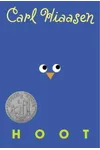
- Hoot (2002) – Features the struggle to save endangered burrowing owls.
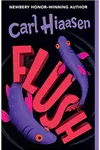
- Flush (2005) – Follows a sibling duo trying to stop sewage dumping from a casino boat.
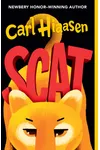
- Scat (2009) – Centers on a missing biology teacher and the protection of the Florida panther.
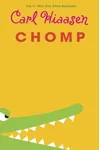
- Chomp (2012) – Explores the chaotic world of reality TV and wildlife wrangling.
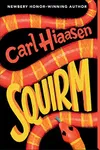
- Squirm (2018) – Explores snake hunting, grizzly bears, and a journey from Florida to Montana.
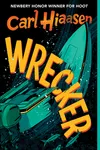
- Wrecker (2023) – Set in Key West, addressing smuggling and cruise ship pollution during the COVID-19 pandemic.
Chronological Flow vs. Standalone Continuity
Because there are no recurring main characters or continuous plotlines that bridge these novels, there is no difference between the publication order and a chronological reading order. Each book features a brand-new protagonist, a new set of allies, and a distinct environmental threat. You will not miss any crucial plot points or character growth by reading these books out of order. The only minor caveat is that the technological and societal contexts advance naturally over time—moving from flip phones and physical maps in Hoot to modern drones in Squirm and face masks, social distancing, and pandemic anxieties in Wrecker.
Key Themes and Settings: Why Florida Matters
The true connective tissue of the series is the state of Florida itself. Carl Hiaasen, a lifelong Florida resident and former investigative columnist for the Miami Herald, writes about his home state with a mixture of deep love and fierce protective frustration. His stories showcase the tension between Florida's breathtaking natural beauty—from the Keys to the Everglades—and the destructive greed of human developers, poachers, and polluters.
Hiaasen's trademark humor uses satire to highlight these serious issues without feeling overly preachy. By pairing eccentric, sometimes bizarre adults with smart, resourceful teenagers, he highlights the power of the younger generation to stand up for conservation, wildlife protection, and civic responsibility.
Exploring the Books: Summaries and Environmental Focus
Hoot (2002)
The story follows Roy Eberhardt, a new kid in Coconut Cove, Florida, who has just moved from Montana. Roy notices a mysterious barefoot boy running away from the school bus. This discovery leads him to "Mullet Fingers," a runaway youth, and his stepsister Beatrice Leep. Together, they uncover a corporate cover-up: a pancake house chain plans to build a new restaurant directly over a colony of endangered burrowing owls. Hoot earned a Newbery Honor in 2003 and was adapted into a feature film in 2006 starring Logan Lerman, Brie Larson, and Cody Linley.
Flush (2005)
Set in the Florida Keys, Flush introduces Noah Underwood, whose father Paine has been arrested for sinking the Coral Queen casino boat. Paine is convinced that the boat's owner, Dusty Muleman, is illegally dumping raw sewage directly into the local waters, polluting the beach and harming marine wildlife. With his father behind bars, Noah and his younger sister Abbey take it upon themselves to gather the proof needed to expose the operation, leading to a high-stakes undercover mission involving dye packs and toilet flushing.
Scat (2009)
When a mysterious fire breaks out during a biology class field trip to the Blackwood Peach Wilderness Path, the school’s most feared teacher, Mrs. Bunny Starch, vanishes. Nick and Marta suspect that her disappearance is tied to a corrupt oilman named Drake McBride, who is conducting illegal oil drilling operations in the Everglades. Along their journey, the kids team up with a mysterious classmate named Smoke and encounter a rare, endangered Florida panther, highlighting the fragility of Everglades conservation.
Chomp (2012)
Wahoo Cray lives in a home filled with wild animals, thanks to his father Mickey, a professional animal wrangler. When the self-proclaimed star of the reality TV show Expedition Survival!, Derek Badger, hires them for an episode in the Everglades, chaos ensues. Derek is a clueless showman who insists on performing dangerous, artificial stunts. When the TV host gets lost in a storm and starts behaving erratically, Wahoo and his classmate Tuna Gordon must navigate the wilderness to save both the reality star and Wahoo’s father from disaster.
Squirm (2018)
Unlike the other books in the series, Squirm takes readers outside of Florida. The protagonist, Billy Dickens, is obsessed with snakes and lives with his mother. Hoping to reconnect with his mysterious, estranged father, Billy travels to the wilderness of Montana. There, he discovers that his father is involved in drone operations aimed at tracking and stopping illegal poachers. The novel addresses themes of poaching, the hunting of grizzly bears, and the importance of preserving remote wilderness habitats across both Florida and the American West.
Wrecker (2023)
Set in Key West during the height of the COVID-19 pandemic, this novel features fifteen-year-old Valdez Jones VIII, nicknamed "Wrecker" because his family has salvaged shipwrecks for generations. While boating, Wrecker witnesses a suspicious incident near a historic cemetery and is coerced by a group of smugglers into acting as a lookout. As he tries to untangle himself from their criminal operation, the story explores the ecological impact of cruise ships on the fragile marine environment of Key West, contrasting Wrecker's deep connection to the ocean with the greed of those who exploit it.
Crossovers and Spin-offs: Skink - No Surrender
While the six books mentioned above form the core of Hiaasen's middle-grade novels, there is an important crossover title that older readers should not miss: Skink—No Surrender (2014). This young adult novel features Clinton Tyree (better known as "Skink"), an eccentric, one-eyed ex-governor of Florida who eats roadkill and lives wild in the swamps. Skink is a major recurring character in Hiaasen’s adult satirical novels (such as Double Whammy and Stormy Weather). In Skink—No Surrender, Hiaasen introduces him to a younger audience as he helps a teenager track down a missing cousin, bridging his adult and young adult bibliographies.
What to Know Before You Start
Before diving into Carl Hiaasen's books, it's helpful to understand that his stories balance lighthearted comedy with real environmental stakes. While the villains are often ridiculous and the situations satirical, the ecological threats—such as habitat destruction, animal poaching, and corporate pollution—are based on very real issues facing Florida. The tone is always hopeful, emphasizing that young people possess the resourcefulness and moral clarity needed to protect the natural world when adults fail to do so.