












Recommended Starting Point: Where to Begin Kay Tracey's Cases
For the best experience, readers should start with The Secret of the Red Scarf (1934). This first book introduces Kay Tracey, her mother Kathryn, her attorney cousin Bill, and her loyal companions, the twins Wilma and Betty Worth. The story establishes the lighthearted, fast-paced, and slightly melodramatic formula that defines the series, beginning with Kay helping a young amnesiac she names 'Bro' while navigating a web of danger.
Because the novels are episodic and Kay does not age, you do not strictly need to read them in chronological or publication order. However, starting with the first volume and moving forward is highly recommended to appreciate the subtle evolution of the writing style, the shifting of primary ghostwriters, and the development of Brantwood's high school setting.
Kay Tracey Books in Original Publication Order
Originally published by Cupples & Leon between 1934 and 1942, the original run of the series consists of 18 novels. Reading in this order allows you to follow the series as it was originally presented to young readers in the mid-20th century:
- The Secret of the Red Scarf (1934) – Ghostwritten by Elizabeth M. Duffield Ward. Kay helps an amnesiac boy and avoids a dangerous criminal ring.
- The Strange Echo (1934) – Ghostwritten by Elizabeth M. Duffield Ward. A mysterious disembodied voice warns Kay of danger near a local glen.
- The Mystery of the Swaying Curtains (1935) – Ghostwritten by Mildred A. Wirt Benson. Kay investigates a puzzling situation at a secluded house.
- The Shadow on the Door (1935) – Ghostwritten by Mildred A. Wirt Benson. Kay uncovers a plot involving a missing girl and a mysterious silhouette.
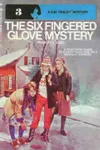
- The Six-Fingered Glove Mystery (1936) – Ghostwritten by Mildred A. Wirt Benson. A kidnapper targets a movie star, and Kay must follow the clues.
- The Green Cameo Mystery (1936) – Ghostwritten by Mildred A. Wirt Benson. A valuable antique cameo leads Kay into a web of theft and deception.
- The Secret at the Windmill (1937) – Ghostwritten by Mildred A. Wirt Benson. A strange mystery unfolds around a local historic windmill.
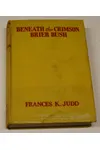
- Beneath the Crimson Brier Bush (1937) – Ghostwritten by Mildred A. Wirt Benson. Kay discovers secrets hidden on a nearby country estate.
- The Message in the Sand Dunes (1938) – Ghostwritten by Mildred A. Wirt Benson. Kay unravels a mystery during a trip to the beach.
- The Murmuring Portrait (1938) – Ghostwritten by Mildred A. Wirt Benson. A painting with a mysterious sound guides Kay to a new case.
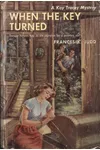
- When the Key Turned (1939) – Ghostwritten by Mildred A. Wirt Benson. An old, locked casket leads to a hidden treasure and family secrets.
- In the Sunken Garden (1939) – Ghostwritten by Mildred A. Wirt Benson. Kay investigates a suspicious landscape design that hides a darker plot.
- The Forbidden Tower (1940) – Ghostwritten by Edna Camilla Stratemeyer Squier. Kay explores a restricted property hiding secrets.
- The Sacred Feather (1940) – Ghostwritten by Mildred A. Wirt Benson. A rare bird feather provides the clue to a mysterious disappearance.
- The Lone Footprint (1941) – Ghostwritten by Anna Perot Rose Wright. A single footmark leads Kay to solve a wilderness mystery.
- The Double Disguise (1941) – Ghostwritten by Anna Perot Rose Wright. Kay deals with impersonation and double-crossing villains.
- The Mansion of Secrets (1942) – Ghostwritten by Anna Perot Rose Wright. Kay and her friends explore a dark, passage-filled mansion.
- The Mysterious Neighbors (1942) – Ghostwritten by Anna Perot Rose Wright. The final volume in the original run features unusual newcomers.
Chronological Order and Continuity Caveats
Like many Stratemeyer Syndicate properties, the Kay Tracey series maintains a status quo. Kay is consistently sixteen years old, attends high school, lives with her mother and Cousin Bill, and hangs out with the Worth twins. As a result, there is no overarching chronological story arc or character growth that requires strict linear reading.
However, minor character and setting elements do shift slightly. Early books refer to the setting as Carmont, which eventually settles into Brantwood. In addition, Kay's rival, Ethel Eaton, is sometimes renamed 'Chris Eaton' in later revised editions. Because of this, staying close to the original publication order prevents confusion regarding these small naming variations.
The Bantam Skylark Reprints and Revisions
In 1980, Bantam Books reissued six selected titles from the series in paperback under its Bantam Skylark imprint. Bantam created a new, alternative reading order for this mini-set, numbering the paperbacks as follows:
- Book 1: The Double Disguise
- Book 2: In the Sunken Garden
- Book 3: The Six-Fingered Glove Mystery
- Book 4: The Mansion of Secrets
- Book 5: The Green Cameo Mystery
- Book 6: The Message in the Sand Dunes
If you are collecting or reading these Bantam paperbacks, they can be read in the order Bantam numbered them without any loss of comprehension. Additionally, other publishers like Garden City Books, Books, Inc., and Berkley issued their own selected reprint sets between the 1950s and 1980s. Collectors should note that while the majority of the texts remained unchanged, three books—The Secret of the Red Scarf, The Strange Echo, and The Green Cameo Mystery—received significant shortening and text revisions in later reprint editions.
What to Know Before You Start: Kay Tracey vs. Nancy Drew
While Kay Tracey was created by the Stratemeyer Syndicate to capitalize on the massive success of Nancy Drew, Kay stands out with her own distinct personality. Unlike Nancy's poised, polished, and fully independent lifestyle, Kay is a busy high school student who has to juggle school life and rivalries with classmates like the envious Ethel Eaton. Kay doesn't own a high-end roadster; instead, she frequently borrows her cousin Bill's car.
Furthermore, Kay's sleuthing style is highly impulsive and energetic compared to Nancy's methodical approach. The plots are often described as fast-paced and slightly melodramatic, leaning into a comic-book style of fun. Her cousin Bill, a practicing attorney, acts as a supportive mentor and legal shield, filling a role similar to Carson Drew but with a more hands-off approach that lets Kay's own female ingenuity take center stage.
Behind the Pseudonym: The Ghostwriters of Frances K. Judd
The name 'Frances K. Judd' was a house pseudonym owned by the Stratemeyer Syndicate. The 18 books were written by four distinct ghostwriters. Notably, Mildred A. Wirt Benson—who was also the primary ghostwriter behind the early, defining Nancy Drew books under the name Carolyn Keene—penned 11 of the 18 Kay Tracey books. Her signature fast-paced action and independent heroine archetype heavily shaped the midsection of the series. The original authorship breakdown is as follows:
- Elizabeth M. Duffield Ward: Books 1 and 2
- Mildred A. Wirt Benson: Books 3 through 12, and Book 14
- Edna Camilla Stratemeyer Squier: Book 13
- Anna Perot Rose Wright: Books 15 through 18