




The Recommended Reading Order for Kelvin of Rud
The Kelvin of Rud series (also known as the Adventures of Kelvin of Rud or the Roundear Prophecy) is a classic five-book fantasy saga co-authored by Piers Anthony and Robert E. Margroff. Because the narrative follows a strict, linear progression of Kelvin Knight Hackleberry's life and the ongoing fulfillment of the Prophecy of Mouvar, there is only one recommended reading path: the order of publication. Reading the books out of sequence will spoil major plot points, character growth, and the evolution of the multiversal system.
Here is the recommended reading order for the series:
- Dragon's Gold (1987)
- Serpent's Silver (1988)
- Chimaera's Copper (1990)
- Orc's Opal (1990)
- Mouvar's Magic (1992)
Understanding the Publication and Chronological Order
Unlike some long-running fantasy series where prequels or spin-offs complicate the timeline, Kelvin of Rud is straightforward. The chronological sequence matches the publication order exactly. The narrative begins with a young, naive Kelvin and moves forward through his adulthood, his marriage, the birth of his telepathic children, and eventually shifts its focus to those children as young adults in the final volume.
However, readers looking to collect the books should be aware of the two major omnibus editions published in 1992, which group the novels into convenient volumes:
- Across the Frames (1992): This omnibus collects the first three novels: Dragon's Gold, Serpent's Silver, and Chimaera's Copper. It covers Kelvin's initial quest, his search for his father, and his survival in a hostile frame.
- The Adventures of Kelvin of Rud: Final Magic (1992): This omnibus collects the final two books: Orc's Opal and Mouvar's Magic, wrapping up the prophecy and shifting focus to the next generation of the Hackleberry family.
Breaking Down the Kelvin of Rud Universe
To fully appreciate the reading experience, it helps to understand the unique elements that Anthony and Margroff brought to this series. The setting is built around a multiversal structure consisting of parallel realities called Frames. Each Frame functions as a distinct dimension with its own physical rules, societies, and levels of magical or scientific advancement. Some Frames are governed by high magic and populated by dragons and magical creatures, while others have developed along paths of logic or advanced technology.
A recurring visual indicator of a character's native Frame is the shape of their ears. The natives of Kelvin's home world have pointed ears, making Kelvin—who has round ears inherited from his father (a traveler from another Frame)—an outsider. This physical difference forms a central theme of identity and prejudice, as Kelvin is mockingly referred to as a "Roundear" in a world dominated by pointed-eared natives.
Dragon's Gold (1987)
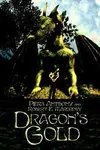
The saga begins with Dragon's Gold, introducing Kelvin Knight Hackleberry. Kelvin's mother reads him the ancient Prophecy of Mouvar, which foretells that a round-eared hero will eventually unite the warring kingdoms of Rud. Alongside his sister Jon, Kelvin sets out to collect golden dragon scales to pay the oppressive taxes imposed by a corrupt government. This simple quest quickly escalates into an epic rebellion against a tyrannical usurper and an evil sorcerer, setting Kelvin's destiny in motion.
Serpent's Silver (1988)
In the second installment, Kelvin seeks rest after his initial trials but is forced back into action when his father, John, is captured and imprisoned in a dungeon located in an adjacent Frame. Kelvin must navigate this new reality to rescue him. This Frame is populated by dangerous new threats, including rock-chewing giant silver worms and a humanoid serpent race capable of paralyzing victims with a glance. To succeed, Kelvin and his family rely on magical items left behind by the mysterious, long-lost sorcerer Mouvar.
Chimaera's Copper (1990)
The stakes escalate in Chimaera's Copper. Kelvin finds himself trapped in a distant, unfamiliar Frame while his enemies band together to destroy him. He must find a way to escape and return to protect the woman he loves, who is pregnant with his child. This book deepens the mechanics of interdimensional travel and challenges Kelvin's reliance on his prophecy.
Orc's Opal (1990)
With Orc's Opal, the series transitions into a multi-generational tale. The focus begins to encompass Kelvin's children: the telepathic twins Charles and Merlain, and their unusual dragon brother, Horace. While attending a convention of benign wizards and witches, a vengeful witch named Zady possesses Kelvin's sister, Jon. Zady tricks the children into stealing the "orc's opal," a powerful artifact that regulates magic. The family must work together to prevent a devastating war between humans and orcs.
Mouvar's Magic (1992)
The final novel, Mouvar's Magic, brings the overarching Prophecy of Mouvar to its resolution. Set years later, Kelvin's twin children are now young adults. They must thwart a final conspiracy orchestrated by the evil Professor Devale and the witch Zady, who are determined to prevent the final unification of the kingdoms. The story concludes the epic battle between the benign witch Helbah and the forces of darkness, sealing the fate of the united realms.
Practical Reader Advice and Starting Points
For anyone looking to dive into this series, Dragon's Gold is the only logical starting point. The books are not written to be read as standalones; the plot threads, character relationships, and the lore surrounding the Frames build directly upon the events of the preceding volumes. The co-authorship of Piers Anthony and Robert E. Margroff provides a unique blend of Anthony's signature lighthearted, pun-friendly fantasy style (reminiscent of his famous Xanth series) and Margroff's structural science fiction influence, making the multi-frame travel feel distinct from standard high fantasy. If you enjoy multiversal adventures, portal fantasy, and classic coming-of-age journeys, the Kelvin of Rud series is an enjoyable, self-contained epic that can easily be read in a single reading sprint.