
How to Read the King Raven Trilogy
The King Raven trilogy by Stephen R. Lawhead is a complete, linear story, meaning that the order in which the books were published is also the chronological sequence of the narrative. To experience the full story arc of Bran ap Brychan's transformation into the legendary outlaw king, you must read the novels in their original order. Reading them out of sequence will spoil major plot points, character deaths, and the political resolutions of the rebellion.
Here is the recommended reading path for the King Raven trilogy:
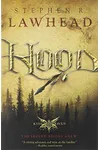
- Hood (2006) – The origin story introducing Bran ap Brychan, his fall from royalty, and his initial flight into the deep Welsh forests where the legend of King Raven is born.
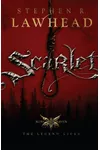
- Scarlet (2007) – The continuation of the struggle against the Norman invaders, written largely from the perspective of Will Scarlet (Will Scatlocke), a forester caught in the gears of war.
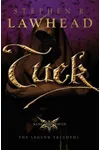
- Tuck (2009) – The concluding chapter of the trilogy, centering on Friar Tuck (Aethelfrith) as the outlaws attempt a final, desperate stand to reclaim their homeland.
An omnibus edition titled King Raven: The Complete Trilogy was released in 2011, compiling all three books into a single volume. If you purchase the omnibus, the books are already arranged in this correct order.
Publication Order vs. Chronological Order
Unlike some of Stephen R. Lawhead's other massive fantasy works (such as the Pendragon Cycle, which features prequels and flexible entry points), the King Raven books follow a strict chronological timeline. There are no side novellas, short story collections, or co-authored spin-offs that disrupt the order. The series begins in Hood, peaks in complexity during the guerilla warfare of Scarlet, and reaches its ultimate conclusion in Tuck. For the best reading experience, you should stick to this straightforward publication timeline.
Exploring the Books
Hood (2006)
The journey begins with Hood, which introduces us to Bran ap Brychan, the heir to the small Welsh kingdom of Elfael. When his father is killed and their lands are ruthlessly seized by Norman invaders under the command of Baron de Braose, Bran is forced to flee into the ancient, misty forests of Wales. Rather than a merry outlaw, Bran starts as a prideful, somewhat cowardly prince who must learn humility and survival. Guided by the mysterious forest woman Angharad and the bard Méirion, he adopts the mantle of the King Raven—a mythological forest defender—to unite his scattered people and wage a guerilla campaign against the foreign occupiers.
Scarlet (2007)
The second book, Scarlet, shifts the spotlight to Will Scarlet (Will Scatlocke). Imprisoned in a brutal Norman dungeon and facing execution, Will recounts his journey from a simple forester to one of King Raven’s most lethal lieutenants. This novel expands the scope of the conflict, illustrating the heavy toll of the rebellion and the harsh realities of medieval warfare. It also won the 2008 Christy Award for Visionary Fiction, highlighting its spiritual depth, rich character development, and atmospheric world-building.
Tuck (2009)
The saga concludes with Tuck, where the conflict between the Welsh rebels and the Norman occupiers reaches its boiling point. The narrative relies heavily on Father Aethelfrith (Tuck), a monk who serves as Bran's spiritual advisor and advisor-in-exile. As Abbot Hugo and the Sheriff de Glanville tighten their grip on Elfael, Tuck must help Bran navigate political negotiations, theological dilemmas, and a final military stand. The book brings the overarching battle for the freedom of Wales to a dramatic and definitive close.
What to Know Before You Start
Before diving into the forests of Elfael, there are a few stylistic and historical details that will help you appreciate Lawhead's approach:
- A Celtic Context: This series is not set in Sherwood Forest, nor does it feature King Richard the Lionheart. Lawhead grounds the Robin Hood legend in late 11th-century Wales (specifically around the year 1093), during the brutal reign of William Rufus (William II of England). The legendary figure of Robin Hood is reimagined here as the Welsh prince Bran ap Brychan (often referred to as Rhi Bran).
- Pronunciation and Language: Lawhead makes extensive use of Welsh names, geography, and cultural terms. Familiarizing yourself with basic Welsh pronunciation rules (such as 'dd' sounding like 'th' and 'w' functioning as a vowel) can enhance your immersion.
- Tone and Realism: This is a darker, grittier, and more realistic take than standard Robin Hood stories. The violence of the Norman conquest is depicted with historical realism, and the lifestyle of the outlaws is shown to be cold, damp, and exhausting rather than romantic.
- Spiritual Elements: While grounded in historical fact, the story features strong themes of faith, Celtic Christianity, and the mystical, spiritual qualities of the natural world, which are hallmarks of Lawhead's writing style.