

The Recommended Reading Order for Lanny Budd
Because Lanny Budd’s life unfolds alongside the history of the twentieth century, there is only one logical way to read this series: in its original publication order. Upton Sinclair wrote the novels sequentially, tracking Lanny’s growth from a naive teenager on the eve of World War I to a seasoned intelligence agent navigating the Cold War. Reading these out of order will spoil major character developments, shifts in Lanny's personal relationships, and the evolving geopolitical landscape.
1. World's End (1940)
Timeline: 1913–1919
The saga opens in the idyllic pre-war years of Europe. Lanny is a teenage American living on the French Riviera with his mother. As the son of Robbie Budd, an American munitions salesman, Lanny is uniquely positioned to see both the glamour and the underbelly of European society. The novel details the devastating impact of World War I and concludes with Lanny working as a secretary at the Paris Peace Conference, where his ideals are challenged by the cynicism of global treaty-making.
2. Between Two Worlds (1941)
Timeline: 1919–1929
Following the Treaty of Versailles, Lanny begins working as an art dealer, a profession that allows him to travel freely and interact with the wealthy, the bohemian, and the political. This decade-spanning book covers the economic chaos of post-war Europe, the rise of Benito Mussolini's fascist regime in Italy, and the speculative bubble of the American stock market, ending with the catastrophic Wall Street crash of 1929.
3. Dragon's Teeth (1942)
Timeline: 1929–1934
This Pulitzer Prize-winning novel focuses heavily on the rise of the Nazi party in Germany. Lanny is drawn into the political nightmare when his Jewish brother-in-law is arrested by the Gestapo. Lanny must use all his social connections, charm, and resources to navigate the increasingly hostile regime and rescue his relatives. The book captures the grim reality of the Reichstag fire, the Night of the Long Knives, and Hitler's consolidation of power.
4. Wide Is the Gate (1943)
Timeline: 1934–1937
With fascism spreading, Lanny continues his dual life as a high-society art dealer and an underground anti-Nazi operative. He participates in clandestine operations to help political refugees escape Germany and becomes deeply concerned with the outbreak of the Spanish Civil War, witnessing the early dress rehearsal for World War II.
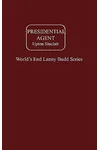
5. Presidential Agent (1944)
Timeline: 1937–1939
As Europe moves inexorably toward war, Lanny is recruited by U.S. President Franklin D. Roosevelt to act as an unofficial, secret intelligence agent. Posing as a Nazi sympathizer to maintain access to high-ranking German officials, Lanny reports directly to FDR on the mounting danger. The novel covers the annexation of Austria (the Anschluss) and the Munich Agreement.
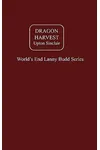
6. Dragon Harvest (1945)
Timeline: 1939–1940
This volume covers the terrifying early years of World War II, starting with the invasion of Poland. Lanny remains in Europe, feeding vital intelligence to FDR while walking a razor-thin line between friend and foe. The story details the fall of France, the Dunkirk evacuation, and the shocking ease with which the German war machine sweeps across the continent.
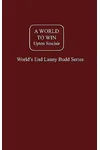
7. A World to Win (1946)
Timeline: 1940–1942
Lanny's missions take him even further afield as the conflict becomes a truly global war. He travels from Vichy France to the United States, and eventually on a dangerous mission to the Soviet Union just as Germany launches Operation Barbarossa. The book wraps up around the time of the Japanese attack on Pearl Harbor and the official entry of the United States into the war.
8. Presidential Mission (1947)
Timeline: 1942–1943
Lanny continues his high-stakes espionage for President Roosevelt. He is sent to North Africa to assess political alignments ahead of the Allied landings (Operation Torch) and attends the historic Casablanca Conference. Posing as an art expert, he enters Nazi Germany once again, gathering intel under the very noses of Goering and Hitler.
9. One Clear Call (1948)
Timeline: 1943–1944
This installment covers the critical turning points of the war, including the Allied invasion of Italy and the painstaking preparations for D-Day. Lanny finds himself behind enemy lines during the Battle of the Bulge, facing his most dangerous challenges yet as the Nazi regime begins to crumble from within and without.
10. O Shepherd, Speak! (1949)
Timeline: 1944–1946
The war in Europe comes to an end, and Lanny witnesses the liberation of concentration camps and the beginning of the Nuremberg trials. Following the death of Franklin D. Roosevelt, Lanny works to fulfill the late President's vision of a peaceful future, using a massive inheritance to establish a peace foundation and promote global cooperation during the birth of the United Nations.
11. The Return of Lanny Budd (1953)
Timeline: 1946–1949
After a four-year hiatus, Sinclair returned to Lanny's story to address the post-war world. Lanny comes out of retirement to combat the growing threat of the Cold War and Soviet expansionism. He travels back to a ruined Germany to help root out neo-Nazi networks and counter Soviet propaganda, concluding his epic journey through the first half of the twentieth century.
Chronological Order vs. Publication Order
For the Lanny Budd series, chronological order and publication order are identical. Upton Sinclair wrote the books chronologically as history unfolded around him. While some historical fiction authors write prequels or spin-offs later, Sinclair kept his focus strictly linear. Consequently, readers do not have to worry about shifting timelines or complicated read orders; starting with the first book, World's End, and reading straight through to The Return of Lanny Budd is the only recommended path.
What to Know Before You Start
Upton Sinclair was a famously passionate social reformer, muckraker, and socialist. His political views heavily influence the tone of the series. Lanny Budd serves as Sinclair’s vehicle to explore the clash between capitalism, fascism, and socialism. Readers should expect detailed discussions of political philosophy and economics alongside the espionage and historical events.
Furthermore, Sinclair's blending of fact and fiction is exceptionally seamless. Lanny routinely rubs shoulders with real-world figures like Franklin D. Roosevelt, Adolf Hitler, Hermann Göring, Benito Mussolini, Winston Churchill, and Albert Einstein. While Lanny himself is fictional, the events he witnesses and the political climates he navigates are meticulously researched and historically accurate.
Practical Reader Advice
Can these books be read as standalones? Generally, no. Each novel builds directly on the events and relationships established in the previous books. While the Pulitzer-winning third volume, Dragon's Teeth, is sometimes read on its own due to its fame, doing so misses the crucial setup of Lanny's relationships with his German friends and family established in World's End and Between Two Worlds.
Who is Lanny Budd based on? Upton Sinclair based Lanny on a composite of several real-world figures he knew, including the writer and political candidate Cornelius Vanderbilt Jr., who similarly traveled the world and met with global leaders. Sinclair's own experiences as an activist and intellectual also heavily colored Lanny's social conscience.
Understanding the Non-Fiction Companion: The database lists an Index to the Lanny Budd Story with a publication date of 2021. In reality, this companion index was originally compiled and published by Upton Sinclair in 1943 to help readers keep track of the sprawling cast of characters across the first four books. The 2021 date reflects a modern digital reprint or reissue rather than a new companion work.