
The Recommended Reading Order for The Last Dragon Chronicles
When diving into The Last Dragon Chronicles, the best path is simple: stick strictly to the publication order. While some authors write series where you can jump in at any point, Chris d'Lacey constructed this saga as a continuous, escalating journey. The mythology expands rapidly with each book, evolving from a simple neighborhood mystery into a multi-dimensional epic. If you read them out of order, the complex concepts of the Fain, the fire, and the cosmic connections will quickly become incomprehensible.
Start your journey with the main seven-book sequence, which was published between 2001 and 2012:
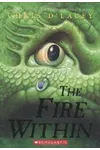
- The Fire Within (2001) – Introduces David Rain, a college student who rents a room in the Pennykettle household, only to discover that the clay dragons Liz and Lucy craft are far more than mere pottery.
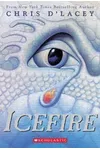
- Icefire (2003) – David is sent to the Arctic to research polar bears, discovering a deep connection between the icy landscape, the ancient dragon Gawain, and the mysterious Pennykettle lineage.
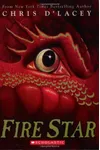
- Fire Star (2005) – The stakes rise dramatically as ancient forces wake up in the Arctic, and the battle between the dark, shadowy forces and the light of the dragons begins.
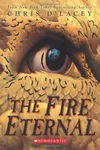
- The Fire Eternal (2007) – Set five years after the events of Fire Star, this book follows David's daughter, Alexa, and a world where the presence of dragons has shifted from myth to reality.
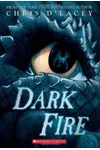
- Dark Fire (2009) – Focuses on the dangerous emergence of the dark fire, an entropic force that threatens to consume both the earth and the dragons.
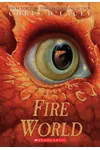
- Fire World (2011) – A massive departure from the previous settings, this story takes place in a parallel world, Libris, where dragons do not exist, and characters appear in new, unrecognizable forms.
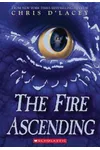
- The Fire Ascending (2012) – The final book ties together the prehistoric past, the cosmic origins of the dragons, and the fate of the modern-day characters in a grand conclusion.
The Prequel Series: The Dragons of Wayward Crescent
For readers who want to spend more time in the cozy beginnings of the Pennykettle household, d'Lacey penned a prequel spin-off series titled The Dragons of Wayward Crescent. Illustrated by Adam Stower, these books are significantly shorter, faster-paced, and targeted at a younger audience (ages 7 to 10) compared to the main series.
The series explores the creation of some of the most beloved clay dragons and is set before David Rain ever knocks on the door of Crescent Lane. The published books include:
- Gruffen (2008) – The story of a small, vigilant watch-dragon who tries to protect the household from a mysterious intruder.
- Gauge (2008) – Follows the creation of a dragon designed to measure time, who ends up causing minor chaos when he starts manipulating it.
- Glade (2009) – Centers on a green dragon created to help Liz with her gardening, discovering secrets in the soil.
- Grabber (2010) – Follows the adventures of a small dragon with oversized claws who is eager to help retrieve lost items.
While Chris d'Lacey originally envisioned a massive 16-book run for this prequel series, the publisher cancelled it after four books. The author later noted that the cancellation was likely due to readers finding it difficult to reconcile the gentle, younger-skewing tone of the prequels with the increasingly dark and cosmic direction of the main books.
The Companion Guide: Rain & Fire
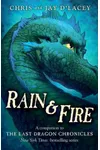
Co-authored by Chris d'Lacey and his wife Jay d'Lacey, Rain & Fire: A Guide to the Last Dragon Chronicles (2010) is the official companion book to the universe. It features exclusive character profiles, detailed lore explanations, behind-the-scenes insights, and even maps of key locations like Scrubbley and the Arctic.
When to read it: To avoid massive plot spoilers, do not read Rain & Fire until you have completed at least the first five books of the main series (up through Dark Fire). It serves as an excellent refresher before you dive into the mind-bending reality shifts of Fire World and The Fire Ascending.
Next Steps: The Erth Dragons Trilogy
After finishing the main sequence, fans often wonder where to look next for more dragon lore. While not a direct continuation of David Rain's story, d'Lacey's subsequent trilogy, The Erth Dragons, is a spiritual companion series that shares deep thematic roots and answers long-standing questions about dragon mythology.
This high-fantasy epic is set in a primeval world where dragons rule as biological, living beasts rather than magical clay creations. The trilogy consists of:
- The Wearle (2015)
- Dark Wyng (2016)
- The New Age (2018)
Reading The Erth Dragons offers a richer understanding of how dragons, humans, and cosmic forces interact in d'Lacey's grand imaginative framework, making it the perfect post-series read.
Chronological Order vs. Publication Order
Given that The Dragons of Wayward Crescent takes place before the events of The Fire Within, some readers wonder if they should start there. We strongly advise against a chronological start for a few reasons:
- Tonal Disconnect: The prequels are gentle chapter books written for very young children. Starting here might give you a false impression of what the main series is like, which eventually morphs into complex cosmic sci-fi/fantasy suited for older middle-grade and young adult readers.
- Lore Spoiling: The magic of the Pennykettle house is best uncovered alongside David Rain in The Fire Within. Knowing the origins of the clay dragons beforehand strips away the sense of mystery and discovery that makes the first book so engaging.
- Timeline Complexities: Later books in the main series (particularly Fire World and The Fire Ascending) play extensively with parallel dimensions, prehistory, and deep time. Chronological tracking becomes nearly impossible once you reach these layers, making publication order the only logical path.
What to Know Before You Start
Before you pick up The Fire Within, it is helpful to prepare for the massive genre shift that occurs as the series progresses. The first book reads like a cozy, contemporary British fantasy (despite being set in the fictional town of Scrubbley) focused on rescuing squirrels, writing stories, and household clay figurines. However, by the time you reach the fourth and fifth books, the series pivots into a sprawling cosmic mythos featuring polar bear lore, ancient extraterrestrial spirits (the Fain), global ecological crises, and interdimensional warfare.
Embrace the change in scale! Many readers love the escalating complexity, while others find the sudden shifts in timeline and location during the final books to be a wild ride. Keeping an open mind and letting the mystery unfold is the key to fully enjoying Chris d'Lacey's unique, eco-conscious masterpiece.