

The Recommended Reading Order for Lavender Road
To fully experience the emotional depth and character growth in Helen Carey’s Lavender Road series, you should read the books in their chronological order, which also matches the order of their publication. Because the characters’ lives are deeply entwined and their personal relationships develop continuously throughout the narrative, reading the series out of order will spoil major plot points, romances, and character arcs.
Here is the recommended reading path for the series:
- Lavender Road (1995) – Set in 1939.
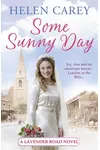
- Some Sunny Day (1995/1996) – Set in 1940.
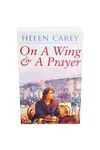
- On a Wing and a Prayer (1997) – Set in 1941.
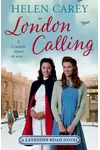
- London Calling (2016) – Set in 1943.
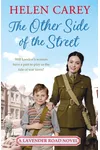
- The Other Side of the Street (2017) – Set in 1944.
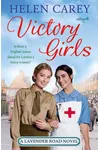
- Victory Girls (2018) – Set in 1944–1945.
Lavender Road Book-by-Book Breakdown
This series spans the entirety of World War II, starting from the nervous tension of late 1939 to the celebrations of VE Day in 1945. Below is a detailed breakdown of the six books that make up this beloved London saga.
1. Lavender Road (1995)
Set in Clapham, South London, in the late summer of 1939, this debut novel introduces readers to the fictional street of Lavender Road just as war becomes inevitable. We meet the diverse characters who call this neighborhood home: Joyce Carter, struggling with poverty and a difficult marriage; her headstrong daughter Jen, who dreams of escaping her domestic struggles to become a famous actress; and the elegant but unhappy Pam Nelson, who is trapped in a marriage to a cruel man. As the first air raids begin, the class divides between neighbors begin to soften, laying the groundwork for the community bonds that define the rest of the series.
2. Some Sunny Day (1995)
The story shifts to 1940, a year defined by the terror of the London Blitz. This installment focuses on Katy Parsons, a shy and sheltered young woman suffering from asthma who longs to break free from her protective parents and serve as a nurse. Meanwhile, Louise Rutherford, a young woman from a wealthy family, experiences a personal crisis that forces her to confront the realities of class prejudice. Jen Carter joins an ENSA (Entertainments National Service Association) theatrical troupe to entertain the troops, and her mother Joyce finds a new sense of purpose driving a mobile canteen for the WVS (Women's Voluntary Service).
3. On a Wing and a Prayer (1997)
Set in late 1941, the war has dragged on, bringing exhaustion and grief to the home front. The spotlight in this book falls on Lady Helen de Burrel. Moved by the quiet courage and sacrifices of her neighbors on Lavender Road, Helen volunteers for the Special Operations Executive (SOE) and faces intense danger as she helps coordinate clandestine missions in German-occupied France. This novel introduces elements of espionage and high stakes, contrasting the secret operations abroad with the stubborn daily struggle of the residents back in Clapham.
4. London Calling (2016)
Published nearly two decades after the third book, London Calling picks up the story in 1943. The focus shifts to Molly Coogan, a passionate and rebellious young nurse who is struggling with the harsh discipline of hospital life while keeping a heavy secret close to her heart. Her strong-willed personality repeatedly clashes with Jen Carter, who has returned to London and is still chasing her acting dreams. As the war enters its most critical phases in Europe and the Mediterranean, the residents of Lavender Road must pull together once more.
5. The Other Side of the Street (2017)
Set in 1944, Londoners are weary of rationing, air raids, and the endless strain of war, but hope begins to rise with the impending Allied invasion of France. Louise Rutherford, now a young widow, is determined to rebuild her life while caring for George Nelson, a young war orphan. When a charismatic American officer arrives at her factory to recruit volunteers for a secret project, Louise sees her chance for a fresh start. At the same time, Joyce Carter navigates a late-in-life romance just as London is terrorized by the arrival of the V-1 "doodlebug" flying bombs.
6. Victory Girls (2018)
The series reaches its conclusion between August 1944 and VE Day in May 1945. Despite Allied advances across Europe, the final months of the war bring intense danger to London in the form of V-2 rocket attacks. Helen de Burrel ventures back to war-torn France and Germany, risking her life to search for her missing fiancé, Andre. Back in London, Molly Coogan tries to heal from her own wartime losses while uncovering the truth about the mother who gave her up for adoption. The novel brings the threads of all the major characters together, ending with the historic celebrations of peace on VE Day.
Chronological Timeline vs. Publication Order
Because Helen Carey wrote the series in exact chronological order, there are no confusing timeline jumps. However, the publication history features a notable gap. The first three books were published in rapid succession between 1995 and 1997, after which Carey took a nineteen-year hiatus from the series. She returned to the saga in 2016, publishing the remaining three novels over the next three years. Despite this long real-world gap, the continuity remains seamless, and the overall style and character development transition naturally from the third to the fourth book.
What to Know Before You Start
Before diving into Lavender Road, it helps to understand the context of the series. Helen Carey was inspired to write the saga after a conversation with a neighbor who pointed out the remnants of WWII air-raid shelters on Clapham Common. This sparked a deep interest in the home front experiences of ordinary Londoners, particularly the unsung contributions of women. The series focuses heavily on historical accuracy, showing the realistic details of wartime nursing, the WVS, the entertainment tours of ENSA, and the dangerous operations of the SOE. While the series deals with the grim realities of war, it maintains a warm, hopeful, and life-affirming tone, focusing on community solidarity and female friendship.
Are There Spin-offs or Companion Books?
There are no spin-offs, co-authored novels, or companion short stories associated with the Lavender Road series. Carey has written two standalone contemporary novels—Slick Deals (2011) and The Art of Loving (2012)—but they have no narrative connection to the Clapham wartime saga. The Lavender Road series stands alone as a self-contained six-book collection.