
The Recommended Reading Order
When diving into Nick Webb's high-stakes military science fiction universe, the path forward is straightforward but crucial. The Legacy Fleet series is highly serialized, meaning characters age, political landscapes shift, and the alien threats evolve continuously from one installment to the next. To get the full experience and avoid major spoilers, you should read the books in their publication order.
The main series consists of nine primary novels. Although the series began as a single trilogy, it quickly expanded into three distinct three-book narrative arcs that span the broader galactic conflict. Reading them in sequence ensures you follow the natural evolution of the technology, the overarching military strategy, and the character arcs that span generations.
Legacy Fleet Books in Publication Order
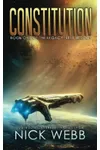
- Constitution (2015) – The book that started it all, introducing Captain Timothy Granger and the aging starship ISS Constitution.
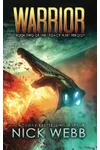
- Warrior (2015) – The intense second chapter, where humanity uncovers deep conspiracies while trying to survive the Swarm's onslaught.
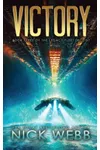
- Victory (2016) – The explosive conclusion to the original trilogy, featuring a massive, desperate showdown to save Earth.
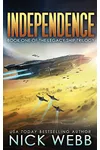
- Independence (2016) – Opening the second major arc, shifting focus to Admiral Shelby Proctor and the newer ISS Independence.
- Defiance (2017) – The struggle intensifies as new, mysterious threats emerge and internal factions threaten human unity.
- Liberty (2018) – A high-stakes battle for freedom that wraps up the secondary Legacy Ship narrative arc.
- Legend (2021) – Launching the final three-book arc, bringing old legends and new technologies back to the front lines.
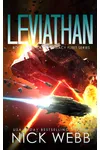
- Leviathan (2021) – A massive cosmic clash as the true scale of the galactic conflict is laid bare.
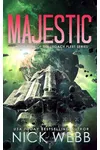
- Majestic (2023) – The epic ninth book that serves as the ultimate culmination of the series' grand story.
Breaking Down the Arcs and Subseries
To help organize your reading schedule, it is useful to understand how Nick Webb structured this nine-book journey. The saga is essentially divided into three consecutive phases, each focusing on different phases of the war against the alien entity known as the Swarm, as well as shifting leadership within the human fleets.
The Legacy Fleet Trilogy (Books 1–3)
The original trilogy comprises Constitution, Warrior, and Victory. Set in the year 2650, it takes place 75 years after humanity barely survived a devastating attack by a merciless alien collective called the Swarm. The story focuses on the grizzled, old-school Captain Timothy Granger and his crew on the ISS Constitution—an outdated, soon-to-be-retired starship that suddenly becomes Earth's only hope when the Swarm makes its terrifying return. This arc established Webb's signature blend of gritty military tactics, telepathic alien threats, and classic space opera action.
The Legacy Ship Trilogy (Books 4–6)
The second arc includes Independence, Defiance, and Liberty (often referred to by fans and retail bundles as the Legacy Ship Trilogy). This arc jumps forward in time and shifts focus to Shelby Proctor, who has risen to the rank of Admiral. When a new, even more dangerous threat surfaces, Proctor is pulled out of retirement to command the advanced ISS Independence. This trilogy expands the political landscape of the universe, diving deeper into internal human conspiracies and the complex nature of the alien technology.
The Final Arc (Books 7–9)
The saga culminates with Legend, Leviathan, and Majestic. These three books bring the overarching war to its final, massive resolution. As the title of the seventh book suggests, this arc features the return of legendary figures, desperate last stands, and a deep exploration of the origin of the alien threats. Reading these books is highly recommended for anyone who wants closure on the characters and storylines introduced all the way back in Constitution.
What to Know Before You Start
Before you strap into the cockpit, there are a few practical elements to keep in mind regarding Nick Webb's writing style and the continuity of the series:
- High Continuity: These books are not designed to be read as standalones. Each novel builds directly on the cliffhangers and revelations of the previous one. Skipping a book will leave you highly confused about character motivations and the state of the interstellar war.
- Hard Science Meets Space Opera: Webb's background in science shines through in his descriptions of quantum jump drives, smart steel hulls, and sub-light physics. However, the story remains accessible and prioritizes fast-paced action and emotional character moments over dry technical jargon.
- Tonal Inspiration: If you are a fan of military sci-fi classics like Battlestar Galactica or the starship-focused action of Star Trek, you will feel right at home. The series balances massive fleet maneuvers with the claustrophobic, tense atmosphere of life aboard a warship.
The Expanded Universe and Companion Stories
In addition to the main nine-book sequence, the Legacy Fleet universe has expanded with spin-offs and companion works. While these are not mandatory to understand the core plot of Granger and Proctor, they offer extra flavor for dedicated fans:
Legends of the Legacy Fleet
This companion series acts as a collection of side stories. Rather than following the linear path of the main fleet, these tales explore standalone missions, different ship crews, and historical events within the same universe. They are perfect for reading after you finish the first trilogy to get a broader view of how the Swarm war affected other parts of human-occupied space.
The Kindle Worlds Era
During the height of the series' popularity, the Legacy Fleet was featured in Amazon's now-defunct Kindle Worlds program. This allowed other science fiction authors to write authorized stories set in Nick Webb's universe. Because the program has officially shut down, these stories can be difficult to track down today. Rest assured that you do not need to read any of these guest-authored stories to follow the main narrative arc written by Webb.
A Note on Other Nick Webb Series
It is common to see retail sites list other works by Webb, such as the Pax Humana Saga (sometimes published under the name Endi Webb), alongside the Legacy Fleet. While they share similar military science fiction DNA, themes of alien invasion, and space combat, they are set in entirely different universes with no narrative crossover. You can read them independently of the Legacy Fleet books.