

The Recommended Reading Order for the Legend Series
When diving into Marie Lu’s electrifying young adult dystopian world, the best path forward is clear: read in publication order. While the series features prequel material, starting with the first full-length novel establishes the central conflict, the stark class divides, and the dual perspectives of June and Day in the most impactful way possible. Starting with the prequels can lessen the mystery of how these two vastly different characters ended up on their collision course.
For the absolute best reading experience, we recommend following this path, which weaves the main novels and the supplemental stories together chronologically as they were meant to be experienced:
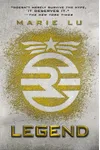
- Legend (Book 1) — Published in 2011. This is where the saga begins. You are introduced to June Iparis, a fifteen-year-old military prodigy born into an elite family, and Daniel “Day” Altan Wing, a fifteen-year-old street criminal and rebel champion. Their paths cross in a dangerous game of cat-and-mouse in a flooded, futuristic Los Angeles.
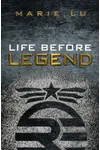
- Life Before Legend (Novella 0.5) — Published in 2012. This collection contains prequel stories that explore the lives of June and Day when they were twelve years old, three years before they met. It is best read after the first book so you already have an emotional connection to the characters.
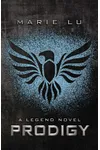
- Prodigy (Book 2) — Published in 2013. The stakes escalate rapidly as June and Day find themselves in Las Vegas, joining forces with the Patriot rebels to overthrow the Republic, all while navigating shifting political alliances and their growing feelings for one another.
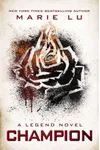
- Champion (Book 3) — Published in 2013. The original trilogy's explosive conclusion. A deadly plague sweeps through the Republic, and international war with the Colonies looms, forcing June and Day to make devastating personal sacrifices for the greater good.
- Life After Legend / Life After Legend II (Short Epilogues) — Released in 2018. Originally shared by Marie Lu as exclusive digital extras for fans, these brief epilogue stories check in on June and Day during their years apart, bridging the massive narrative gap between the ending of the original trilogy and the spin-off sequel.
- Rebel (Book 4) — Published in 2019. Set several years after the events of Champion, this novel shifts the focus slightly to Day’s younger brother, Eden Wing, who is now growing up in the futuristic city of Ross City, Antarctica. Both June and Day return as major characters, facing new threats in a seemingly utopian society.
Publication Order of Legend Books
If you prefer to stick strictly to the major novel releases and want to see how the world expanded year by year, you can follow the official release timeline. Marie Lu took a six-year break between the conclusion of the core trilogy and the release of the companion novel, which makes the jump to the final book a unique experience for long-time readers.
- Legend (November 2011)
- Life Before Legend (Novella — January 2012)
- Prodigy (January 2013)
- Champion (November 2013)
- Rebel (October 2019)
Chronological Order vs. Publication Order: What’s the Difference?
For readers who love tracking timelines from the absolute beginning, the chronological order shifts the prequel stories to the very start of the list. Here is how that timeline looks:
- Life Before Legend: Episode 1 & Episode 2 (Set three years before the main story)
- Legend (The core introduction to the conflict)
- Prodigy (Picking up immediately after the first book's escape)
- Champion (The climax of the Republic vs. Colonies war)
- Life After Legend / Life After Legend II (Short epilogues filling the years of recovery)
- Rebel (Set ten years after the end of the original trilogy)
While reading chronologically is a fun option for a re-read, we strongly advise first-time readers to avoid starting with Life Before Legend. Part of the magic of the first book is uncovering the mysteries of June's privileged military upbringing and Day's street-level survival strategy. Reading the prequels first spoils the discovery of their early lives and weakens the impact of their initial meeting in the streets of Los Angeles.
The Legend Graphic Novels
If you prefer visual storytelling or want to experience June and Day’s adventures in a new medium, the original trilogy was adapted into a series of graphic novels. Featuring script adaptations by Leigh Dragoon and dynamic artwork by Caravan Studio, these graphic novels faithfully capture the cinematic action of Marie Lu’s world.
The graphic novels should be read in the exact same order as the main trilogy:
- Legend: The Graphic Novel (2015)
- Prodigy: The Graphic Novel (2016)
- Champion: The Graphic Novel (2017)
Please note that Rebel has not received a graphic novel adaptation, so you will need to switch back to the traditional prose novel to finish the story of Eden, June, and Day.
What to Know Before You Start
Marie Lu’s dystopian universe is heavily inspired by classic literature and real-world history. Lu has frequently noted that the tense cat-and-mouse dynamic between June (the brilliant detective) and Day (the elusive criminal) was directly inspired by the relationship between Inspector Javert and Jean Valjean in Victor Hugo’s Les Misérables. By placing these dynamics into a futuristic, flooded Los Angeles, Lu created a story that balances military tactics, political revolution, and personal survival.
The series is written in alternating first-person perspectives. Each chapter swaps between June's highly analytical, observant point of view and Day's street-smart, emotional perspective. This dual-narrative style allows readers to see both sides of the class divide in the Republic of America. The tone is fast-paced and action-heavy, but it also tackles deeper ethical questions about government propaganda, public health, class warfare, and the cost of revolution.
Practical Reader Advice
Can the books be read as standalones? No. The Legend series tells a continuous story, and each book builds directly on the cliffhangers and character developments of the previous installment. Reading them out of order will result in major plot spoilers.
Are the novellas required reading? Not at all. Life Before Legend offers fun backstory for dedicated fans, but you will not lose track of the plot if you skip it. Similarly, the Life After Legend epilogue shorts are excellent bridges to Rebel, but Rebel itself contains enough recapping to fill in any blanks. They are highly recommended for the emotional closure they offer, but they are not strictly mandatory to understand the plot.
Where does Rebel fit in? Many readers refer to the series as the “Legend Trilogy,” which was its original format. Rebel was published years later and is technically a companion sequel rather than a mandatory fourth volume of the original arc. However, because it directly resolves the long-term fates of June and Day while giving Eden his own time to shine, most fans consider it the true conclusion to the saga.