
How to Read the Lestrade Series
M.J. Trow’s Lestrade series reimagines Inspector Sholto Lestrade—originally depicted as a bumbling, unimaginative foil to Sherlock Holmes in Arthur Conan Doyle's stories—as a sharp-witted, highly competent, and endearing detective. With 17 novels and a companion volume, the series blends meticulous historical research, satirical humor, and complex mysteries. Because Trow did not write the books in order of their historical settings, readers can choose between two primary reading paths: publication order and chronological order.
Option 1: Publication Order (Recommended)
Reading the series in publication order is highly recommended for first-time readers. This allows you to experience the author's development of Lestrade's character, the evolution of the narrative voice, and the escalating style of witty wordplay. In this order, the series begins with Sholto Lestrade at the height of his career before jumping back and forth through time to examine his earlier cases and later retirement.
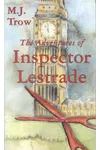
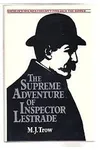
- The Adventures of Inspector Lestrade (1985) – Also published in the US as The Supreme Adventure of Inspector Lestrade. Set in 1891, Sholto Lestrade investigates a series of murders beginning on the Isle of Wight.
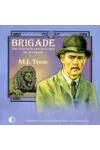
- Brigade: Further Adventures of Inspector Lestrade (1986) – Set in 1894, featuring a conspiracy involving the Charge of the Light Brigade.
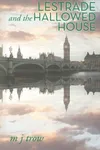
- Lestrade and the Hallowed House (1987) – Set in 1901, where Lestrade deals with the political aftermath of the death of Queen Victoria.
- Lestrade and the Leviathan (1987) – Set in 1910, dealing with a mysterious murder mystery on a grand scale.
- Lestrade and the Brother of Death (1988) – Also published as Lestrade and the Brigade. Set in 1912, exploring a sinister series of killings.
- Lestrade and the Ripper (1988) – Set in 1888, putting Lestrade at the center of the infamous Jack the Ripper investigation.
- Lestrade and the Deadly Game (1990) – Set in 1908, involving international espionage and the early Olympic Games.
- Lestrade and the Guardian Angel (1990) – Set in 1897, focusing on a complex conspiracy during the Queen's Diamond Jubilee.
- Lestrade and the Gift of the Prince (1991) – Set in 1903, sending Lestrade to Scotland to deal with royal intrigues.
- Lestrade and the Magpie (1991) – Set in 1920, featuring an older, retired Lestrade drawn back into a case involving his daughter's fiancé.
- Lestrade and the Dead Man's Hand (1992) – Set in 1885, exploring an early investigation involving a sinister card game.
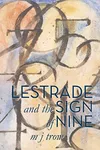
- Lestrade and the Sign of Nine (1992) – Set in 1886, playing directly on classic Sherlockian themes and investigations.
- Lestrade and the Sawdust Ring (1993) – Set in 1879, taking the reader to the very beginning of Lestrade's policing career.
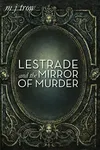
- Lestrade and the Mirror of Murder (1993) – Set in 1906, involving country house mysteries and high-society secrets.
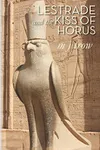
- Lestrade and the Kiss of Horus (1995) – Set in 1923, following the elderly Lestrade during the era of the Tutankhamun tomb discovery.
- Lestrade and the Devil's Own (1996) – Set in 1913, dealing with pre-war tensions and domestic cults.
- Lestrade and the Giant Rat of Sumatra (2014) – Set in 1905, resolving one of the most famous untold canonical Sherlockian mysteries.
Option 2: Chronological Order
If you prefer to follow Inspector Lestrade's life and career linearly from his early days as a young Detective-Sergeant in the Victorian era through to his retirement in the 1920s, you can read the books chronologically. This order highlights the passage of time, the changes in British society from late-Victorian industrialism to the post-Edwardian era, and the aging of Lestrade himself.
- Lestrade and the Sawdust Ring (Set in 1879)
- Lestrade and the Dead Man's Hand (Set in 1885)
- Lestrade and the Sign of Nine (Set in 1886)
- Lestrade and the Ripper (Set in 1888)
- The Adventures of Inspector Lestrade (Set in 1891)
- Brigade (Set in 1894)
- Lestrade and the Guardian Angel (Set in 1897)
- Lestrade and the Hallowed House (Set in 1901)
- Lestrade and the Gift of the Prince (Set in 1903)
- Lestrade and the Giant Rat of Sumatra (Set in 1905)
- Lestrade and the Mirror of Murder (Set in 1906)
- Lestrade and the Deadly Game (Set in 1908)
- Lestrade and the Leviathan (Set in 1910)
- Lestrade and the Brother of Death (Set in 1912)
- Lestrade and the Devil's Own (Set in 1913)
- Lestrade and the Magpie (Set in 1920)
- Lestrade and the Kiss of Horus (Set in 1923)
What to Know Before You Start
M.J. Trow's portrayal of Sholto Joseph Lestrade is a deliberate subversion of Arthur Conan Doyle's original Sherlock Holmes canon. While Holmes is traditionally the brilliant hero, Trow portrays him as a cocaine-addicted eccentric whose dramatic theories often complicate real police work, leaving Lestrade to solve the actual crimes through practical, systematic police procedures.
Readers should expect a tone that is highly satirical, frequently described as neo-Wodehousian due to its reliance on puns, historical cameos, and dry British wit. Real historical figures make frequent appearances, including Queen Victoria, Oscar Wilde, Winston Churchill, and various political and cultural icons of the era. The series is as much a parody of Victorian society and detective tropes as it is a collection of historical mysteries.
Companion Guide and Side Projects
In addition to the 17 core novels, M.J. Trow published a companion volume in 2019 titled The World of Inspector Lestrade. This book is a non-fiction historical guide that outlines the historical reality behind the Victorian and Edwardian settings, real-life figures, and locations featured throughout Sholto Lestrade's fictional career. It is an excellent read for history buffs wanting to understand the real-world contexts and research that Trow utilized to write the series.