



The Recommended Reading Path
When diving into the world of Lew Griffin, the definitive and only recommended way to read the series is in publication order. While the narrative is famous for its fragmented timeline, flashbacks, and structural time shifts, the character development and overarching themes are carefully built to be experienced in the order the books were released.
Reading these novels chronologically is not only counterproductive but nearly impossible, as individual books (particularly the debut) cover multiple eras of Lew's life, jumping back and forth across decades. Experiencing them as Sallis published them allows you to appreciate the deliberate, poetic layering of memory and identity.
The Lew Griffin Books in Publication Order
The core series consists of six novels published between 1992 and 2001:
- The Long-Legged Fly (1992): The novel that introduces Lew Griffin. Instead of a single case, it is structured in four distinct sections set in 1964, 1970, 1984, and 1990. It details his transition from a military policeman to a private investigator, debt collector, and writer, while establishing the central trauma of his life: the disappearance of his son, David.
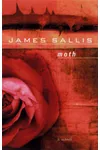
- Moth (1993): Set when Lew is fifty, semi-retired, and working as a university instructor and novelist. He is drawn back into the New Orleans underbelly to locate Alouette, the runaway daughter of a deceased friend and former lover, forcing him to confront his rural Southern roots.
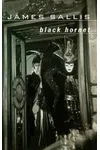
- Black Hornet (1994): A prequel in focus, this novel transports readers back to the turbulent 1960s civil rights era in New Orleans. A younger Lew Griffin becomes targeted and involved in an investigation surrounding a sniper sniper-killing spree amidst heavy racial unrest.
- Eye of the Cricket (1997): Lew searches for three missing young men, including his estranged son David. The mystery deepens when a hospital patient claiming to be Lewis Griffin is found carrying a copy of one of Lew's own novels.
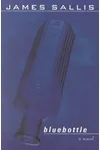
- Bluebottle (1999): The narrative takes a jarring turn when Lew is shot outside a music club. Waking up after losing a year of his life to recovery, he must piece together what occurred during his lost months, leading him into conflict with white supremacists.
- Ghost of a Flea (2001): The elegiac conclusion to the series. The novel opens with Lew in a room with a dead body, reflecting on a life unraveling. With his partner Deborah leaving him, his cop friend Don Walsh shot, and David missing again, the book delivers a metafictional twist that reframes the entire series.
Chronological Caveats and Narrative Style
James Sallis does not write traditional detective fiction. If you are expecting straightforward police procedurals, the Lew Griffin series will challenge you. Sallis utilizes the framework of detective noir to explore deep philosophical questions, the instability of memory, and the fluid nature of time. The past is not a static backdrop in these books; it actively encroaches on the present.
For example, because The Long-Legged Fly spans from 1964 to 1990, it frames the entire timeline, while Black Hornet zooms in on the 1960s to fill in the gaps of Lew's formative years. The final book, Ghost of a Flea, functions as a meditative summary that suggests all six novels are a single, continuous investigation into Lew Griffin’s own existence.
What to Know Before You Start
Before stepping into Lew Griffin's New Orleans, keep the following in mind:
- Atmosphere as a Character: New Orleans is not just a setting; its jazz clubs, humidity, cultural crossroads, and racial tensions are integral to the story's soul.
- Poetic Prose: Sallis is a poet, and his writing features a rhythmic, bluesy cadence with sparse, haunting prose.
- Metafictional Elements: Lew is a novelist writing about his own experiences, and the boundary between the narrator's reality and the stories he tells becomes increasingly blurred as the series reaches its climax.