
The Recommended Lightbringer Reading Order
For readers diving into Brent Weeks' acclaimed epic fantasy series, the recommended path is simple: read the main books in publication order. Because the series features a complex, continuous storyline with deep character evolution and cascading political consequences, reading the novels out of order will spoil major plot points. The complete sequence consists of five primary novels and one supplemental short story that fits between the second and third volumes.
The Lightbringer Reading Order at a Glance
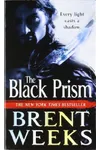
- The Black Prism (Book 1)
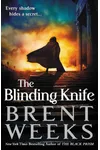
- The Blinding Knife (Book 2)
- Gunner’s Apprentice (Novella / Book 2.5 - Optional)
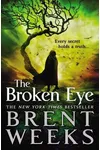
- The Broken Eye (Book 3)
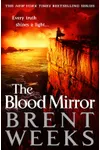
- The Blood Mirror (Book 4)
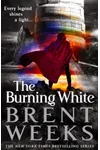
- The Burning White (Book 5)
The Lightbringer Books in Publication Order
The series developed over nearly a decade, beginning with a fresh take on magical dynamics and concluding in a massive, high-stakes conflict. Below is the breakdown of each book in the main sequence:
1. The Black Prism (2010)
The saga starts with The Black Prism, introducing readers to the Seven Satrapies and the complex magic of chromaturgy. The story revolves around Gavin Guile, the reigning Prism—the high priest and emperor who maintains the fragile peace of the world by balancing colors. Gavin's world is upended when he learns he has a son, Kip, born in a distant province. As Gavin attempts to rescue Kip and keep his own dark secrets hidden, the rumblings of a massive rebellion threaten to tear the Satrapies apart.
2. The Blinding Knife (2012)
The second volume, The Blinding Knife, accelerates the stakes. Gavin’s power is waning, and his past continues to catch up with him. Meanwhile, Kip undergoes rigorous training under the Blackguard, the elite protectors of the Prism. This installment introduces the mysterious blinding knife, an ancient artifact capable of altering the drafting powers of anyone it cuts, shifting the balance of power across the entire realm.
3. The Broken Eye (2014)
In The Broken Eye, the characters find themselves scattered and reeling from the consequences of the war. Kip must navigate a web of political assassinations, secret societies, and ancient orders while Gavin faces imprisonment and the loss of his magical abilities. The book dives deeper into the mythological history of the world, revealing that the conflicts between the satrapies are part of a much older struggle.
4. The Blood Mirror (2016)
Originally planned as a trilogy, the series expanded as the narrative grew. The Blood Mirror (frequently noted in older databases as published in 2015, but officially released in October 2016) focuses on Gavin’s struggle to survive his confinement and escape his past, while Kip attempts to unite a fractured resistance against the White King’s invading forces. It is a darker, more introspective volume that sets the stage for the final clash.
5. The Burning White (2019)
The epic conclusion, The Burning White, is a massive volume that resolves the fates of Gavin, Kip, and the Seven Satrapies. It brings the war to a head, answering long-standing mysteries about the nature of the Orholam, the Creator, and the ultimate cost of drafting light. Weeks weaves together the spiritual, political, and physical battles of the series in an emotional finale.
Chronological Order, Caveats, and Supplemental Stories
Because the main storyline is strictly linear, chronological order matches the publication order. However, there are a few minor details and supplemental works to keep in mind when navigating the universe:
The Novella: Gunner's Apprentice (Book 2.5)
Originally released in 2014 as a pre-order bonus for The Broken Eye, "Gunner's Apprentice" is a supplemental short story focusing on characters within the Seven Satrapies. It takes place between the events of The Blinding Knife and The Broken Eye. While it offers fun extra context for Kip and Liv, it is not strictly required to understand the core narrative, and some fans treat it as non-canonical or a separate piece of bonus content.
The Night Angel Multiverse Connection
While the Lightbringer series stands entirely on its own, Brent Weeks has confirmed that it exists within a larger multiverse alongside his other major work, the Night Angel trilogy. Although they are set on different worlds with entirely different magic systems (chromaturgy vs. the Talent), observant readers will catch subtle Easter eggs, cosmological references, and name-drops (such as mentions of Midcyru) that bridge the two worlds. However, you do not need to read Night Angel to understand or enjoy Lightbringer.
What to Know Before You Start: Magic and World-Building
Before jumping into The Black Prism, here is a quick primer on what makes this epic fantasy world so distinct:
- Chromaturgy and Luxin: The magic system is based on light and color. Drafters absorb light through their eyes and transform it into a physical substance called luxin. Each color of luxin has unique physical properties (for example, blue is hard and structured, red is flammable, and green is flexible and wild).
- The Cost of Drafting: Magic is not free. Every time a drafter uses magic, luxin accumulates in their eyes. Eventually, the colors "break the halo," driving the drafter insane and turning them into a "wight." This adds a tragic, finite lifespan to every magic user.
- The Prism: The Prism is the only drafter who can draft every color of the spectrum without breaking their halo. They act as both a political leader and a spiritual mediator, balancing the colors of the world to prevent magical imbalance.
Audiobook Recommendations: Two Ways to Listen
For audiobook enthusiasts, the Lightbringer series offers two excellent, distinct listening formats:
- The Standard Audiobooks: Read by the highly acclaimed narrator Simon Vance. Vance is widely praised by fans for his clear narration, distinct character voices, and consistent pacing across all five books.
- The GraphicAudio Adaptation: A full-cast dramatization featuring multiple voice actors, custom sound effects, and cinematic background music. This is often described as a "movie in your mind." Fans are divided on which version is superior, so it is highly recommended to listen to samples of both styles before making a choice. Note that GraphicAudio's availability may vary based on regional licensing rights.