











Where to Start with the Lois Meade Mysteries
If you are ready to dive into the cozy, gossip-filled village of Long Farnden, there is only one logical starting point: Murder on Monday (2002). Ann Purser designed the Lois Meade series to be read in order, allowing readers to watch Lois's domestic life, her cleaning business, and her sleuthing relationships evolve naturally over time. Reading the series out of order is possible, but you will miss the gradual growth of Lois’s family, the expansion of her cleaning business, and the shifting dynamics with the local constabulary.
The Lois Meade Reading Order: Days of the Week and Clock Hours
Ann Purser structured the series using a highly memorable naming convention. The first seven books follow the days of the week, tracking Lois's early investigations. Following the Sunday installment, the titles transition to hours of the clock, starting at one and ending at seven. The chronological order matches the publication order exactly. Here is the complete list of Lois Meade mysteries in their recommended reading order:
- Murder on Monday (2002) – Lois Meade is introduced as a working-class mother who starts the New Brooms cleaning service. She uses her access to the village's homes to investigate the murder of a local spinster.
- Terror on Tuesday (2003) – A corpse is found dressed in a suit of armor inside the village chapel, drawing Lois back into detective work.
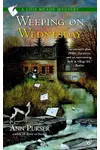
- Weeping on Wednesday (2004) – Lois digs into the dark secrets of Long Farnden when she uncovers blackmail and murder.
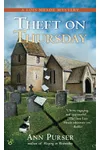
- Theft on Thursday (2004) – Under the guise of cleaning, Lois investigates a series of local thefts that escalate into murder.
- Fear on Friday (2005) – The peace of Long Farnden is shattered again, forcing Lois to balance her growing business with a complex investigation.
- Secrets on Saturday (2006) – Secrets hidden behind the polished doors of the village's wealthier residents come to light.
- Sorrow on Sunday (2007) – A tragic death on Sunday forces Lois to choose between her safety and finding the truth.
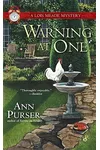
- Warning at One (2008) – The naming convention shifts to hours of the day. Lois untangles a mystery that begins with a threatening warning.
- Tragedy at Two (2009) – A shocking death in the village leads Lois to work alongside local authorities to find the culprit.
- Threats at Three (2010) – Small-town extortion and threats lead to a lethal confrontation.
- Foul Play at Four (2011) – Lois investigates foul play that hits close to home in her tight-knit community.
- Found Guilty at Five (2012) – Justice and vengeance collide in another intricate village mystery.
- Scandal at Six (2013) – Gossip runs rampant as a new scandal threatens the reputation of village residents.
- Suspicion at Seven (2014) – The final book in the series sees Lois untangling a murder tied to a fraudulent pyramid scheme.
The Ivy Beasley Spin-off Series
For readers who finish the main series and want more of Ann Purser’s cozy English settings, there is a direct spin-off. Ivy Beasley, a cantankerous and gossipy spinster who frequently appears in the Lois Meade books, becomes the protagonist of her own five-book mystery series (often called the Barrington or Enquiry series). After being sent to a retirement community in Barrington, Ivy refuses to fade quietly into the background and instead starts her own amateur detective agency.
If you want to follow Ivy's adventures, read them in this order after finishing the Lois Meade series:
- The Hangman's Row Enquiry (2010)
- The Measby Murder Enquiry (2011)
- The Wild Wood Enquiry (2012)
- The Sleeping Salesman Enquiry (2013)
- The Blackwoods Farm Enquiry (2014)
What to Know Before You Start
The Lois Meade mysteries offer a distinct flavor compared to traditional middle-class British cozy mysteries. Here are a few key elements to keep in mind before you begin reading:
- A Working-Class Sleuth: Unlike the aristocratic or wealthy amateur detectives common in cozy mysteries, Lois is a working-class mother of three. Her husband, Derek, is an electrician, and she launches her cleaning business, New Brooms, to help make ends meet. Her job is her superpower, granting her access to the village's private quarters and dirty laundry (both literal and figurative).
- The Growing Family: The passage of time is a central feature of the series. Throughout the 14 novels, Lois's three children—Douglas, Josie, and Jamie—grow up, take on careers, and experience their own life milestones. This domestic continuity makes reading the books in order highly rewarding.
- Competent Police: Many cozy mysteries rely on incompetent police officers to justify the amateur sleuth's involvement. Purser avoids this cliché. Inspector Hunter Cowgill is portrayed as a competent and intelligent detective who respects Lois's insights, creating a productive partnership rather than adversarial conflict.
- Vibrant Setting: The fictional village of Long Farnden, set in Leicestershire, is a character in its own right. Purser leverages her own experience living in rural England to detail the village's nosy neighbors, thatched cottages, and local pubs, capturing both the charm and the claustrophobia of small-town life.
Chronological and Order Caveats
Because the publication order and chronological order are identical, readers will not face confusing timeline shifts. However, there are a few minor details to keep in mind. The spin-off series focusing on Ivy Beasley runs parallel to the later Lois Meade books (the first Ivy Beasley book was published in 2010, around the same time as Threats at Three). While you do not need to read them in a strict mixed chronological order, it is best to read the Lois Meade series up to at least the tenth book before starting Ivy's spin-off to understand her character's origins in Long Farnden.