
The Recommended Reading Order
The Looking Glass Trilogy is a unique, time-spanning subseries within Jayne Ann Krentz's expansive Arcane Society universe. Unlike typical trilogies that follow a single set of characters chronologically, this series bridges three distinct historical eras—the Victorian era, the contemporary day, and a far-future colony planet—using three of the author's most famous pen names. Despite the massive shifts in time and setting, the books are bound together by a single overarching mystery: the dangerous, psychically active legacy of Mrs. Bridewell's deadly glass and clockwork inventions.
We highly recommend reading the trilogy in publication order. While you might be tempted to read chronologically by jumping back to Victorian England first, doing so will spoil key narrative reveals and disrupt the natural flow of the mystery. The author designed the modern-day book to introduce the core threat, the historical book to explain its origins, and the futuristic book to resolve its long-term legacy.
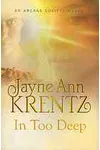
- In Too Deep (Jayne Ann Krentz, 2010) — Set in contemporary California.
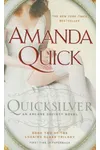
- Quicksilver (Amanda Quick, 2011) — Set in Victorian London.
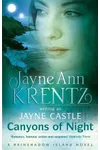
- Canyons of Night (Jayne Castle, 2011) — Set in the futuristic world of Harmony.
Additionally, there is an official companion novella, The Scargill Cove Case Files (released digitally in December 2011 under the name Jayne Ann Krentz). While technically published last, it serves as a prequel (often numbered as Book 0.5) that introduces the paranormal coastal town of Scargill Cove and its resident investigator, Fallon Jones. You can safely read this novella either before starting the trilogy or as a bonus wrap-up afterward.
Looking Glass Trilogy: Book-by-Book Breakdown
1. In Too Deep (Written as Jayne Ann Krentz)
The trilogy kicks off in the contemporary era in Scargill Cove, a foggy, remote Northern California coastal town known as a paranormal "hot spot." Fallon Jones, a powerful chaos-theory psychic and head of the Jones & Jones investigator agency, has retreated here to manage his unstable abilities. When Isabella Valdez, a woman fleeing a lethal past, arrives seeking his help, they are pulled into a deadly conspiracy. They discover a black market ring trafficking in psychically charged artifacts, specifically a set of dangerous mirrors created by a Victorian inventor named Mrs. Bridewell. The book establishes the contemporary state of the Arcane Society and introduces the primary elements of the Looking Glass mystery.
2. Quicksilver (Written as Amanda Quick)
For the second volume, the story shifts back in time to late 19th-century Victorian London. Virginia Dean is a "glass-reader" who can tune into the psychic resonance left behind on mirrors and crystals—a talent she must hide to survive in polite society. When she discovers a murder victim next to a bizarre, glowing glass artifact, she crosses paths with Owen Sweetwater, a hunter for the Arcane Society. Together, they investigate the origins of the deadly Bridewell glass inventions. This historical installment acts as a flashback, providing crucial context on how these dangerous devices were first manufactured, who Mrs. Bridewell was, and why the Arcane Society spent over a century trying to lock them away.
3. Canyons of Night (Written as Jayne Castle)
The finale catapults readers centuries into the future to the planet Harmony, where human colonists have been cut off from Earth and have built a society relying on unique psychic talents, ghost-hunting dust bunnies, and underground ruins. The story takes place on Rainshadow Island, a mysterious, fog-shrouded outpost containing a psychic preserve. Charlotte Enright, a consultant who uses her talents to study the local flora, teams up with Slade Attridge, a former investigator with a dangerous psychic edge. Together, they confront a syndicate plotting to weaponize the ancient, surviving remnants of the Bridewell glass artifacts. This book ties up the trilogy by showing how the legacy of the Looking Glass conspiracy is finally laid to rest in the far reaches of space.
Publication Order vs. Chronological Order
Because the trilogy spans three vastly different settings, readers often wonder if a chronological approach makes more sense. Let's look at how the timeline breaks down historically:
- Victorian Era (Late 1800s): Quicksilver (Amanda Quick)
- Contemporary Era (Early 2000s): In Too Deep & The Scargill Cove Case Files (Jayne Ann Krentz)
- Futuristic Era (Far Future): Canyons of Night (Jayne Castle)
While reading chronologically starting with Quicksilver seems logical on paper, we strongly advise against it. Jayne Ann Krentz wrote In Too Deep first to lay the groundwork of the modern conflict, letting readers experience the confusion and danger of the modern characters uncovering these historical secrets. If you read Quicksilver first, you will already know the secrets behind the Bridewell devices, stripping the suspense from the contemporary investigation. Stick to the publication order for the best pacing and mystery resolution.
What to Know Before You Start
The most important thing to understand is that the Looking Glass Trilogy is part of a much larger, overarching meta-series called the Arcane Society. Founded by late 17th-century alchemist Sylvester Jones, the Arcane Society is a secret organization dedicated to protecting, cataloging, and researching individuals with psychic abilities.
Jayne Ann Krentz uses her three pen names to segment this universe by genre and era: Jayne Ann Krentz handles contemporary romantic suspense, Amanda Quick writes historical Victorian romances, and Jayne Castle handles futuristic science-fiction romance. While the Looking Glass books are officially numbers 10, 11, and 12 in the broader Arcane Society series, you do not need to read the first nine books of the Arcane Society to enjoy this trilogy. Krentz designed this subseries to stand perfectly well on its own, with the Bridewell artifact plotline beginning and ending strictly within these three novels.