
Introduction to the Looking Glass Trilogy
The Looking Glass Trilogy is a unique, cross-genre sub-series created by bestselling romantic suspense author Jayne Ann Krentz. Designed as a climax to her massive, overarching Arcane Society universe, this trilogy spans three distinct eras—contemporary, Victorian historical, and futuristic science fiction—using Krentz's three most famous pen names: Jayne Ann Krentz, Amanda Quick, and Jayne Castle. The trilogy follows psychic investigators who track dangerous, energy-charged artifacts and solve high-stakes mysteries, all while finding love along the way.
Because the trilogy is tightly connected to the broader Arcane Society, readers often wonder whether they need to tackle the entire parent series first or if they can jump straight into the Looking Glass books. This guide provides the best starting points, chronological and publication pathways, and detailed breakdown of each book in the trilogy.
The Best Reading Orders for Looking Glass
Depending on your reading style, there are three primary ways to approach the Looking Glass Trilogy. You can read the trilogy directly as a standalone unit, read it chronologically by historical setting, or place it at the end of the full Arcane Society series.
Option 1: The Trilogy Publication Order (Recommended)
This is the most straightforward way to read the trilogy and is the order in which the books were released. Reading this way allows you to follow the narrative clues as Krentz built them, starting with the contemporary setup, moving to the historical backstory, and concluding in the futuristic world of Harmony.
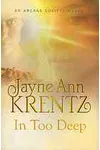
- In Too Deep (Written as Jayne Ann Krentz, 2010) – Contemporary Romantic Suspense
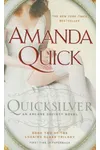
- Quicksilver (Written as Amanda Quick, 2011) – Victorian Historical Romance
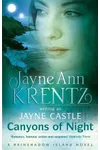
- Canyons of Night (Written as Jayne Castle, 2011) – Futuristic Paranormal Romance
Note on the Novella: Jayne Ann Krentz also published a digital-only novella titled The Scargill Cove Case Files in December 2011. While released after the trilogy was completed, it serves as a prequel/companion to the events of In Too Deep. If you want the full experience, read it first or directly after In Too Deep.
Option 2: The Chronological Era Order
If you prefer to read stories in order of the timeline they are set in, you will hop across Krentz's pen names in a different sequence. This path starts in Victorian London, moves to contemporary California, and finishes on the colony world of Harmony centuries in the future.
- Quicksilver (Victorian Era) – Owen Sweetwater and Virginia Dean's Victorian investigations.
- The Scargill Cove Case Files (Contemporary Novella) – Introduction to Scargill Cove and Fallon Jones.
- In Too Deep (Contemporary Era) – Fallon Jones and Isabella Valdez's contemporary mystery.
- Canyons of Night (Futuristic Era) – Charlotte Enright and Slade Attridge on Rainshadow Island.
Option 3: The Complete Arcane Society Order
Because the Looking Glass Trilogy represents Books 10, 11, and 12 of the grand Arcane Society series, hardcore fans may want to read the entire series from the beginning. In this case, the trilogy serves as the grand finale of the Arcane Society storyline:
- Second Sight (Amanda Quick, 2006)
- White Lies (Jayne Ann Krentz, 2007)
- Sizzle and Burn (Jayne Ann Krentz, 2008)
- The Third Circle (Amanda Quick, 2008)
- Running Hot (Jayne Ann Krentz, 2009)
- The Perfect Poison (Amanda Quick, 2009)
- Fired Up (Jayne Ann Krentz, 2010)
- Burning Lamp (Amanda Quick, 2010)
- Midnight Crystal (Jayne Castle, 2010)
- In Too Deep (Jayne Ann Krentz, 2010)
- Quicksilver (Amanda Quick, 2011)
- Canyons of Night (Jayne Castle, 2011)
Detailed Book Summaries and Key Elements
The Scargill Cove Case Files (Companion Novella, 2011)
This digital short story is a wonderful introduction to the atmospheric setting of Scargill Cove, Northern California. Scargill Cove is a geological and psychic "hot spot" where unusual psychic currents converge, attracting eccentric personalities, paranormal drifters, and outcasts. The novella introduces Fallon Jones, director of the psychic detective agency Jones & Jones, as he examines a body hidden in a local bookstore vault. The mystery lays the groundwork for the psychic artifacts and conspiracies that dominate the trilogy.
In Too Deep (Book 1, 2010)
Writing as Jayne Ann Krentz, the author kicks off the trilogy in contemporary Scargill Cove. Fallon Jones, a powerful psychic investigator who tracks chaos patterns, is struggling to run his disorganized office. Enter Isabella Valdez, a capable woman fleeing a dangerous past. Isabella becomes his assistant, and she is entirely unfazed by Fallon's psychic abilities. The plot thickens when they investigate a mysterious antique clock infused with dark energy, uncovering the sinister Nightshade conspiracy and dangerous secrets tied to Mrs. Bridewell's glass artifacts.
Quicksilver (Book 2, 2011)
Writing as Amanda Quick, Krentz takes readers back to Victorian London. The heroine, Virginia Dean, is a "glass-reader" who wakes up next to a dead body with a bloody knife and no memory of the crime. She is rescued by Owen Sweetwater, a member of the Sweetwater family known for hunting psychic monsters. Owen recognizes that Virginia is innocent and that her talent for reading mirrors is genuine. Together, they hunt down a killer targeting glass-readers, revealing the Victorian-era origin of the psychic mirror artifacts that plague the Jones family in the present day.
Canyons of Night (Book 3, 2011)
Writing as Jayne Castle, the final book leaps centuries into the future to the colony world of Harmony, specifically to the eerie Rainshadow Island. The island features "The Preserve," a dangerous, privately-owned forest containing alien ruins. Charlotte Enright, an antiques shop owner who reads aura "rainbows," teams up with Slade Attridge, the island's new police chief who is recovering from a psychic trauma. Accompanied by Slade's pet "dust bunny," they investigate a murder linked to the Preserve, resolving the final threads of the psychic artifacts and bringing the trilogy to a satisfying close.
What to Know Before You Start
Before diving into the trilogy, it helps to understand the foundational rules of the Arcane Society. The society was founded in Victorian times by Sylvester Jones to study and protect psychically gifted individuals. The Jones family and their close allies have passed down unique talents through generations, such as chaos-pattern detection and aura reading. Mrs. Bridewell, a historical figure in the universe, manufactured psychically charged mirrors and clockwork devices that can amplify power or drive people to madness. These mirrors form the central mystery that connects the Victorian, contemporary, and futuristic threads of the trilogy.
While the trilogy reads perfectly well on its own as a set of standalone romance-thrillers, reading the previous Arcane Society trilogy—the Dreamlight Trilogy (consisting of Fired Up, Burning Lamp, and Midnight Crystal)—provides excellent context, as it shares the same structural structure of historical, contemporary, and futuristic storytelling.