
How to Read the Lost Colony Series
To fully appreciate the world-building and the evolution of the setting, we recommend reading the Lost Colony books in their original publication order. Although some database listings sort them alphabetically or put Crystal Flame first, Sweet Starfire was released first in March 1986 and serves as the foundational introduction to the universe's core concepts. Here is the recommended reading path:
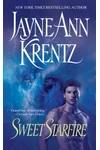
- Sweet Starfire (March 1986) – Set in the Stanza Nine system, focusing on the planet Renaissance.
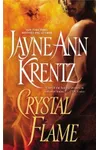
- Crystal Flame (November 1986) – Following Kalena and Ridge on a mission of survival and vengeance.
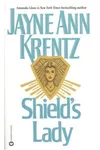
- Shield's Lady (1989) – Originally published under the pseudonym Amanda Glass, featuring the clashing cultures of the East and West.
The Pioneer of Futuristic Romance
Long before Science Fiction Romance (SFR) became a recognized subgenre on bookstore shelves, bestselling author Jayne Ann Krentz decided to run an ambitious experiment. Drawing inspiration from Anne McCaffrey’s 1967 classic Restoree, Krentz set out to combine the emotional depth and relationship dynamics of traditional romance with the speculative world-building of science fiction. The result was the Lost Colony trilogy, a series that broke boundaries in the mid-to-late 1980s when the romance market was heavily dominated by historical and contemporary settings.
Publishers were initially skeptical of this blend, fearing that romance readers would reject sci-fi elements and that science fiction fans would avoid romance. However, Krentz’s persistent storytelling paid off. By placing resilient, intellectually sharp heroines alongside rugged, protective heroes in futuristic environments, she helped carve out a brand-new space for future writers blending speculative elements with romantic suspense.
Understanding the Shared Universe and Factions
The Lost Colony books take place in a shared futuristic universe where humanity has colonized deep space, establishing colonies that eventually lost contact with Earth. Over generations, these colonies developed distinct cultures, technologies, and physical traits. A central theme across the books is the divide between different human factions:
- The Harmonics (Saints): A highly structured, pacifist society that relies on telepathic abilities, spiritual discipline, and emotional control. Those who lack these abilities, like Cidra in Sweet Starfire, are treated as outsiders.
- The Wolves: The ordinary, non-telepathic humans who inhabit the rugged outback of the colony systems. They are viewed by the Harmonics as aggressive and untrustworthy, yet they possess the practical survival skills needed in a harsh universe.
- The Ghosts: An ancient, long-extinct alien race that left behind mysterious ruins, shrines, and high-tech relics. Their advanced technology remains a source of fascination, danger, and greed for the surviving human factions.
A Closer Look at the Books
1. Sweet Starfire (1986)
The series begins with Sweet Starfire, which introduces Cidra Rainforest. Raised by the telepathic Harmonics, Cidra is devastated to find she lacks their signature mental abilities. Desperate to find a sense of belonging and unlock her potential, she decides to seek out an ancient, mythical Ghost shrine on the planet Renaissance. To navigate the dangerous, untamed outback of the Stanza Nine system, she hires Teague Severance, a rugged starship captain and a classic "Wolf." Their journey features classic opposites-attract tension, dangerous alien jungles, and the slow-burn realization that their differences make them a perfect match.
2. Crystal Flame (1986)
In the second installment, Krentz dials up the stakes and introduces a more fantasy-tinged setting. The story follows Kalena, the last survivor of a proud noble family that was ruined by a ruthless enemy. In order to carry out her plan of vengeance, she must escape an arranged "Trade Marriage." However, her betrothed is Ridge, a deadly soldier known as the "Fire Whip," who is employed by the very man Kalena hopes to destroy. As Kalena and Ridge are forced into a tense alliance, they must navigate a treacherous landscape of fire and ice, learning to trust each other to survive the political plots closing in around them.
3. Shield's Lady (1989)
Originally published under Krentz's pseudonym Amanda Glass, Shield's Lady focuses on Sariana Dayne, a pragmatic businesswoman from the civilized East who is left stranded and desperate after a critical business theft. To recover her stolen property, she signs a contract with Gryph Chassyn, a powerful mercenary from the warrior "Shield" clan of the West. While Sariana views their deal as strictly professional, Gryph recognizes her immediately as his destined "Shield mate." Together, they embark on a dangerous quest to retrieve a stolen prism cutter, bridging the gap between their starkly different cultures.
The Pseudonym Mystery and Connections to Other Series
For years, readers looking for the complete trilogy ran into a frustrating obstacle: the third book, Shield's Lady, was originally published under the pen name Amanda Glass and was difficult to find alongside Krentz's other titles. Modern reprints have fortunately restored her primary pen name, Jayne Ann Krentz, to the cover, bringing all three books under the same umbrella.
While the Lost Colony series ended as a trilogy, it laid the foundation for Krentz’s later, incredibly successful futuristic work. Writing as Jayne Castle, Krentz would go on to write the St. Helen's trilogy (consisting of Amaryllis, Zinnia, and Orchid) and the long-running Harmony series. These later books are set on the planet Harmony, a lost colony characterized by psychic talents and ancient alien ruins. While the Lost Colony books are distinct from the Harmony books, they share the same DNA of speculative romance and early ideas about lost human colonies adjusting to psychic phenomena.
Furthermore, Krentz's famous Arcane Society series eventually bridges her contemporary romantic suspense, historical romances (as Amanda Quick), and futuristic Harmony stories (as Jayne Castle), proving that her speculative universe-building is deeply interconnected.
What to Know Before You Start
If you're jumping into the Lost Colony series, keep these practical tips in mind:
- Standalone Romances: Each book features a self-contained romance with a satisfying resolution, meaning you don't have to worry about frustrating cliffhangers between books.
- 1980s Style: The books feature classic 1980s romance dynamics, including alpha heroes and high-stakes adventure, but they also highlight Krentz's signature focus on independent, highly intelligent heroines who refuse to be damsels in distress.
- Foundational Sci-Fi: The scientific concepts are light and focused on psychic phenomena and lost colony culture rather than hard, technical physics, making it highly accessible for romance fans looking to try science fiction.