

The Recommended Reading Order for Lucky Starr
The Lucky Starr series consists of six short novels written by Isaac Asimov in the 1950s. Because the series follows a linear character arc—starting with the origin of Lucky's partnership with Bigman Jones and escalating to a cold-war style diplomatic conflict with the Sirian Empire—you should read the books in their original publication order. The chronological story order aligns perfectly with the order of release:
- David Starr, Space Ranger (1952)
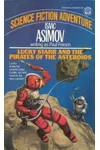
- Lucky Starr and the Pirates of the Asteroids (1953)
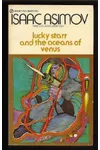
- Lucky Starr and the Oceans of Venus (1954)
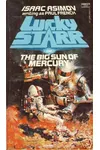
- Lucky Starr and the Big Sun of Mercury (1956)
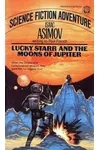
- Lucky Starr and the Moons of Jupiter (1957)
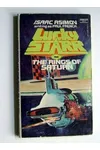
- Lucky Starr and the Rings of Saturn (1958)
Who is Lucky Starr?
David 'Lucky' Starr is a class-A councilman for the Council of Science, a powerful scientific governance body on Earth. Orphaned as a young boy when space pirates attacked his parents' ship, Lucky was adopted and raised by two high-ranking Council members, Dr. Hector Conway and Augustus Henree. Lucky is highly intelligent, athletic, and fiercely dedicated to protecting Earth and the peaceful expansion of humanity across the solar system.
On his very first mission to Mars, Lucky meets John 'Bigman' Jones, a short-statured, hot-tempered Martian agricultural worker who stands barely over five feet tall. Despite Bigman's initial skepticism and his extreme sensitivity about his height, the two quickly form an inseparable bond. While Lucky brings calm logic and deductive reasoning to their investigations, Bigman brings physical grit, loyalty, and a quick-firing blaster, making them one of classic science fiction's most memorable duos.
The 'Paul French' Pseudonym Mystery
In 1951, science fiction editor Walter I. Bradbury and literary agent Frederik Pohl approached Isaac Asimov with a proposal: write a series of science fiction novels for young adults that could be adapted into a children's television show. Asimov was excited about the project but deeply concerned about the quality of early television programming. Fearing that a low-budget TV show would ruin his reputation as a serious science fiction writer, Asimov decided to write the books under the pen name Paul French.
Although the television adaptation fell through, Asimov continued writing the series. Over time, he became more relaxed about hiding his identity. By the fourth book, Lucky Starr and the Big Sun of Mercury, he openly incorporated his famous Three Laws of Robotics into the plot. Since the Three Laws were Asimov's signature creation, this was a dead giveaway to readers that Paul French was, in fact, Isaac Asimov. Eventually, subsequent reprints of the novels credited Asimov under his real name.
Science vs. Reality: Asimov's Prefaces
Asimov intended the Lucky Starr books to be 'hard' science fiction, meaning he grounded the stories in the best astronomical knowledge available in the 1950s. However, the subsequent decades of space exploration—including the Mariner, Viking, and Voyager missions—rapidly rendered many of his settings scientifically inaccurate.
When the books were reissued in the 1970s and 1980s, Asimov chose not to rewrite the text to maintain the historical integrity of the stories. Instead, he wrote charming prefaces for each novel to explain the discrepancies to modern readers. For instance, in the preface to Oceans of Venus, Asimov notes that Venus was long thought to have global oceans beneath its thick clouds, though we now know its surface is a crushing, dry desert of hot volcanic rock. Similarly, in Big Sun of Mercury, he explains that Mercury is not tidally locked with one side permanently facing the sun, as was believed in the 1950s. These prefaces add an educational and nostalgic layer to the reading experience, highlighting how fast our understanding of the solar system evolved.
A Book-by-Book Breakdown of the Adventures
1. David Starr, Space Ranger (1952)
The adventure begins on Mars, where poisoned food shipments from Martian dome farms are killing people on Earth. Undercover as a farmhand, Lucky investigates the conspiracy, meets Bigman Jones, and discovers a hidden, ancient Martian civilization living underground. The non-corporeal Martians gift Lucky an advanced, bulletproof force-field mask, which becomes his signature tool in later books.
2. Lucky Starr and the Pirates of the Asteroids (1953)
Set in the Asteroid Belt, this installment is personal for Lucky. He tracks down the rogue space pirates responsible for his parents' deaths. In the process, he uncovers a secret alliance between the pirates and the expansionist Sirian Empire, raising the stakes from a local criminal investigation to a matter of interplanetary security.
3. Lucky Starr and the Oceans of Venus (1954)
Lucky travels to the underwater dome cities of Venus, where human colony leaders are falling under mysterious mind control. Lucky investigates telepathic, frog-like native creatures called 'V-frogs' that can project emotions. This book is widely praised by fans for its immersive world-building and detective-style puzzle solving.
4. Lucky Starr and the Big Sun of Mercury (1956)
Earth is building an experimental project on Mercury to tap the sun's energy, but mysterious sabotage threatens to destroy it. Lucky and Bigman are dispatched to the scorching planet, where they must identify a saboteur. This book famously introduces positronic robots and Asimov's Three Laws of Robotics into the series' lore.
5. Lucky Starr and the Moons of Jupiter (1957)
On the Jovian moon IX (Jupiter Nine), scientists are working on a top-secret anti-gravity engine. When a V-frog is killed, Lucky realizes the saboteur cannot be human, as no human could resist the creature's emotional projection. Lucky deduces that the Sirian Empire has planted a humanoid robot spy, utilizing the Three Laws of Robotics to solve the case.
6. Lucky Starr and the Rings of Saturn (1958)
The final book in the series centers on a high-stakes diplomatic standoff. The Sirian Empire has established a colony on Saturn's moon Mimas, claiming ownership of the entire Saturnian system. Lucky must navigate intense political maneuvering and avoid starting an interstellar war while defending Earth's rights in the Outer Sol system.
The Unwritten Seventh Book
Asimov originally planned a seventh book, titled Lucky Starr and the Snows of Pluto. However, the launch of the Soviet Union's Sputnik satellite in 1957 prompted a massive surge of interest in real-world science. Asimov felt a strong calling to write popular science non-fiction to help educate the public, leading him to abandon the Pluto novel and shift his career focus away from writing science fiction series.
Practical Reading Advice
Although the Lucky Starr books have overarching political plotlines—particularly the threat of the Sirian Empire—each novel is a self-contained mystery. You can read them as standalone adventures, but starting with the first book is highly recommended to understand the character development, the origin of Lucky's force-field mask, and how he and Bigman Jones became partners. The books are quick, breezy reads that offer a fantastic window into the optimistic 'Golden Age' of science fiction storytelling.