
The Recommended Reading Path: Follow the Fever
If you are planning to dive into the dark, seductive, and apocalyptic world of Karen Marie Moning’s Fever series, the absolute best way to experience it is by following the publication order. The series is a continuous, high-stakes narrative where events build directly upon one another. Skipping books or reading out of order will spoil major plot twists, character deaths, and world-shattering revelations.
The series is naturally split into two main arcs: the core MacKayla Lane story and the expanded universe books. Below is the recommended sequence to get the full experience without missing a beat.
Phase 1: The MacKayla Lane Core Arc (Books 1–5)
This is where it all begins. We follow MacKayla "Mac" Lane, a sunny Southern girl who travels to Dublin to investigate the murder of her sister, Alina. In doing so, she discovers she is a Sidhe-seer—someone who can see the terrifying Fae creatures hiding in plain sight. This five-book arc tracks her transformation from a naive bartender into a hardened warrior fighting for the survival of humanity.
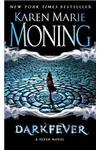
- Darkfever (2006): Introduces Mac, the mysterious bookseller Jericho Barrons, and a Dublin on the brink of supernatural chaos.
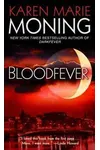
- Bloodfever (2007): Mac continues her search for the Sinsar Dubh, an ancient, evil book of Fae magic, while dealing with competing factions.
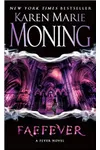
- Faefever (2008): The walls between the human world and the Fae realm begin to crumble.
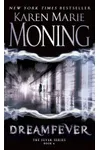
- Dreamfever (2009): Apocalyptic stakes rise as Mac struggles with her own humanity and dark desires.
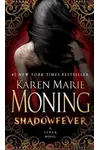
- Shadowfever (2011): The grand finale to Mac's initial arc, resolving major mysteries and concluding the first story cycle.
Phase 2: The Dani O'Malley and Expanded Universe Arc (Books 6–11)
After the events of Shadowfever, the world has irrevocably changed. Moning expands the universe by introducing new point-of-view characters, beginning with the fan-favorite teenager Dani "Mega" O'Malley. While Mac remains a vital part of the story, these later books shift perspectives to weave a much larger tapestry involving the street-savvy Dani, Ryodan, and other ancient beings.
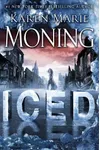
- Iced (2012): Shifts focus to Dani O'Malley as she navigates a frozen, post-apocalyptic Dublin. This is the first book in the Dani-centric subseries.
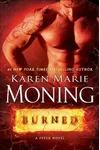
- Burned (2015): Reintroduces Mac's perspective alongside Dani's, blending their storylines as new threats emerge.
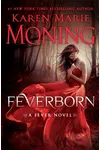
- Feverborn (2016): The tension rises as the characters search for a way to permanently close the Fae portals.
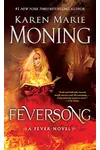
- Feversong (2017): A highly emotional entry that brings major changes to the relationships and fates of both Mac and Dani.
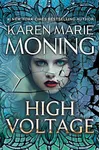
- High Voltage (2018): Shines the spotlight back on Dani O'Malley as she comes into her full power and faces her destiny.
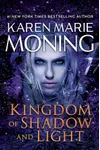
- Kingdom of Shadow and Light (2021): The epic conclusion to the entire 11-book Fever saga, wrapping up the arcs of Mac, Dani, Barrons, and the rest of the Dublin survivors.
The Complete Publication Order
Here is the full list of titles in the Fever series by publication year, including key spin-offs and short pieces that fit into the reading order:
- Darkfever (2006)
- Bloodfever (2007)
- Faefever (2008)
- Dreamfever (2009)
- Shadowfever (2011)
- The Alpha Alternative (2011) - Short story/deleted scene
- Fever Moon: The Fear Dorcha (2012) - Graphic novel
- Iced (2012)
- Burned (2015)
- Feverborn (2016)
- Feversong (2017)
- High Voltage (2018)
- Kingdom of Shadow and Light (2021)
Chronological Reading Order and Key Caveats
For the most part, the chronological order matches the publication order. However, there are two notable additions—a graphic novel and an alternative scene—that readers often wonder where to place.
What is "The Alpha Alternative"?
The Alpha Alternative (often subtitled JZB Sex Scene) is a short piece of bonus content written from the perspective of Jericho Barrons. It is not an independent sequel, but rather an alternative, highly detailed scene corresponding to events in the first book, Darkfever. While it was initially released online, it was later officially included in the print editions of Burned. It is best read as a companion piece after you have finished the first five books and want to revisit the early days with Barrons' internal thoughts.
Integrating the Fever Moon Graphic Novel
Fever Moon: The Fear Dorcha is an official graphic novel illustrated by Al Rio. Chronologically, it takes place between the events of Shadowfever and Iced, making it book 5.5. It tells a standalone story about Mac and Barrons battling a fear-devouring Fae entity in Dublin. While not strictly mandatory to understand the plot of Iced, it offers excellent character moments and fills the brief gap between the first and second halves of the series.
The Highlander Crossover Connection
Longtime fans of Karen Marie Moning know that the Fever series shares its universe with her historical paranormal romance series, the Highlander series. Certain characters from the Highlander books—particularly the immortal MacKeltar druids like Christian MacKeltar—make significant appearances in the Fever series.
You do not need to read the Highlander books to enjoy MacKayla Lane's story; the Fever series stands perfectly on its own and explains the necessary lore. However, if you want to understand the full history of the MacKeltars and enjoy the Easter eggs, you may want to read the Highlander series first. The most relevant Highlander books to read for Fever context are Kiss of the Highlander (Book 4), The Dark Highlander (Book 5), and Spell of the Highlander (Book 7).
What to Know Before You Start
Before stepping into Moning's Dublin, there are a few stylistic shifts to keep in mind. The first five books are a classic, tightly-paced urban fantasy series written in the first person from Mac's perspective. The romance is an incredibly slow burn, and the tone is dark, gritty, and mysterious.
Starting with Iced, the series transitions into a broader ensemble cast. The tone shifts slightly to match Dani’s younger, hyperactive voice, which initially divided some fans. By the time you reach Burned, the perspective splits between Mac, Dani, and other characters, expanding the narrative scope significantly. Keep this transition in mind; it is a necessary evolution to resolve the world-ending conflicts introduced in the first arc.