






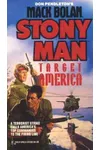

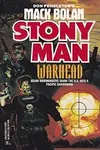







Where to Start: The Two Best Entry Points
With over 800 books in the franchise, you don't need to read every single book in order to enjoy Mack Bolan's adventures. Instead, readers generally choose one of two distinct entry points depending on their preference for gritty vigilante action or international espionage.
Option 1: The Original 'Mafia Wars' Era (Books 1–38)
If you want to experience the roots of the franchise, start with War Against the Mafia (1969). This era was penned almost entirely by series creator Don Pendleton (with the exception of book #16, Sicilian Slaughter, written by William Crawford). These books follow a gritty, street-level vigilante campaign where Bolan utilizes his military sniper skills to single-handedly dismantle the Mob after they drive his family to tragedy. Reading these first 38 books in publication order offers a complete, satisfying story arc that concludes Bolan's initial crusade.
Option 2: The Stony Man Farm Era (Book 39 onwards)
For readers who prefer military thrillers and global counter-terrorism, The New War (#39) is the perfect place to jump in. Published in 1981, this book marks a massive shift in the franchise. After Don Pendleton licensed the rights to Gold Eagle, the series transitioned to a rotating crew of ghostwriters. Bolan receives a presidential pardon, fakes his death, and assumes the alias of 'Colonel John Phoenix' to lead Stony Man Farm—a covert anti-terrorist agency. From this point forward, the series leaves behind the domestic Mafia focus and goes global.
Understanding the Stony Man Universe Subseries
To navigate the broader universe, it helps to understand the different spin-offs and companion series that ran alongside the main monthly novels.
The Core Monthly Series: The Executioner
The main series continued to publish monthly adventures, wrapping up in December 2020 with a final count of 464 novels. These books focus primarily on Bolan's solo missions, tracking his growth from the 1970s vigilante into a modern counter-terrorist operative.
The Novel-Length Thrillers: Super Bolan
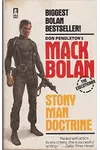
Launched in 1983, the Super Bolan series consists of 178 longer, double-length novels published bimonthly. These stories feature larger-scale global conflicts and more complex plots. The series kicked off with Stony Man Doctrine (1983) and concluded in 2015.
The Team Action: Able Team and Phoenix Force
During the 1980s boom, Gold Eagle launched two parallel spin-off series focusing on Bolan's allies, which ran until 1991:
- Able Team (51 novels): Focuses on Bolan's domestic squad consisting of Vietnam war buddies Carl Lyons, Hermann 'Gadgets' Schwarz, and Rosario 'Politician' Blancanales. They handle threats inside the United States.
- Phoenix Force (51 novels + 4 specials): Focuses on a five-man international team of elite commandos handling global security threats outside the US.
The Unified Team Ops: Stony Man Series
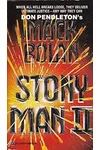
After Able Team and Phoenix Force concluded in 1991, Gold Eagle consolidated both teams into the dedicated Stony Man series. Beginning with Stony Man II (with Stony Man Doctrine retroactively treated as the first book), this series ran for 139 books until 2015, focusing on large-scale cooperative operations between the characters.
Chronological vs. Publication Order
For the vast majority of the franchise, publication order is the recommended reading path. Because the books were written by a collective of ghostwriters on a tight schedule, tight continuity between individual monthly releases is rare. However, if you want to follow the timeline perfectly, you should read the spin-off series (Able Team and Phoenix Force) alongside the main Executioner books from their introduction in the early 1980s up to their merger into the Stony Man series in 1991.
What to Know Before You Start
Bolan is famous for his signature weapons, including the Beretta 93R and his iconic .44 AutoMag (nicknamed 'Big Thunder'). While the earlier Don Pendleton books feature a dark, hard-boiled tone, the later ghostwritten Gold Eagle books lean heavily into tactical details, action-heavy pacing, and real-world geopolitical conflicts of the late 20th and early 21st centuries. Almost all books function well as standalones, meaning you can comfortably pick up any random Gold Eagle paperback and enjoy the ride.