


The Recommended Maggie Hope Reading Path
To fully appreciate the evolution of Maggie Hope from a naive, mathematical typist into a hardened Special Operations Executive (SOE) secret agent, you should read the books in their exact publication order. Because the narrative timeline of the series runs parallel to the actual progression of World War II, the chronological order of the story matches the publication order perfectly. Reading out of sequence will spoil major character developments, personal relationships, and recurring historical plotlines.
Maggie Hope Books in Publication & Chronological Order
The series spans eleven full-length novels published between 2012 and 2024. There are no side novellas or short stories to track, making this a straightforward run from start to finish:
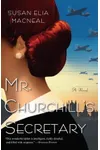
- Mr. Churchill's Secretary (2012): Set in 1940 London. Maggie Hope, a British-born American with a talent for mathematics, finds work as a secretary at Number 10 Downing Street. When she uncovers a conspiracy threatening Prime Minister Winston Churchill, her knack for codebreaking thrusts her into the world of espionage.
- Princess Elizabeth's Spy (2012): Set in 1940. Maggie is sent undercover to Windsor Castle under the guise of tutoring the young Princess Elizabeth in mathematics, while secretly protecting her from an active Nazi kidnapping plot.
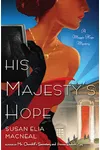
- His Majesty's Hope (2013): Set in 1941. Now fully trained as an elite SOE agent, Maggie is sent deep undercover behind enemy lines in Berlin, posing as a loyal German clerk to transmit vital intelligence back to London.
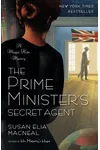
- The Prime Minister's Secret Agent (2014): Set in late 1941. Maggie undergoes intensive training in Scotland, but soon finds herself investigating a mysterious, deadly disease plaguing a local village, just as the Pearl Harbor attacks change the course of the war.
- Mrs. Roosevelt’s Confidante (2015): Set in late 1941 to early 1942. Maggie travels to Washington, D.C., as an aide to Winston Churchill. While there, she is tasked with helping First Lady Eleanor Roosevelt investigate a mysterious death linked to racial tensions.
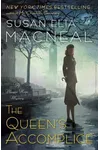
- The Queen's Accomplice (2016): Set in 1942. Maggie returns to a war-torn London during the Blitz to assist Scotland Yard in hunting down a brutal serial killer targeting female SOE agents in a manner mimicking Jack the Ripper.
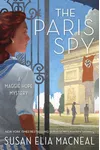
- The Paris Spy (2017): Set in 1942. Maggie travels into Nazi-occupied Paris to find her half-sister, Elise, who has gone missing while working for the French Resistance. The mission brings her face-to-face with legendary fashion icon Coco Chanel.
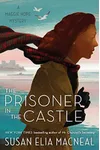
- The Prisoner in the Castle (2018): Set in 1942. Isolated at Killoch Castle on a remote Scottish island—a secure facility where agents who know too much are held—Maggie must survive a killer who is picking off the residents one by one.
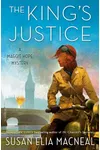
- The King's Justice (2020): Set in 1943. Back in London and struggling with severe PTSD, Maggie works alongside Scotland Yard to investigate a series of bombings and a stolen precious diamond, culminating in a high-stakes bomb defusal.
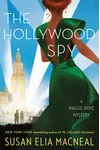
- The Hollywood Spy (2021): Set in 1943. Maggie travels to Los Angeles to investigate the suspicious death of her former classmate. In Southern California, she confronts the dark reality of wartime American racism, segregation, and local Nazi sympathizers.
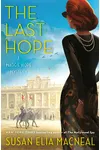
- The Last Hope (2024): Set in 1944. In the final chapter of the series, Maggie is sent to Madrid to determine the progress of Nazi Germany's nuclear bomb program and once again crosses paths with Coco Chanel, wrapping up her wartime career.
Timeline Context and Reading Caveats
The timeline of the series starts in the darkest days of the London Blitz in 1940 and marches steadily forward through the global conflict to the mid-1940s. Because of this linear structure, the character development is highly cumulative. Maggie's emotional scars, her bouts with post-traumatic stress disorder (PTSD), and the evolving relationships with her friends, lovers, and estranged family members build directly from one book to the next. Skipping around the series will make her personal journey feel fragmented and ruin the suspense of major overarching subplots, such as the fate of her half-sister Elise and her complex family history.
Historical Realism and Famous Cameos
One of the hallmarks of Susan Elia MacNeal's series is the meticulous historical research that grounds each book. Rather than relying on generic historical backdrops, the author integrates real-life figures, political events, and social struggles of the era. Readers will encounter Winston Churchill, Eleanor Roosevelt, Princess Elizabeth (the future Queen Elizabeth II), and Coco Chanel. MacNeal also shines a light on historical issues that are often overlooked in WWII fiction, including the treatment of female agents by the SOE, racial segregation in wartime America, and the rise of home-grown extremist groups.
Spin-offs and Standalones
While Susan Elia MacNeal has written other historical fiction, they do not cross over into Maggie Hope's narrative. Her 2022 novel, Mother Daughter Traitor Spy, is an entirely standalone thriller set in 1940s Los Angeles about a real-life mother and daughter who infiltrated American Nazi groups. While it shares the same rich historical detail, suspenseful pacing, and themes of anti-fascist resistance, it features an entirely new cast of characters and does not include Maggie Hope. It is an excellent read for fans of the series, but it can be read completely independently at any time.
Practical Reader Advice
Best Starting Point
You should absolutely start with the first novel, Mr. Churchill's Secretary. It establishes Maggie’s mathematical background, her American roots, her initial entry into the British war effort, and the core cast of supporting characters who remain relevant throughout the entire eleven-book run.
Can the Books Be Read as Standalones?
While each book features a self-contained mystery or espionage mission that is resolved by the final page, the underlying personal arcs and character growth are highly serialized. It is strongly discouraged to read these books out of order, as you will miss the emotional weight of Maggie's personal sacrifices and mental health struggles.
Is the Series Complete?
Yes. Susan Elia MacNeal has confirmed that The Last Hope (2024) is the eleventh and final book in the Maggie Hope series. The book brings Maggie's wartime espionage career to a natural conclusion as the conflict enters its final stages, allowing the character to step away from the shadows of war.