
The Recommended Reading Path
The Maggie MacGowen series is a highly serialized, character-driven mystery saga that must be read in publication order. Because author Wendy Hornsby allows Maggie to age, grow, and experience life-altering personal milestones in real time, jumping around the series will spoil major plot developments. Maggie begins the series as a San Francisco-based independent filmmaker and mother to a teenage daughter, Casey. Over the course of the twelve novels, she relocates to Los Angeles, builds a life with LAPD Detective Mike Flint, navigates devastating personal loss, uncovers complex family histories, and eventually moves to Europe to start anew with French diplomat Jean-Paul Bernard. To appreciate the deep emotional resonance and character continuity, start with the first book, Telling Lies, and read straight through to the end.
Maggie MacGowen Books in Chronological and Publication Order
Since the timeline of the books matches their release order, the publication order serves as the definitive reading order:
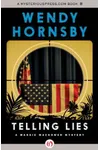
1. Telling Lies (1992)
Maggie MacGowen’s journey begins when her sister Emily, a former political radical working at a free clinic in Los Angeles, is shot and killed. Leaving San Francisco behind, Maggie heads south with her video camera to document the investigation. Her search leads her to confront their family's activist past and introduces her to LAPD homicide detective Mike Flint.
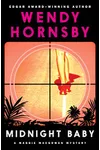
2. Midnight Baby (1993)
While shooting a documentary on homeless youth in Los Angeles, Maggie meets Pisces, a young, surprisingly polite streetwalker. When Pisces is found murdered shortly afterward, Maggie is determined to give the girl a voice. She launches her own investigation into the underbelly of LA, exposing how the city's elite exploit its most vulnerable children.
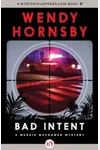
3. Bad Intent (1994)
Maggie and her teenage daughter Casey move into Mike Flint's Los Angeles home, but their domestic peace is short-lived. A politically motivated investigation revives a fifteen-year-old homicide case, accusing Mike of coercing child witnesses. To clear her partner's name, Maggie takes her camera into South Central Los Angeles, uncovering systemic corruption and a killer determined to keep the past buried.
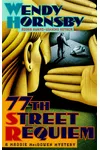
4. 77th Street Requiem (1995)
Maggie is hired to produce a documentary about the unsolved 1974 murder of LAPD officer Hank Miller. As she digs into the case, she discovers that the shooting is linked to the radical Symbionese Liberation Army. The investigation becomes deeply personal when she learns that Mike Flint was Miller's rookie partner and has been harboring secrets about that night for decades.
5. A Hard Light (1997)
This installment weaves a decades-old mystery dating back to the fall of Saigon. Decades after three refugees attempted to save historical artifacts from a museum in Da Nang, one of them reappears armed in Los Angeles. When the key witnesses Maggie interviews disappear right after she finishes filming, she must follow a trail of stolen art and wartime secrets.
6. In the Guise of Mercy (2009)
Following a twelve-year publishing hiatus, the series resumes with a major turning point: LAPD Detective Mike Flint has passed away. Haunted by a cold case Flint could never solve—the 1999 disappearance of a young gang member named Jesús Ramón—Maggie sets out to find the truth as a final tribute to her late partner.
7. The Paramour's Daughter (2010)
Maggie's world is turned upside down when a stranger claims they share a father. After the woman is killed in a hit-and-run, Maggie travels to Normandy, France, to meet her father's secret French family. There, she becomes embroiled in a bitter dispute over a family patent, inheritance, and a web of deadly family secrets.
8. The Hanging (2012)
With her documentary series canceled, Maggie takes a temporary job teaching film production at a community college in Southern California. The academic setting turns hostile when the college president is murdered. Maggie's investigation leads her past disgruntled students and faculty into a wider conspiracy involving art forgery and an illegal arms deal.
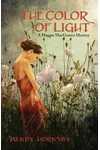
9. The Color of Light (2014)
Maggie returns to her childhood home in Berkeley, California, to pack up her late father’s estate. While sorting through his belongings, she discovers a locked home movie containing footage that could solve a brutal, thirty-year-old cold case. Her digging threatens to expose the secrets of her family's old friends, proving the past is never truly dead.
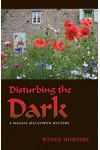
10. Disturbing the Dark (2016)
Returning to Normandy, Maggie and her film crew document the seasons on her ancestral farm. When her half-brother unearths a mass grave of German soldiers killed during World War II, it stirs up historic tensions. The stakes rise when an archaeology student assisting with the excavation is murdered, pulling Maggie into a clash of modern greed and wartime guilt.
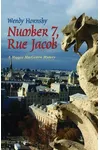
11. Number 7, Rue Jacob (2018)
Maggie arrives in Paris to claim a flat left to her by her biological mother. Her plans for a quiet transition are disrupted when her fiancé, diplomat Jean-Paul Bernard, is targeted in a drone strike in Venice. Forced to go on the run across Europe with no cash and only burner phones, Maggie must figure out who wants them dead.
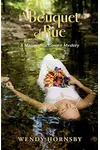
12. A Bouquet of Rue (2019)
Having officially relocated to France, Maggie starts a new job with a French television network. She settles into a leafy Parisian suburb with Jean-Paul, only to find that their peaceful new neighborhood is built on dark secrets. Maggie must use her investigative skills to navigate a domestic mystery in an unfamiliar culture.
What to Know Before You Start
Wendy Hornsby, a Southern California native and former history professor, infuses the series with rich historical context and social realism. Maggie MacGowen stands out in the amateur sleuth subgenre because of her profession. Her camera is not just a recording device; it acts as a literal and figurative shield, allowing her to ask invasive questions and observe details others miss. The series is notable for its sharp setting transitions: the first six books serve as a time capsule of 1990s Los Angeles, highlighting gang culture, urban corruption, and local politics, while the later books shift to Europe, exploring French customs, World War II legacies, and international diplomacy. Additionally, while Hornsby's Edgar Award-winning short story "Nine Sons" (1992) is not a Maggie MacGowen story, its dark, historical tone matches the gritty realism found throughout this series.