






The Recommended Reading Path
If you are planning to join Gareth Owen on his investigations through the dusty markets and opulent palaces of colonial Cairo, the best path forward is simple: read the books in publication order. Michael Pearce structured the series with a clear, linear timeline that mirrors the shifting political landscape of Egypt between 1908 and the aftermath of World War I. While the mystery in each book is self-contained and can theoretically be read as a standalone, the character dynamics, political tensions, and Owen's personal relationships—particularly his romance with the Pasha’s daughter, Zeinab—develop continuously across the novels.
Starting at the beginning allows you to experience the atmospheric evolution of Cairo as the city moves from the height of the British "veiled protectorate" toward the turbulent, nationalist-driven post-war years.
The Mamur Zapt Books in Publication Order
The series consists of nineteen novels published between 1988 and 2017. Here is the complete list of books in their official order of release:
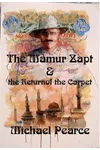
- The Mamur Zapt and the Return of the Carpet (1988) – Owen investigates a potential nationalist bomb plot threatening Cairo’s annual religious festival celebrating the Holy Carpet’s return from Mecca.
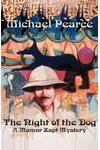
- The Night of the Dog (1989) – Tensions flare between Cairo’s Coptic Christian and Muslim communities after a series of bizarre incidents, drawing Owen into a delicate religious puzzle.
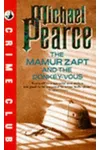
- The Mamur Zapt and the Donkey-vous (1990) – When a tourist goes missing from the famous Shepheard's Hotel, Owen must navigate European eccentricities and colonial bureaucracy.
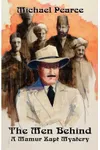
- The Mamur Zapt and the Men Behind (1991) – A series of attacks on British soldiers leads Owen to investigate underground political groups and corrupt officials.
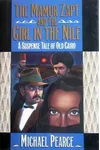
- The Mamur Zapt and the Girl in the Nile (1992) – The discovery of an unidentified woman's body in the Nile River leads to a case involving royal scandals and high-society secrets.
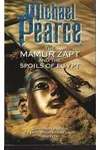
- The Mamur Zapt and the Spoils of Egypt (1992) – Owen is tasked with protecting an American archaeologist while uncovering a massive illegal trade in ancient Egyptian antiquities.
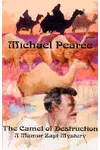
- The Camel of Destruction (1993) – Set during a stifling heatwave, Owen investigates agricultural corruption and political unrest tied to the cotton industry.
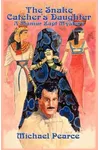
- The Snake Catcher's Daughter (1994) – A murder in a small village leads Owen deep into local traditions, superstitions, and family feuds.
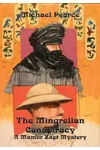
- The Mingrelian Conspiracy (1995) – Owen uncovers a plot involving political exiles from the Caucasus using Cairo as a base for international conspiracy.
- The Fig Tree Murder (1996) – An unexpected death during the construction of a new railway line exposes conflicts between modernization and traditional landowners.
- The Last Cut (1998) – Owen must keep the peace during the annual cutting of the Nile dam, a vital festival threatened by sabotage.
- Death of an Effendi (1999) – The shooting of a wealthy foreign investor at a lake-side shooting party in the Fayoum oasis draws Owen into high-stakes financial espionage.
- A Cold Touch of Ice (2000) – The murder of an Italian businessman in Cairo’s old quarters forces Owen to navigate European diplomatic rivalries just before the outbreak of the Balkan wars.
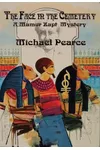
- The Face in the Cemetery (2001) – Rumors of an army of ghosts in a desert cemetery lead Owen to a stash of illegal weapons and a conspiracy involving German intelligence.
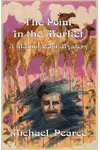
- The Point in the Market (2003) – Set as World War I looms, Owen faces rising black market activity, food shortages, and intense local civil unrest.
- The Mark of the Pasha (2008) – Owen investigates the death of an influential Pasha, exposing the decaying power structures of the old ruling class.
- The Bride Box (2013) – The delivery of a traditional bride box containing a dark token forces Owen to investigate the lingering, illicit slave trade in Egypt.
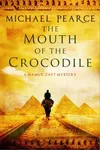
- The Mouth of the Crocodile (2015) – Sent south to Atbara, Sudan, Owen must investigate a suspicious drowning and protect a prominent Pasha who fears he is marked for death.
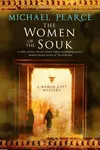
- The Women of the Souk (2017) – In the final novel of the series, Owen is drawn into a complex kidnapping case involving a young girl from an elite family, reflecting the shifting social roles of women in post-war Egypt.
What to Know Before You Start: The Historical Setting
Before diving into the series, it helps to understand the unique historical landscape Michael Pearce brings to life. The books are set during Egypt’s "veiled protectorate" period, roughly from 1882 to 1922. Officially, Egypt was still a province of the Ottoman Empire, ruled locally by a Khedive (the viceroy). In reality, the country was managed by British colonial administrators and advisors, overseen by the British Consul-General. This created a complex, overlapping legal and political system where British officials, Ottoman-Egyptian elites, and traditional religious courts all claimed authority.
Gareth Owen’s title, the Mamur Zapt, is a historical term for the head of Cairo’s Political Criminal Investigation Department (CID)—effectively the chief of the secret police. Because of his position, Owen does not just solve simple murders; his cases are almost always entangled with political subversion, colonial tensions, religious riots, and diplomatic crises. He reports to the British Sirdar (the commander-in-chief of the Egyptian army) but must constantly appease the Khedive and avoid international incidents with the resident European populations, who enjoyed special legal privileges under the historical Capitulations system.
Timeline Consistency and Order Caveats
Michael Pearce was highly consistent with his timeline. The series begins around 1908 and progresses systematically year-by-year, concluding in the post-World War I era around 1920. Because the historical events of the era—such as the buildup to the First World War, wartime shortages, and the post-war rise of the Wafd nationalist party—directly affect the plotlines, skipping books can make the political backdrop feel disjointed.
Furthermore, the personal lives of the recurring cast change noticeably. Owen's evolving relationship with Zeinab, a cosmopolitan Egyptian woman who refuses to conform to British or traditional Egyptian expectations, serves as a crucial emotional anchor for the series. Similarly, Owen's interactions with his Egyptian colleague, Mahmoud El-Zaki, highlight the changing dynamics between British administrators and the local professional class. Reading the books out of order will spoil these slow-burning character arcs.
Spin-Offs and Companion Series
While there are no direct spin-off books featuring Gareth Owen, Michael Pearce wrote two other historical mystery series that share the same sharp wit, historical accuracy, and political flavor:
- Seymour of Special Branch Series: This seven-book series follows Sandor Seymour, a multilingual Scotland Yard investigator dispatched by the British Foreign Office to handle delicate political crimes across Europe and the Mediterranean in the years leading up to World War I. Settings include Trieste, Istanbul, Athens, Tangier, Barcelona, Naples, and Malta.
- Dmitri Kameron Series: A shorter, two-book series (*Dmitri and the Milk-Drinkers* and *Dmitri and the One-Legged Lady*) featuring a young Scottish-Russian lawyer named Dmitri Kameron who solves cases in late 19th-century Tsarist Russia.