








The Best Way to Read the Man-Kzin Wars
Because the Man-Kzin Wars series is a collaborative shared universe consisting of numbered anthologies, standalone novels, and thematic story collections, tackling it can seem daunting. For the best experience, the recommended reading path is to follow the publication order. Starting with the original 1988 anthology, The Man-Kzin Wars, introduces you to the foundation of the conflict, the predatory nature of the catlike Kzinti, and the clever, desperate tactics of humanity before Niven opened up the universe to other voices.
While some fans attempt to read the individual stories in strict internal chronological order, doing so requires jumping constantly between different anthologies. Since the chronological timeline spans centuries—from first contact in the mid-24th century to post-war diplomacy—reading the volumes in the order they were published allows you to appreciate how Niven and his guest authors systematically expanded the lore, technology, and alien biology over time.
Publication Order of Man-Kzin Wars Books
Here is the complete publication sequence of the series, combining the core numbered anthologies with the standalone novels and special collections as tracked by public databases like the Internet Speculative Fiction Database (ISFDB) and Wikipedia:
- The Man-Kzin Wars (1988) – The foundational anthology containing Niven's original story 'The Warriors' alongside contributions by Poul Anderson and Dean Ing.
- Man-Kzin Wars II (1989) – Features the introduction of Kzinti telepaths and stories by Dean Ing and Jerry Pournelle.
- Man-Kzin Wars III (1990) – Contains stories by Poul Anderson, Jerry Pournelle, and S.M. Stirling, expanding the early years of the conflict.
- Man-Kzin Wars IV (1991) – A collection focusing on the tactical struggles, containing notable contributions by Donald Kingsbury.
- The Children's Hour (1991) – A focused collection containing the titular novella by Jerry Pournelle and S.M. Stirling, which details a crucial Kzinti invasion plan.
- Man-Kzin Wars V (1992) – Continued short stories exploring the broader galactic theater of war.
- Man-Kzin Wars VI (1994) – Notable for expanding Kzinti history and societal structures, including stories by Gregory Benford and Mark O. Martin.
- Man-Kzin Wars VII (1995) – Features stories by Hal Colebatch, who would go on to become one of the series' most prolific contributors.
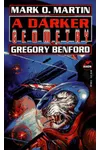
- A Darker Geometry (1996) – A full-length novel by Gregory Benford and Mark O. Martin, expanded from their novella in Volume VI, introducing pak protectors and ancient mysteries.
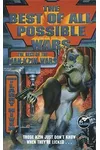
- The Best of All Possible Wars (1998) – A retrospective anthology compiling the most popular stories from the first few volumes.
- Man-Kzin Wars VIII: Choosing Names (1998) – An anthology that highlights the cultural aspects of Kzinti naming conventions.
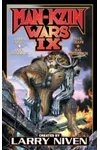
- Man-Kzin Wars IX (2001) – Diving deeper into the post-war era and uneasy human-Kzinti alliances.
- The House of the Kzinti (2002) – A collection gathering stories by Dean Ing, Jerry Pournelle, and S.M. Stirling.
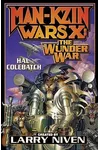
- Man-Kzin Wars X: The Wunder War (2003) – A collection dominated by Hal Colebatch's stories detailing the occupation and liberation of the colony planet Wunderland.
- Man-Kzin Wars XI (2005) – Explores further tales of resistance and space battles.
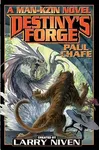
- Destiny's Forge (2006) – The first massive, full-length standalone novel written specifically for the series, authored by Paul Chafe, focusing on political upheaval on Kzinhome.
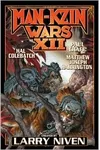
- Man-Kzin Wars XII (2009) – Explores new frontiers and features tales by Hal Colebatch and Edward M. Lerner.
- Man-Kzin Wars XIII (2012) – Combines military space opera with deeper look into the biological differences between the species.
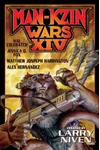
- Man-Kzin Wars XIV (2013) – Anthologizes several longer novellas detailing advanced military conflicts.
- Treasure Planet (2014) – A standalone adventure novel by Hal Colebatch and Jessica Q. Fox, paying homage to Robert Louis Stevenson’s classic, set on a colony world.
- Man-Kzin Wars XV (2019) – The final anthology in the sequence, offering fresh perspectives on the long-term aftermath of the war.
Understanding the Wunderland Arc
One of the most popular subseries within the Man-Kzin Wars is the Wunderland story arc, primarily penned by Australian author Hal Colebatch. Wunderland is an Alpha Centauri colony occupied by the Kzinti during the early wars. Colebatch's stories explore the gritty details of human resistance, collaboration, and the eventual liberation of the planet. If you are particularly drawn to this storyline, you should pay close attention to Man-Kzin Wars X: The Wunder War (2003) and follow it through to the novel Treasure Planet (2014), which wraps up several Wunderland-based character arcs.
Novels vs. Anthologies: What to Expect
Most of the numbered Man-Kzin Wars volumes are anthologies containing three or four long novellas or short stories. However, the series also contains true standalone novels that focus on a single, continuous narrative. A Darker Geometry (1996), Destiny's Forge (2006), and Treasure Planet (2014) are full-length novels. Reading these requires a bit more commitment but provides a more cohesive narrative structure than the rapid-fire style of the anthologies. Destiny's Forge by Paul Chafe, in particular, is highly regarded for its deep dive into Kzinti culture, politics, and the internal struggles of their Patriarchy.
How It Fits Into Niven’s Known Space
For readers who want to understand the larger context, the Man-Kzin Wars serve as the bridge between Larry Niven's early 'Slowboat' era (where humanity is strictly pacifist and travels below light-speed) and the hyperdrive-era space opera of his famous novel Ringworld. The wars with the Kzinti force humanity to abandon their absolute pacifism, weaponize their technology, and acquire hyperdrives. If you plan to read all of Known Space, reading the Man-Kzin Wars before diving into the core Ringworld books will give you a much richer understanding of why the Kzinti in those later books are subdued and have names like 'Speaker-to-Animals.'