







The Recommended Reading Order for Marius’ Mules
To experience the full weight of Marcus Falerius Fronto’s journey, S.J.A. Turney’s Marius’ Mules series is best read in its chronological order, which also matches the order of publication. The narrative moves year by year, mirroring the real-world timeline of Julius Caesar's campaigns, starting with the Gallic Wars in 58 BC and moving through the Roman Civil War up to the fateful events of 44 BC.
Here is the recommended reading path, including the essential interlude collection:
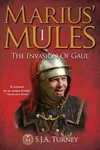
- Book 1: The Invasion of Gaul (2009) – Covers 58 BC. Caesar begins his conquest of Gaul, and Fronto is introduced as the seasoned legate of the Tenth Legion.
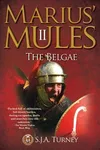
- Book 2: The Belgae (2010) – Covers 57 BC. Fronto and the legions march north to face the fierce Belgae tribes.
- Book 3: Gallia Invicta (2011) – Covers 56 BC. Roman operations shift to Armorica and Aquitania to pacify the maritime tribes.
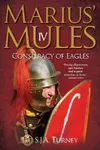
- Book 4: Conspiracy of Eagles (2012) – Covers 55 BC. Caesar crosses the Rhine into Germany and launches the first invasion of Britain.
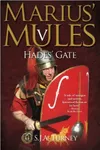
- Book 5: Hades’ Gate (2013) – Covers 54 BC. The second invasion of Britain and rising unrest back in Gaul.
- Book 6: Caesar’s Vow (2014) – Covers 53 BC. Tensions escalate in Gaul as the tribes begin to coordinate their resistance.
- Interlude: Prelude to War (2014) – A companion collection of three short stories set during the winter of 53/52 BC. Best read here to bridge the gap before the great rebellion.
- Book 7: The Great Revolt (2014) – Covers 52 BC. Vercingetorix unites the Gallic tribes, leading to the brutal siege of Gergovia and the decisive clash at Alesia.
- Book 8: Sons of Taranis (2015) – Covers 51 BC. The aftermath of Alesia and the final pacification campaigns in Gaul.
- Book 9: Pax Gallica (2016) – Covers 50 BC. As Gaul settles into a fragile peace, political machinations in Rome threaten to tear the Republic apart.
- Book 10: Fields of Mars (2017) – Covers 49 BC. Caesar crosses the Rubicon, initiating the Civil War, leading Fronto into Spain.
- Book 11: Tides of War (2018) – Covers 48 BC. The campaign moves east to Greece, culminating in the battle of Pharsalus.
- Book 12: Sands of Egypt (2019) – Covers 48–47 BC. Caesar and Fronto find themselves trapped in Alexandria amidst the Ptolemaic dynastic war.
- Book 13: Civil War (2020) – Covers 46 BC. The civil war expands to Africa, leading to the battle of Thapsus.
- Book 14: The Last Battle (2021) – Covers 45 BC. The final campaign of the civil war in Spain, ending at the bloody battle of Munda.
- Book 15: The Ides of March (2023) – Covers 44 BC. The grand finale of the series, detailing the conspiracy against Caesar and the immediate fallout in Rome.
Breaking Down the Campaign Arcs
While the series functions as a continuous story, it can be naturally divided into three main historical and narrative eras:
The Gallic Wars (Books 1 to 8)
This initial arc is closely based on Julius Caesar's own diaries, Commentarii de Bello Gallico. It details the yearly campaigns to conquer the Celtic tribes. Fronto is a frontline officer, balancing his loyalty to his ambitious general with the brutal realities of conquest. This arc reaches its dramatic peak with the rebellion of Vercingetorix in The Great Revolt and wraps up with the pacification of the final holdouts in Sons of Taranis.
The Road to Civil War (Book 9)
Pax Gallica serves as a transition point. The focus shifts from the open battlefields of Gaul to the scheming Senate chambers and political borderlands. It explores how the conquest of Gaul disrupted the balance of power in Rome, setting the stage for Caesar's rebellion against the Republic.
The Roman Civil War (Books 10 to 15)
The final phase of the series tracks the collapse of the Roman Republic. Fronto is dragged across the Mediterranean—from Spain and Greece to Egypt and Africa—as Caesar clashes with Pompey the Great and his republican allies. This arc, and the entire series, concludes with The Ides of March, which deals with the ultimate fate of Julius Caesar and provides a definitive resolution to Fronto's decades-long military career.
Practical Reader Guidance and FAQ
For readers diving into this epic, here are a few key tips to keep in mind:
- Can the books be read as standalones? While S.J.A. Turney provides enough context in each volume for the military campaigns to be understood on their own, the overarching character development, political relationships, and personal tragedies of Fronto build continuously. Reading them out of order is not recommended.
- Is the interlude mandatory? Prelude to War is technically a companion book containing three side-stories focusing on secondary characters. While not strictly necessary to follow the main plot, it provides critical atmospheric buildup for the massive Gallic rebellion that erupts in Book 7.
- Where to start? Always start with The Invasion of Gaul. It establishes the central characters, the dynamics of the Tenth Legion, and the complex relationship between Caesar and Fronto.
What to Know Before You Start
Unlike many works of historical fiction that paint Julius Caesar as either an unblemished hero or a pure tyrant, S.J.A. Turney offers a nuanced, gritty, and humanized portrayal. Caesar is depicted as a brilliant but deeply flawed opportunist, seen through the eyes of a close friend and subordinate who is not blind to his commander's ego.
Turney’s writing is heavily grounded in archaeological and historical research. He has personally visited almost every major battlefield mentioned in the books, including the ruins of Alesia and Gergovia. Consequently, the descriptions of Roman logistics, legionary equipment, and tactics are highly accurate. However, readers should be prepared for a heavy dose of Roman military terminology—such as unit names, ranks, and specialized camp gear—which can require a small learning curve in the opening books.