


The Recommended Mark Beamon Reading Order
The Mark Beamon series by Kyle Mills is a self-contained, chronological thriller franchise. Because the overarching character development, Beamon's shifting status within the FBI, and his career trajectory evolve from book to book, the recommended reading path is the publication order. Fortunately, the publication order matches the chronological timeline perfectly, meaning you can follow Beamon's exploits step-by-step from his debut to his final case.
Here is the recommended order for the Mark Beamon novels:
- Rising Phoenix (1997) – Published by HarperCollins. Beamon investigates a radical group poisoning the U.S. illicit drug supply.
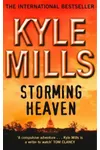
- Storming Heaven (1998) – Published by HarperCollins. Disgraced and exiled to a quiet post in Arizona, Beamon is pulled into a conspiracy involving a wealthy cult.
- Free Fall (2000) – Published by HarperCollins. Beamon finds himself protecting a world-class rock climber who holds information that could destroy a presidential candidate.
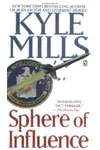
- Sphere of Influence (2002) – Published by HarperCollins. An expanded international conspiracy forces Beamon to work with a criminal mastermind to stop global terror threats.
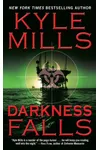
- Darkness Falls (2007) – Published by Vanguard Press. Beamon returns to face an eco-terrorist plot threatening to wipe out the global oil supply using bioengineered bacteria.
Publication Order vs. Chronological Order
Unlike some long-running thriller series that feature prequels or time-skips, the Mark Beamon series follows a simple, linear timeline. Rising Phoenix takes place first, followed sequentially by the subsequent four novels. There are no companion short stories, novellas, or prequel novels to disrupt this order. Readers looking for the best experience should avoid reading them out of sequence, as Beamon's personal setbacks and relationships with his FBI superiors carry over from one book to the next.
Who is Mark Beamon? What to Know Before You Start
Mark Beamon is the antithesis of the polished, invincible espionage hero. He is frequently described as rumpled, slightly overweight, a heavy drinker, and a chain-smoker. He has a blatant disregard for authority, politics, and the bureaucratic red tape of the Federal Bureau of Investigation. Despite these flaws—or perhaps because of them—he is a brilliant investigator who gets results when everyone else fails, making him a classic law enforcement anti-hero.
Kyle Mills drew inspiration for the character and the inner workings of the Bureau from his father, Ron Mills, who was a high-ranking FBI agent. This personal connection allowed Mills to ground the novels in realistic procedural details, capturing the tension between street-level agents and politically minded agency administrators.
Deep Dive: The Mark Beamon Novels
1. Rising Phoenix (1997)
The debut novel introduces Special Agent Mark Beamon. When someone begins poisoning the illegal drug supply in the United States—causing drug users to die by the thousands—the public is split, and the FBI is desperate. Beamon, already on thin ice with his superiors, is handed the case because he is viewed as a convenient scapegoat if the investigation fails. He must track down the charismatic leader of "Rising Phoenix," the group behind the poisonings, while fighting enemies inside his own agency.
2. Storming Heaven (1998)
Following the fallout of his first case, Beamon is effectively banished by FBI leadership to a sleepy field office in Arizona. His forced retirement is cut short when a wealthy corporate executive and his wife are brutally murdered, and their teenage daughter is kidnapped. The investigation leads Beamon directly to a heavily armed, politically connected religious cult. Beamon must navigate desert terrain and hostile local authorities to rescue the girl before a violent standoff occurs.
3. Free Fall (2000)
This installment highlights Kyle Mills' own passion for rock climbing. The story follows Darby Cotswold, a world-class rock climber who accidentally steals a highly classified computer disk containing information that could ruin a presidential candidate. When Darby goes missing in the wilderness, Beamon is tasked with finding him and securing the disk. He soon discovers that powerful corporate and political forces will stop at nothing to cover up the scandal, turning the search into a deadly race.
4. Sphere of Influence (2002)
In this book, the scale of the series expands from domestic investigations to global counter-terrorism. When a series of coordinated terrorist attacks threatens international security, Beamon is forced to think outside the box. To infiltrate a shadowy network of terrorists and drug traffickers, Beamon must forge an alliance with a brilliant, ruthless criminal head of a European cartel. The novel explores themes of moral compromise and the gray areas of global justice.
5. Darkness Falls (2007)
After a five-year hiatus, Mills brought Beamon back for one final adventure. In Darkness Falls, an idealist scientist develops a bioengineered, oil-eating microbe intended to clean up oil spills. However, an eco-terrorist group steals the bacteria, intending to unleash it on the world's major oil reserves and bring global industrial civilization to a halt. Beamon, now older and even more cynical, is called out of the shadows to track down the group before the global economy collapses.
No Crossovers or Spin-Offs: The Mitch Rapp Connection
Because Kyle Mills took over Vince Flynn's famous Mitch Rapp series starting with The Survivor in 2015, fans often wonder if Mark Beamon exists in the same universe. However, the Mark Beamon series is entirely independent. There are no crossover appearances, and Beamon does not show up in the Mitch Rapp books, nor do Rapp characters appear in Beamon's stories. Additionally, standalone thrillers by Mills, such as Burn Factor (featuring FBI employee Quinn Barry) and Fade (featuring Salam al-Fayed), are set in their own distinct universes.
Practical Reading Advice
For the best experience, start with Rising Phoenix. If you read the books out of order, you will still be able to follow the self-contained plot of each mystery, but you will miss the evolution of Beamon's career. Over the course of the five books, Beamon goes from being an active field agent to an exile, then a fugitive, and eventually a consultant called in for extreme crises. Reading the novels in order preserves this rewarding character arc.