
The Recommended Reading Order for Martin Beck
To experience the full weight of the Martin Beck series, readers should follow a single, unbroken line: the original publication order. The authors, Maj Sjöwall and Per Wahlöö, conceptualized the series as a single project titled The Story of a Crime. Because they wrote these ten books with a strict structural outline—ten novels, each consisting of exactly thirty chapters—the characters, social context, and Swedish police force evolve continuously in real time from 1965 to 1975.
Unlike many modern crime series where the order is flexible, the Martin Beck series is a serialized drama. Reading them out of order ruins the slow-burning character arcs, including Beck's disintegrating marriage, his health struggles, his professional promotions, and the changing fates of his colleagues like Lennart Kollberg and Gunvald Larsson. The chronological timeline of the books matches the publication order exactly.
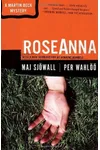
- Roseanna (1965) - The series begins with the discovery of an unidentified female body in Lake Vättern. Beck pieces together clues over several grueling months, establishing the series' trademark focus on tedious, realistic police work.
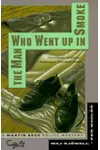
- The Man Who Went Up in Smoke (1966) - Beck travels to Budapest to investigate the disappearance of a prominent Swedish journalist, offering a contrast between eastern and western European settings.
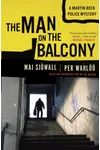
- The Man on the Balcony (1967) - Stockholm is terrorized by a child mugger and serial killer. The investigation relies heavily on grueling stakeouts and public tip-offs.
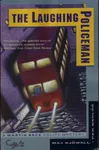
- The Laughing Policeman (1968) - Widely considered the masterpiece of the series and winner of the Edgar Award, this novel begins with a mass shooting on a Stockholm bus that leaves nine dead, including one of Beck's young detectives.
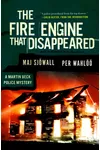
- The Fire Engine That Disappeared (1969) - Beck and his team investigate a mysterious apartment explosion that initially appears to be an accident but quickly reveals a complex suicide pact and arson scheme.
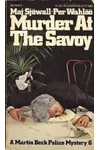
- Murder at the Savoy (1970) - The murder of a wealthy industrialist in a luxury hotel restaurant in Malmö forces Beck to confront corporate corruption and white-collar crime.
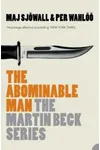
- The Abominable Man (1971) - A brutal police inspector is murdered in his hospital room, prompting a manhunt for a sniper on a rooftop. The story serves as a scathing critique of institutional police brutality.
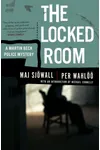
- The Locked Room (1972) - A classic locked-room mystery where a man is found shot dead inside an apartment bolted from the inside, written with a noticeably darker and more satirical tone.
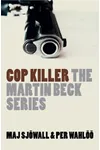
- Cop Killer (1974) - Investigating a woman's murder in a small town leads to a violent shootout between teenage runaways and rural police officers, highlighting growing societal alienation.
- The Terrorists (1975) - The grand finale of the series sees Martin Beck tasked with protecting an American senator during a visit to Stockholm while navigating political extremism and a crumbling judicial apparatus.
What to Know Before You Start
Sjöwall and Wahlöö were committed Marxists and journalists who set out specifically to use the popular crime genre as a tool to dissect and critique the contradictions of the Swedish welfare state. Rather than focusing on genius, eccentric detectives, they chose to highlight the dry, collaborative, and often frustrating nature of municipal police work.
Because the books span a decade, they capture the shifting cultural landscape of Sweden, transitioning from the optimism of the mid-1960s to the political turbulence, drug problems, and cynicism of the mid-1970s. The tone grows increasingly critical and satirical as the series progresses toward its final entry, which was completed shortly before Per Wahlöö's death in 1975.
Spin-Offs, Co-Authorship, and Literary Context
Following Per Wahlöö's death, Maj Sjöwall chose not to write any further Martin Beck novels, leaving the series capped at the planned ten books. However, both authors have separate works that interest fans of the series:
- Per Wahlöö's Inspector Jensen: Before and during the early years of the Martin Beck project, Wahlöö wrote two speculative crime novels starring Inspector Jensen: Murder on the Thirty-First Floor (1964) and The Steel Spring (1968). These dystopian thrillers carry a similar critique of authoritarian systems and media manipulation.
- Per Wahlöö's Standalones: Wahlöö also authored several political thrillers, including A Necessary Action (1960) and The Assignment (1963).
- Maj Sjöwall's Later Work: Sjöwall spent much of her post-Beck career working as a literary translator, notably translating Robert B. Parker's Spenser series into Swedish. She also collaborated on a handful of other books, such as the novel The Woman Who Resembled Greta Garbo (1990) with Tomas Ross.
Adaptations vs. the Source Novels
Navigating the screen adaptations of Martin Beck can be confusing for readers. The famous, long-running Swedish television series starring Peter Haber as Martin Beck (running from 1997 to the present) is not a direct adaptation of the ten novels. Instead, the TV show utilizes the characters and the Stockholm setting to tell original, modern stories. Key characters from the books, such as Lennart Kollberg, are entirely absent from the Haber films, which updated the setting to the 21st century.
For adaptations that remain faithful to the plots of the original ten books, readers should look to the Swedish film series starring Gösta Ekman as Martin Beck, released in the early 1990s. Additionally, Walter Matthau starred in a 1973 Hollywood adaptation of The Laughing Policeman, which relocated the setting from Stockholm to San Francisco but preserved the core mystery plot.