





How to Read the Martin Bora Series
The Martin Bora series, written by the Italian-American author Ben Pastor (the pen name of Maria Verbena Volpi), is a masterclass in historical crime fiction. The novels follow Baron Martin von Bora, an aristocratic Wehrmacht officer and Abwehr military intelligence agent. Bora is a devout Catholic who finds himself deeply conflicted, serving a homeland ruled by a regime he secretly despises. Inspired in part by the real-life anti-Hitler conspirator Claus von Stauffenberg, Bora uses his sharp intellect to solve murders amidst the chaotic backdrop of World War II.
Because the novels jump backward and forward in time, readers are faced with a choice: do you read them in the order they were published, or do you follow Bora's career chronologically? Below, we break down both paths to help you decide how to embark on this dark, atmospheric journey.
Option 1: English Publication Order
For English-speaking readers, the series has primarily been translated and published by Bitter Lemon Press. Reading in publication order allows you to experience the character's development and the author's writing style as it evolved. The English publication order is as follows:
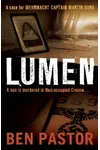
- Lumen (1999) — Set in occupied Poland during the autumn of 1939.
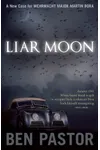
- Liar Moon (2001) — Set in Verona, Italy, in September 1943.
- A Dark Song of Blood (2002; also published as Kaputt Mundi) — Set in occupied Rome in early 1944.
- Tin Sky (2015) — Set in Ukraine during the desolation of the Eastern Front in May 1943.
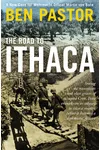
- The Road to Ithaca (2017) — Set in Crete and Greece in the spring of 1941.
- The Horseman’s Song (2019) — Set during the Spanish Civil War in 1937.
- The Night of Shooting Stars (2020) — Set in Berlin in July 1944, coinciding with the July 20 plot.
- The Venus of Salò (2024) — Set in Salò, northern Italy, in October 1944.
Option 2: The Chronological Timeline
If you prefer to follow Martin Bora’s life and military career in a linear fashion, you should read the books chronologically. This path highlights his shift from a young, idealistic lieutenant in Spain to a battle-hardened, physically scarred, and morally exhausted colonel near the war’s end. Here is the chronological sequence of the English-translated novels:
- The Horseman’s Song (Sets the stage in 1937 during the Spanish Civil War, where Bora is a young lieutenant investigating the death of Federico García Lorca).
- Lumen (Set in Autumn 1939, where Captain Bora teams up with a Catholic priest to investigate the murder of a Polish mother superior in occupied Cracow).
- The Road to Ithaca (Set in Spring 1941, focusing on Crete immediately after the German invasion, where Bora investigates a civilian massacre).
- Tin Sky (Set in May 1943 in Ukraine, where Bora navigates locked-room murders and forest skirmishes under the shadow of the Eastern Front).
- Liar Moon (Set in September 1943, following the Italian armistice, where Bora investigates the death of a fascist leader in Verona).
- A Dark Song of Blood (Set in January 1944 in Nazi-occupied Rome, where Bora tackles high-profile murders alongside an Italian inspector).
- The Night of Shooting Stars (Set in July 1944, where a scarred Bora is recalled to Berlin to investigate the murder of a prominent psychic amidst the paranoia of the failed Valchiria coup).
- The Venus of Salò (Set in October 1944, where Bora works as a liaison officer in the puppet Republic of Salò, dealing with looted art and his own impending arrest by the Gestapo).
The Italian Gap: Untranslated Books in the Timeline
While the English translations provide a complete and satisfying arc of Bora's war years, Ben Pastor actually writes her novels in English first, but due to publishing schedules, several entries have only been widely distributed in their Italian translations (published by Sellerio). For completionists who read Italian, these untranslated books fill major gaps in the chronological timeline:
- Il Signore delle cento ossa (Master of One Hundred Bones, Italian release: 2011) — Chronologically fits between The Horseman's Song and Lumen, set in Abruzzo, Italy, during the spring of 1939.
- I piccoli fuochi (The Little Fires, Italian release: 2016) — Set in occupied France during the autumn of 1940, fitting between Lumen and The Road to Ithaca.
- Lo specchio del pellegrino (The Pilgrim's Mirror, Italian release: 2026) — Set in the summer of 1941, detailng the immediate aftermath of the invasion of the Soviet Union.
- La sinagoga degli zingari (The Gypsy Synagogue, Italian release: 2021) — Set during the brutal Battle of Stalingrad from August 1942 to March 1943, chronologically fitting before Tin Sky.
- Il morto in piazza (The Dead in the Square, Italian release: 2005) — Set in June 1944 during the German retreat through central Italy, bridging A Dark Song of Blood and The Night of Shooting Stars.
Additionally, short stories featuring Martin Bora can be found in the collections La Morte, il Diavolo e Martin Bora (2008, published in English as Odd Pages) and La finestra sui tetti e altri racconti con Martin Bora (2023). These stories provide extra snapshots of his life, including a glimpse of Bora as an elderly man living at the end of the 20th century.
What to Know Before You Start
The Martin Bora series is not a standard, lighthearted detective series. It is a dense, literary exploration of wartime morality, Catholic guilt, and survival. Bora is a complex figure; he is not a rebel or a conventional hero, but rather a professional soldier trying to maintain a personal code of honor in a military apparatus that has surrendered its soul. Readers who appreciate Philip Kerr's Bernie Gunther novels or Alan Furst’s espionage thrillers will find a similar grim realism and psychological depth in Pastor's writing. While each mystery is technically self-contained, the overarching development of Bora's physical injuries (such as losing his left hand in a partisan attack in late 1943) and his deteriorating marriage to his wife Dikta make a strong case for following the chronological order.