




How to Read the M*A*S*H Books: Two Different Paths
When diving into the literary world of the 4077th Mobile Army Surgical Hospital, readers face a choice between two distinct paths. Although all 15 novels in the series carry the name "Richard Hooker" (the pseudonym of Dr. H. Richard Hornberger), they were created under very different writing conditions, resulting in a split in continuity and tone.
Path 1: The Core "Richard Hooker" Trilogy (Recommended)
If you want to follow the authentic narrative continuity and the dark, satirical voice of the original creator, you should stick to the three books written solely by Hornberger (with co-author W. C. Heinz on the debut novel). These books follow the characters from the Korean War back home to their post-war civilian medical practices in Maine:
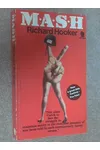
- MASH: A Novel About Three Army Doctors (1968)
- M*A*S*H Goes to Maine (1972)
- M*A*S*H Mania (1977)
By reading only these three, you get a cohesive trilogy that follows Hawkeye, Trapper John, and Duke Forrest as they build their lives, pull elaborate pranks, and practice medicine in rural New England. This path ignores the 12 intervening sequels entirely, which is exactly how Hornberger treated them when he wrote the final book.
Path 2: The Full 15-Book Publication Order
For completionists who want to read every single adventure, you can follow the publication order. Between 1975 and 1977, publisher Pocket Books commissioned author William E. Butterworth (who also achieved fame under the pseudonym W. E. B. Griffin) to write a series of travelogue-style sequels to capitalize on the massive success of the TV adaptation. While Hooker is credited, Butterworth did the heavy lifting. The full list is:
- MASH: A Novel About Three Army Doctors (1968)
- M*A*S*H Goes to Maine (1972)
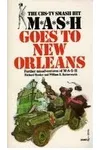
- M*A*S*H Goes to New Orleans (1975)
- M*A*S*H Goes to Paris (1975)
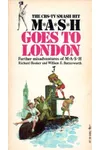
- M*A*S*H Goes to London (1975)
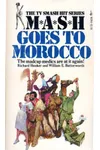
- M*A*S*H Goes to Morocco (1976)
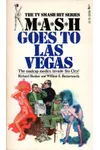
- M*A*S*H Goes to Las Vegas (1976)
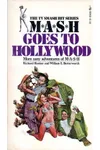
- M*A*S*H Goes to Hollywood (1976)
- M*A*S*H Goes to Vienna (1976)
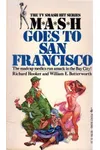
- M*A*S*H Goes to San Francisco (1976)
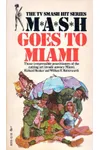
- M*A*S*H Goes to Miami (1976)
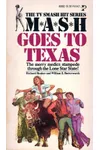
- M*A*S*H Goes to Texas (1977)
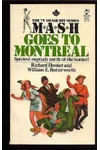
- M*A*S*H Goes to Montreal (1977)
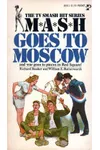
- M*A*S*H Goes to Moscow (1977)
- M*A*S*H Mania (1977)
What to Know Before You Start: Books vs. The TV Show
If you are coming to the books as a fan of the legendary television series starring Alan Alda, prepare yourself for some major differences in character dynamics, tone, and overall worldview.
The Authorship: The original 1968 novel was born from Hornberger's real-life experiences as a surgeon in the Korean War. Seeking to publish his recollections, he partnered with veteran sportswriter and war correspondent W. C. Heinz, who polished the raw manuscript into a cohesive, fast-paced literary work. Later, William E. Butterworth took over for the travelogue sequels, bringing a much lighter, episodic, and broadly comedic style that heavily satirized public figures of the mid-1970s.
Character Discrepancies: In the books, Hawkeye Pierce is a conservative, married man with children rather than the TV show's bachelor liberal hero. Duke Forrest, a key Southern surgeon who is a core member of the book's main trio, was omitted from the television show after the 1970 film. Furthermore, Trapper John remains a central figure throughout the entire book trilogy, and minor characters like Frank Burns and Margaret Houlihan are depicted as far more unlikable and villainous than their eventual TV counterparts.
The Tone: The original books carry a more cynical, anti-bureaucratic, and sometimes crude tone. Hornberger famously disliked the TV adaptation, feeling it sanitized the harsh realities of wartime medicine and turned his characters into overly sentimental mouthpieces for contemporary political views.
Chronological Caveats and Reader Advice
Attempting to read all 15 books as a single, continuous timeline is impossible due to narrative contradictions. The 12 Butterworth sequels are highly episodic, sending the characters on wild international capers that do not align with their age or circumstances in Hornberger's timeline. Most importantly, when Hornberger returned to write M*A*S*H Mania in 1977, he completely ignored the events, characters, and developments of Butterworth's books. For the most satisfying reading experience, we highly recommend reading the core three books first to appreciate Hornberger's original vision, and then treating the "Goes to..." books as a fun, standalone comedic spin-off series.