
The Recommended Reading Path
If you are ready to dive into the gritty world of the Matthew Hawkwood series by James McGee, the best way to experience his journey is to read the books in publication order. Because the publication order aligns perfectly with the in-universe historical timeline, following this progression allows you to watch Hawkwood's character evolve, see his relationships with secondary characters develop naturally, and witness the escalating stakes of the Napoleonic Wars.
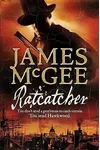
You should start with the debut novel, Ratcatcher (also published under the title Hawkwood in some markets). Starting here establishes Hawkwood's transition from his disgraced military past in the 95th Rifles to his new role as a Bow Street Runner, setting the tone for the entire series.
Matthew Hawkwood Books in Order
The series consists of six full-length novels. Below is the complete list in both publication and chronological order, detailing the primary case and setting for each book:
- Ratcatcher / Hawkwood (2006)
Set in London in 1811. The series begins when a naval courier carrying vital dispatches is murdered by a highwayman on the Great North Road. Matthew Hawkwood is assigned to the case, quickly realizing that the murder is part of a larger, sinister conspiracy involving French spies, a secret weapon, and treason at the highest levels of the British establishment.
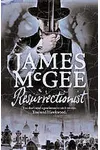
- Resurrectionist (2007)
Set in late 1811. Hawkwood is thrust into the gruesome, underworld trade of body-snatching (resurrectionists) supplying corpses to London's medical schools. When a body is stolen from a fresh grave and a prominent surgeon is murdered, Hawkwood's investigation leads him to the terrifying depths of the Bethlem Royal Hospital (Bedlam) and a mad scientist's experiments.
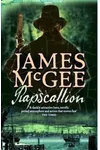
- Rapscallion (2008)
Set in 1812. The war with France has turned the River Medway into a dumping ground for captured French soldiers, housed in decaying prison hulks. Hawkwood goes undercover on one of these floating prisons to dismantle a sophisticated smuggling ring run by a mysterious figure known as the 'Rapscallion', only to discover a plot that threatens the entire British war effort.
- Rebellion (2011)
Set in the autumn of 1812. Against the backdrop of Napoleon's disastrous Russian campaign, Hawkwood is pulled into the shadow world of international espionage. His mission takes him from the criminal underworld of London directly into Paris, where he must navigate the explosive aftermath of the Malet conspiracy and rescue a vital British agent.
- The Blooding (2014)
Set in December 1812. The conflict expands across the Atlantic as the War of 1812 heats up. Hawkwood is dispatched to North America on a covert mission behind enemy lines. Stranded in the American wilderness, he must survive both the brutal winter landscape and hostile forces to secure British interests along the Canadian border.
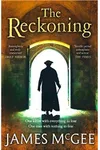
- The Reckoning (2017)
Set in 1813. Hawkwood returns to a crime-weary London. When a young woman is found murdered, Hawkwood's pursuit of justice uncovers a dark web of government secrets, blackmail, and political corruption that hits close to home, forcing him to decide where his ultimate loyalties lie.
Chronology and Historical Settings
Unlike many historical fiction series that bounce around in time with prequels and flash-forward collections, the Matthew Hawkwood saga progresses in a straightforward linear fashion. The timeline spans roughly three years, from the foggy, crime-ridden London streets of 1811 to the high-stakes international theater of 1813.
James McGee masterfully weaves real historical milestones into Hawkwood's investigations. Readers will encounter early engineering marvels like Robert Fulton's experimental submarine, the dark reality of the Medway prison hulks, the political panic of the Malet Conspiracy in Paris, and the woodland combat of the War of 1812. The chronological continuity is tight, meaning characters who survive or are introduced in one book frequently carry their experiences and scars into the next.
What to Know Before You Start
To fully appreciate the world of Matthew Hawkwood, it helps to understand the historical context of his profession and background. Hawkwood is not a modern detective dropped into the past; he is a product of his era. He is a former officer of the 95th Rifles—an elite British Army light infantry regiment famous for their green jackets and marksmanship. Cashiered from the army after a fatal duel, his military skills make him a deadly opponent, but his status as a disgraced officer haunts his reputation.
As a Bow Street Runner, Hawkwood is part of London's first professional, pioneering police force, founded by magistrate Henry Fielding in 1749. Operating out of the Bow Street magistrate's office, the Runners were not modern police officers but thief-takers, investigators, and government troubleshooters who were often paid via rewards and fees. This occupation puts Hawkwood in constant contact with the poorest slums (the Rookeries) and the grandest aristocratic townhouses of London, creating a vibrant contrast of settings.
Practical Reader Advice
Can the books be read as standalones?
While each novel features a self-contained mystery or espionage mission that is resolved by the final page, it is highly recommended to read them in order. The overarching narrative of Hawkwood’s personal life, his tense relationship with Chief Magistrate James Read, and his slow reconciliation with his past military comrades build significantly from book to book. Skipping ahead may spoil character fates and major status-quo shifts.
Where does the series currently stand?
As of now, the series contains six novels. The author, James McGee, has indicated in updates on his official website that the character is not officially retired and that he has ideas for future Hawkwood stories, though no new release dates have been scheduled. The books are praised for their high-quality pacing and atmospheric depth, avoiding the rush of typical mass-market series fiction.