

Where to Start with Matthew Hervey
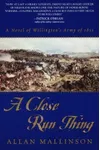
For readers looking to dive into Allan Mallinson’s acclaimed military fiction, the choice is simple: start at the beginning with A Close Run Thing (1999). The series follows a strict chronological trajectory tracking the military career, promotions, and personal trials of Cornet (later officer) Matthew Hervey. Skipping ahead will cause you to miss key developments in his relationships, his shifting status within the 6th Light Dragoons, and the evolving geopolitical landscape of the early 19th century.
Matthew Hervey Books in Publication and Chronological Order
Because the publication order mirrors Hervey’s promotions and aging, reading the books in order of release is the most rewarding way to experience the saga. Below is the complete reading path for the series:
- A Close Run Thing (1999): Set in 1815, this debut introduces a young Matthew Hervey during the brutal, decisive Battle of Waterloo, marking the end of the Napoleonic Wars and the birth of his career.
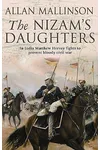
- The Nizam's Daughters (2000) (Also published as Honorable Company): Set in 1816, Hervey travels to India on a delicate political and military mission in the princely state of Chintal.
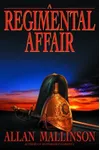
- A Regimental Affair (2001): Set in 1817, Hervey returns to England, facing a hostile commanding officer and policing duties during the domestic unrest of the Luddite riots.
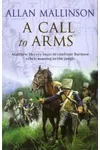
- A Call to Arms (2002): Spanning 1818 to 1819, Hervey finds himself deployed to India once again as tensions rise across the subcontinent.
- The Sabre's Edge (2003): Set in 1824, Hervey leads his men into the grueling and bloody siege of Bhurtpoor in India.
- Rumours of War (2004): Set in 1826, this novel sends Hervey to Portugal, though it notably features extended flashbacks to his earlier service during the Peninsular War in 1809.
- An Act of Courage (2005): Set in 1826–1827, Hervey faces court-martial and imprisonment in Spain, testing his honor and resourcefulness.
- Company of Spears (2006): Set in 1827–1828, Hervey is dispatched to Southern Africa, dealing with the complex conflicts surrounding the Cape Colony and the Zulu Kingdom.
- Man of War (2007): Set in 1827–1828, Hervey takes on a naval-adjacent role, witnessing the Battle of Navarino during the Greek War of Independence.
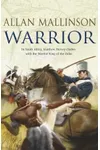
- Warrior (2008): Set in 1828, Hervey return to South Africa, grappling with frontier skirmishes and local tribal politics.
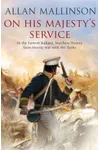
- On His Majesty's Service (2011): Set in 1829, Hervey is sent on a mission to the Balkans to observe the Russo-Turkish War.
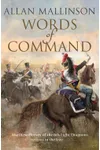
- Words of Command (2015): Set in 1829–1830, Hervey returns to England to navigate changing political tides and reform within the military.
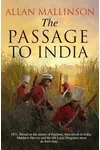
- The Passage to India (2018): Set in 1830, Hervey journeys back to the subcontinent, facing mutinous sentiments and shifting alliances.
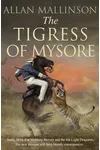
- The Tigress of Mysore (2020): Set in the 1830s, this installment sees Hervey tackling a dangerous uprising in the southern region of India.
Chronological Settings and Timeline Caveats
While Mallinson maintains a steady forward timeline starting in 1815 and wrapping up in the 1830s, readers should be prepared for occasional jumps back in time. The most notable exception is Rumours of War, which steps away from the mid-1820s narrative to detail Hervey’s early baptism by fire in the Peninsular campaign under Sir John Moore in 1809. This backstory adds rich context to Hervey’s tactical experience but does not disrupt the chronological flow if read in publication order.
What to Know Before You Start: Tone and Style
Allan Mallinson’s work stands out in the historical fiction genre due to his background as a retired Brigadier in the British Army and a former cavalry commander. Unlike many authors who focus solely on battle strategy, Mallinson brings unmatched authenticity to the daily life of a 19th-century dragoon. Expect a heavy emphasis on equestrian details, from the care and breeding of horses to the logistics of veterinary medicine. The prose has a deliberate, Regency-era flavor often compared to Jane Austen’s drawing-room dramas combined with the tactical gritty action of Bernard Cornwell’s Sharpe series or the nautical depth of Patrick O'Brian’s Aubrey-Maturin series.
Spin-Offs and Companion Works
There are no fictional spin-offs, short stories, or co-authored novels in the Matthew Hervey universe. However, fans looking for deeper historical context will appreciate Mallinson’s extensive non-fiction bibliography. Works such as Light Dragoons (a history of the real cavalry regiments that inspired the series) and The Making of the British Army offer a factual look at the military system Hervey serves under.